Back-of-the-Envelope Estimation
3 min read- What it is: sanity-check a design with thought experiments + known performance numbers
- Three reference sets: power-of-two units, latency numbers, availability numbers
- Golden rule: round aggressively, write down assumptions, label units
- Estimate first: QPS, peak QPS, storage, cache, server count: before designing
Back-of-the-envelope estimation uses thought experiments and common performance numbers to evaluate whether a design meets requirements.
1 of 5: Power of two
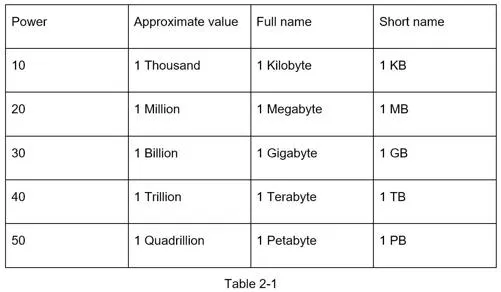
Data volumes grow by powers of two: memorize the unit ladder:
| Power | Approx. value | Full name | Short name |
|---|---|---|---|
| 10 | 1 Thousand | 1 Kilobyte | 1 KB |
| 20 | 1 Million | 1 Megabyte | 1 MB |
| 30 | 1 Billion | 1 Gigabyte | 1 GB |
| 40 | 1 Trillion | 1 Terabyte | 1 TB |
| 50 | 1 Quadrillion | 1 Petabyte | 1 PB |
2 of 5: Latency numbers every programmer should know
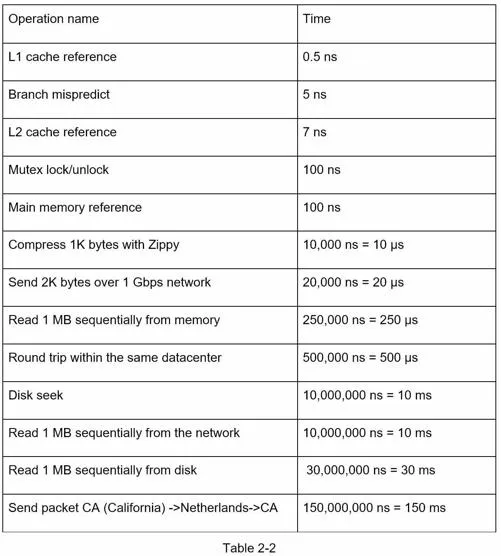
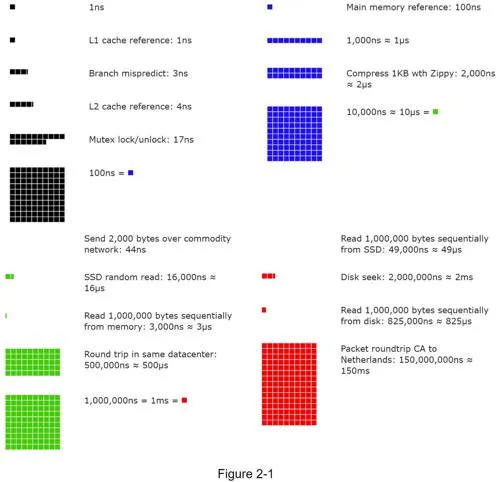
Key conclusions:
- Memory is fast, disk is slow
- Avoid disk seeks if possible
- Simple compression algorithms are fast
- Compress data before sending over the internet
- Data centers in different regions = significant transmission time
3 of 5: Availability numbers
High availability is measured as percentage uptime. The SLA defines the guaranteed uptime.
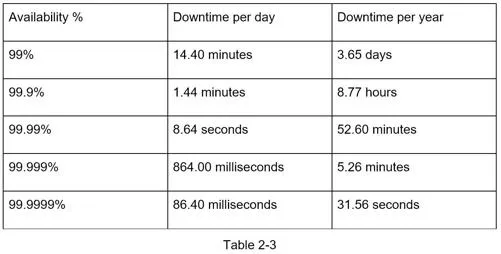
| Availability % | Downtime per year |
|---|---|
| 99% (two nines) | 3.65 days |
| 99.9% (three nines) | 8.76 hours |
| 99.99% (four nines) | 52.56 minutes |
| 99.999% (five nines) | 5.26 minutes |
| 99.9999% (six nines) | 31.5 seconds |
4 of 5. Example: Estimate Twitter QPS and storage
Assumptions:
- 300 million monthly active users
- 50% use Twitter daily
- 2 tweets per day per user on average
- 10% of tweets contain media
- Data stored for 5 years
QPS estimate:
- DAU = 300M × 50% = 150 million
- Tweets QPS = 150M × 2 / 24h / 3600s = ~3,500
- Peak QPS = 2 × QPS = ~7,000
Media storage estimate:
- Average tweet size: tweet_id 64 bytes, text 140 bytes, media 1 MB
- Media per day: 150M × 2 × 10% × 1 MB = 30 TB/day
- 5-year media storage: 30 TB × 365 × 5 = ~55 PB
5 of 5: Tips
- Round and approximate: use round numbers (e.g. 100,000/10 instead of 99,987/9.1). Precision is not expected.
- Write down assumptions: for later reference.
- Label your units: 5 MB, not just "5".
- Practice the common estimates: QPS, peak QPS, storage, cache, number of servers.
[1] J. Dean. Google Pro Tip: Use Back-Of-The-Envelope-Calculations To Choose The Best Design: http://highscalability.com/blog/2011/1/26/google-pro-tip-use-back-of-the-envelope-calculations-to-choo.html [2] System design primer: https://github.com/donnemartin/system-design-primer [3] Latency Numbers Every Programmer Should Know: https://colin-scott.github.io/personal_website/research/interactive_latency.html [4] Amazon Compute Service Level Agreement: https://aws.amazon.com/compute/sla/ [5] Compute Engine Service Level Agreement (SLA): https://cloud.google.com/compute/sla [6] SLA summary for Azure services: https://azure.microsoft.com/en-us/support/legal/sla/summary/