Design a News Feed System
3 min read- What it is: publish posts (write) + build friends' feed (read): reverse chronological, 10M DAU
- Key decision: fanout strategy, push (fast reads, hotkey problem) vs pull (no waste, slow reads) → hybrid: push for most, pull for celebrities
- Fanout stores only post IDs in the feed cache (memory limit), hydrated at read time
- 5 cache layers: news feed (IDs), content, social graph, action, counters
- Read path: feed cache → hydrate from post/user cache → CDN for media
Step 1 of 4: Understand the problem and establish design scope
Goal: lock in requirements before designing.
Requirements:
- Mobile + web app
- Features: publish posts, view friends' posts on news feed
- Sorted by reverse chronological order (simplified)
- Max 5,000 friends per user
- 10 million DAU
- Supports media files (images, videos)
Step 2 of 4: Propose high-level design and get buy-in
Goal: agree on the two flows: feed publishing (write) and news feed building (read).
APIs
- Feed publishing:
POST /v1/me/feed, paramscontent,auth_token - Newsfeed retrieval:
GET /v1/me/feed, paramsauth_token
Feed publishing flow
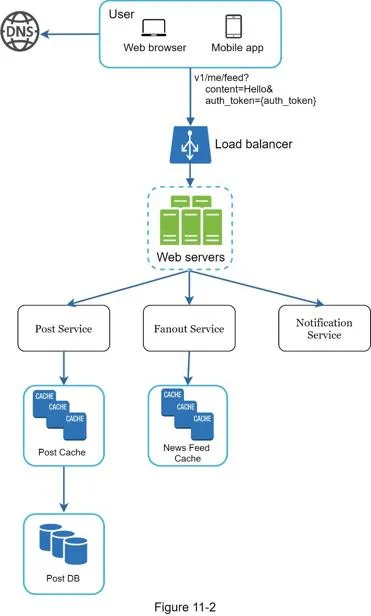
User → Load balancer → Web servers → Post service (persists to DB + cache) → Fanout service (pushes to friends' news feed cache). Notification service informs friends.
Newsfeed building flow
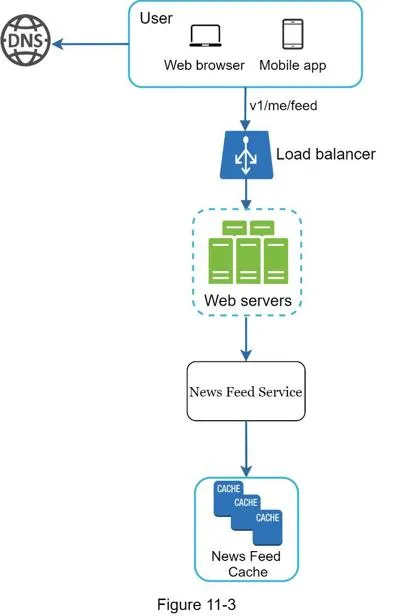
User → Load balancer → Web servers → Newsfeed service (fetches from newsfeed cache).
Step 3 of 4: Design deep dive
Goal: fanout strategy, read path, and cache layers.
Feed publishing deep dive
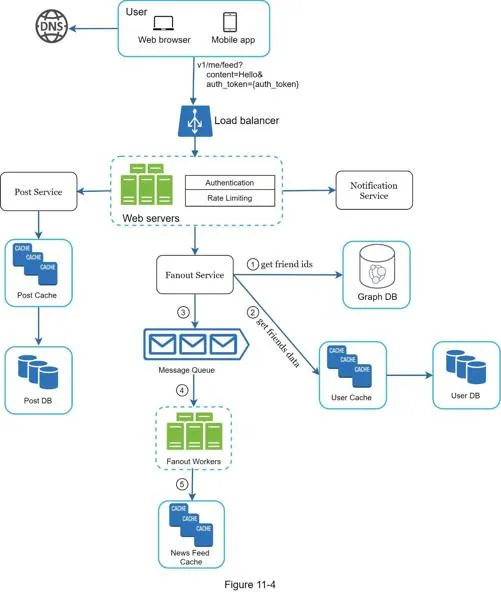
Web servers: authenticate via auth_token + rate-limiting to prevent spam.
Fanout models:
| Model | Pros | Cons |
|---|---|---|
| Fanout on write (push) | Real-time, fast reads | Hotkey problem (users with many friends); wastes compute on inactive users |
| Fanout on read (pull) | No wasted compute, no hotkey problem | Slow reads (not pre-computed) |
Hybrid approach: push for most users; pull for celebrities/users with many followers. Consistent hashing mitigates the hotkey problem.
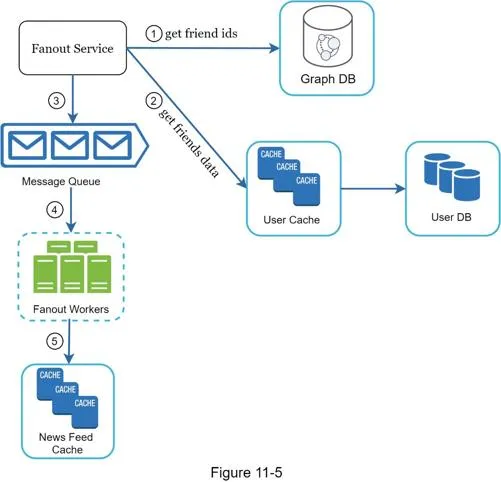
Fanout service workflow:
- Fetch friend IDs from the graph database
- Get friends info from user cache; filter by user settings (muted friends, selective sharing)
- Send friend list + post ID to message queue
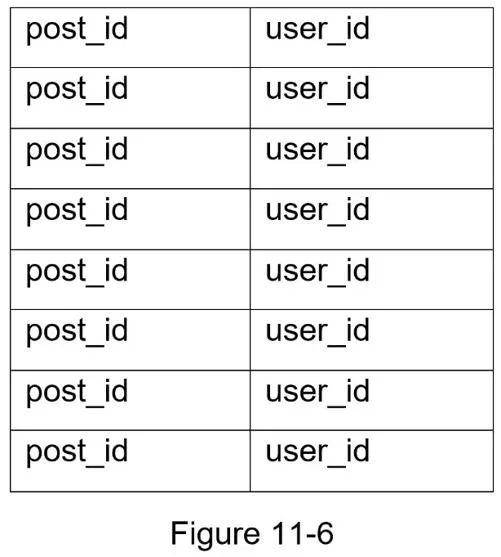
- Fanout workers store
<post_id, user_id>in news feed cache - Only IDs are stored (not full objects) to limit memory; configurable size limit (latest content only)
Newsfeed retrieval deep dive
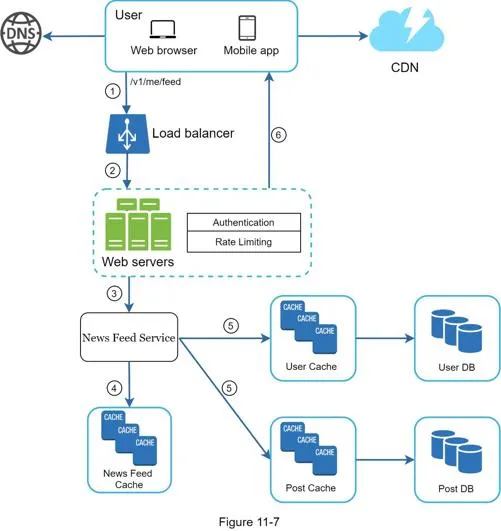
- User requests feed → 2. Load balancer → 3. Web server → 4. Newsfeed service gets post IDs from cache → 5. Hydrate with full user + post objects from user cache and post cache → 6. Return JSON to client
Media content served via CDN.
Cache architecture (5 layers)
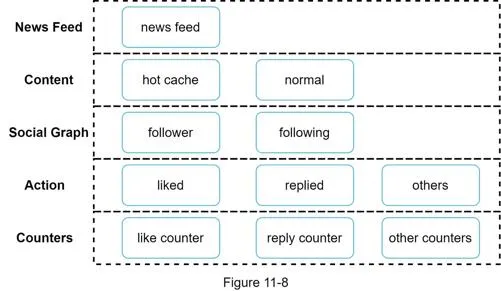
- News Feed: post IDs
- Content: full post data (popular → hot cache)
- Social Graph: user relationships
- Action: like/reply/action data
- Counters: like count, reply count, follower/following counts
Step 4 of 4: Wrap up
Additional talking points:
- Database scaling: vertical vs horizontal, SQL vs NoSQL, master-slave replication, read replicas, consistency models, sharding
- Keep the web tier stateless
- Cache data as much as possible
- Support multiple data centers; decouple components with message queues
- Monitor: QPS at peak, feed refresh latency
[1] How News Feed Works: https://www.facebook.com/help/327131014036297/ [2] Friend of Friend recommendations Neo4j: http://geekswithblogs.net/brendonpage/archive/2015/10/26/friend-of-friend-recommendations-with-neo4j.aspx