Proximity Service
7 min read- What it is: find nearby places (Yelp/Google Maps style) by lat/lng + radius, max 20km
- Scale: 100M DAU, 200M businesses, ~5,000 search QPS; writes are low (updates effective next day)
- Key choice: geohash (simple, fixed precision) over quadtree/S2: query current grid + 8 neighbors
- Memory: quadtree fits in ~1.71 GB (one server); geohash index ~5 GB in Redis
- Radii → geohash length: 500m→6, 1km/2km→5, 5km/20km→4
Design a proximity service to discover nearby places (restaurants, hotels, etc.) on Yelp or Google Maps.
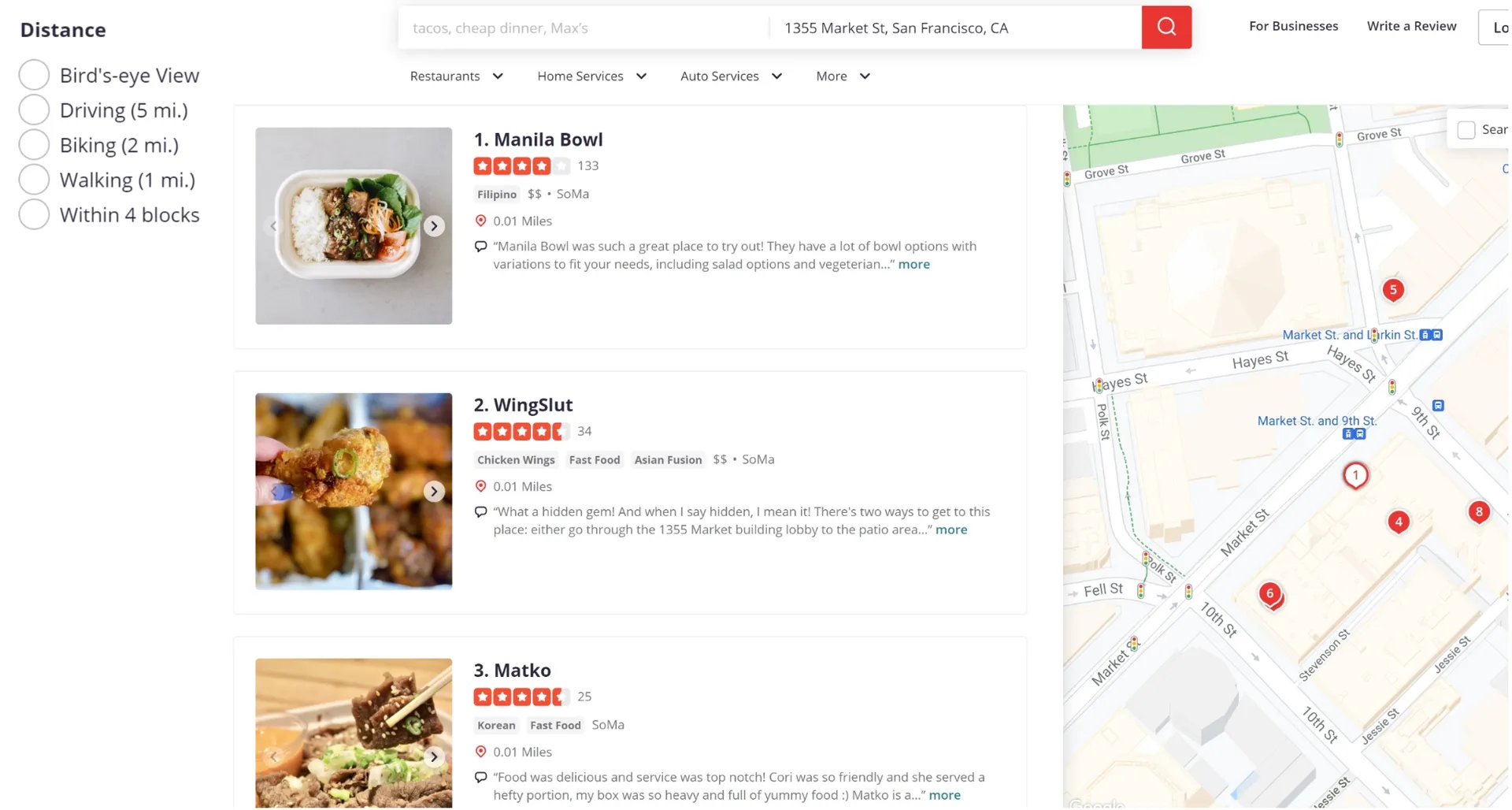
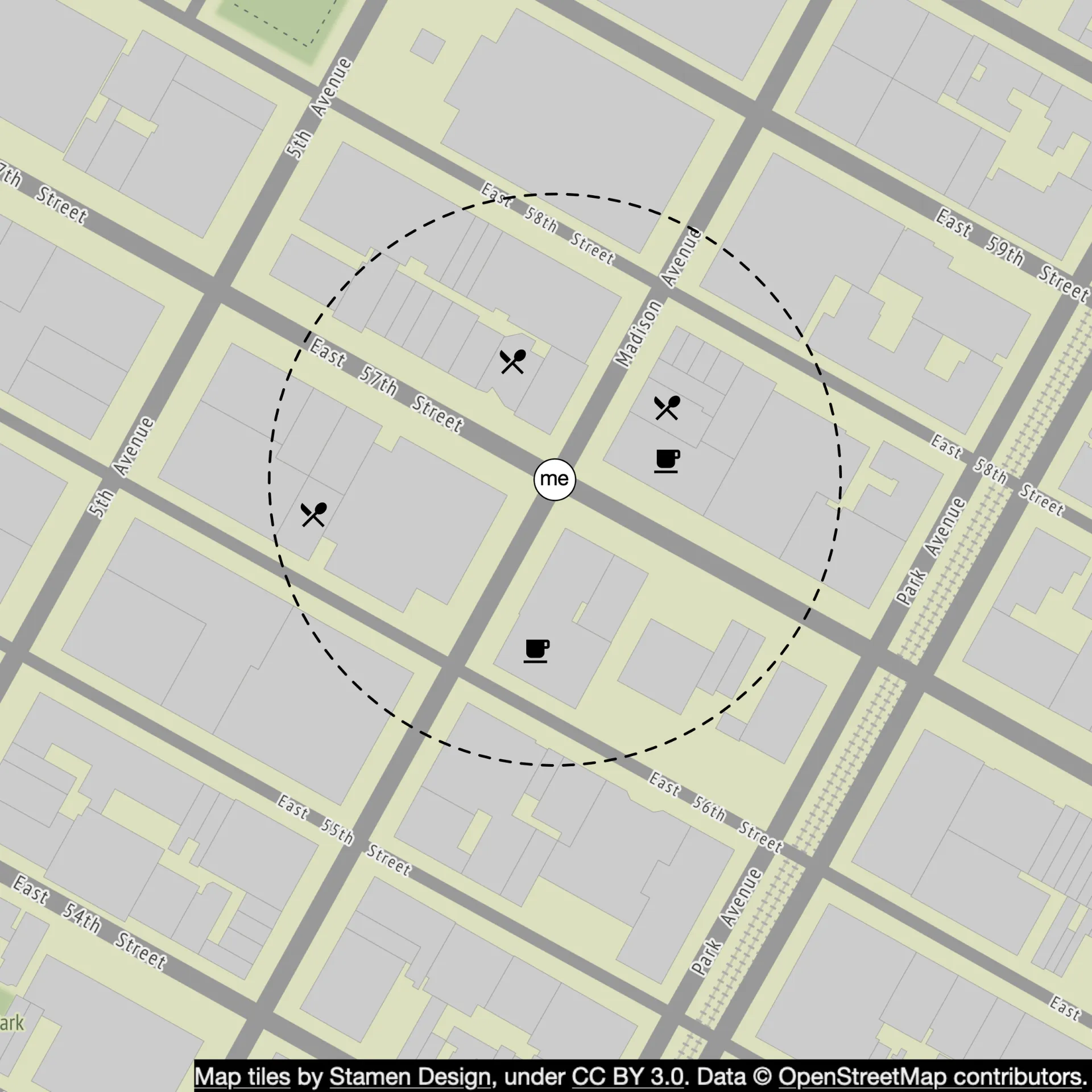
Figure 1: Nearby search on Yelp
Step 1 of 4: Understand the problem and establish design scope
Goal: lock in requirements and scale.
Functional requirements
Must have:
- Return all businesses based on the user's location (lat/lng) and radius
- Business owners can add/delete/update a business; updates effective next day (not real-time)
- Customers can view detailed information about a business
- Search radius options: 0.5km, 1km, 2km, 5km, 20km. Max radius: 20km
- User's moving speed is slow; no constant page refresh needed
Non-functional:
- Low latency for nearby business search
- Data privacy: comply with GDPR, CCPA
- High availability and scalability for peak hours in dense areas
Back-of-the-envelope estimation:
- 100M DAU, 200M businesses
- 5 search queries per user per day
- Search QPS = 100M × 5 / 10⁵ = ~5,000
Step 2 of 4: Propose high-level design and get buy-in
Goal: agree on APIs, data model, and the geospatial index choice.
API design
GET /v1/search/nearby: returns businesses based on search criteria (paginated).
| Field | Description | Type |
|---|---|---|
| latitude | Latitude of location | decimal |
| longitude | Longitude of location | decimal |
| radius | Optional, default 5000m | int |
Business CRUD APIs:
| API | Detail |
|---|---|
| GET /v1/businesses/{:id} | Return detailed business info |
| POST /v1/businesses | Add a business |
| PUT /v1/businesses/{:id} | Update business details |
| DELETE /v1/businesses/{:id} | Delete a business |
Data model
- Read/write ratio: read-heavy (search + detail views), write volume low (infrequent business edits)
- Business table: primary key =
business_id
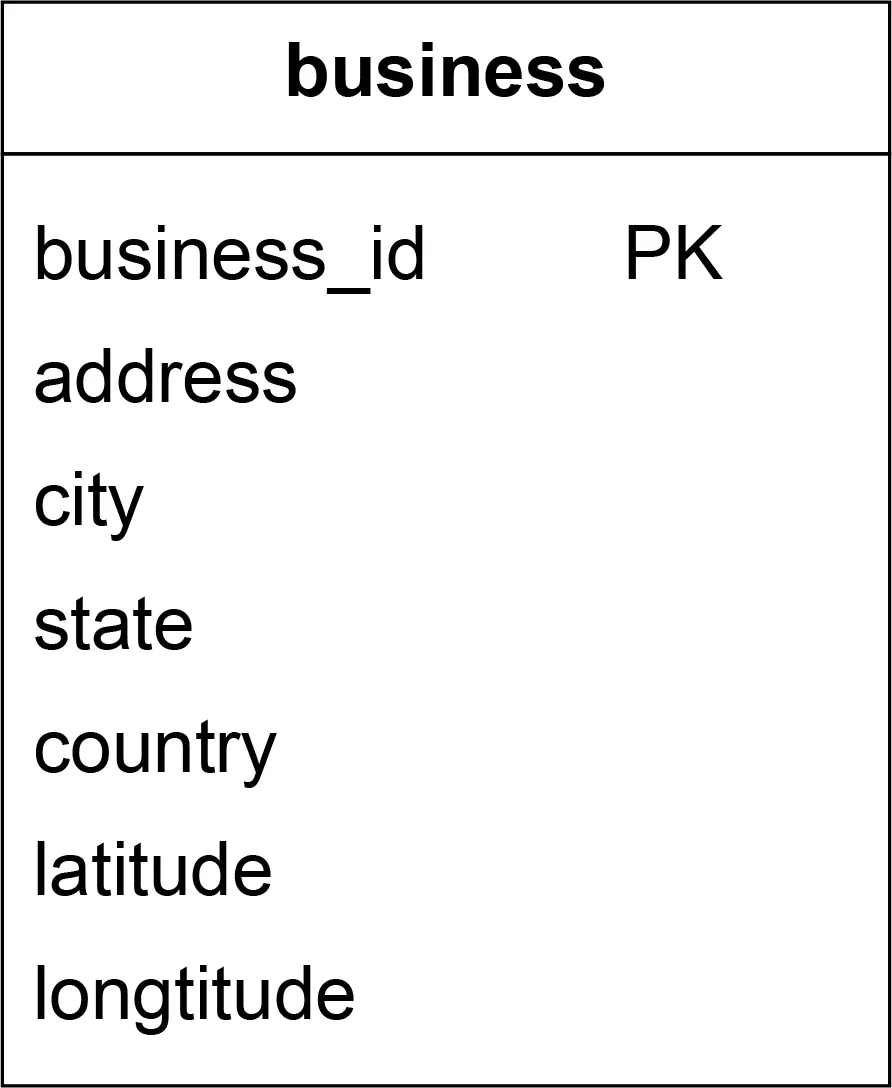
Table 3: Business table
- Geo index table: for efficient spatial operations (discussed in the deep dive)
High-level design
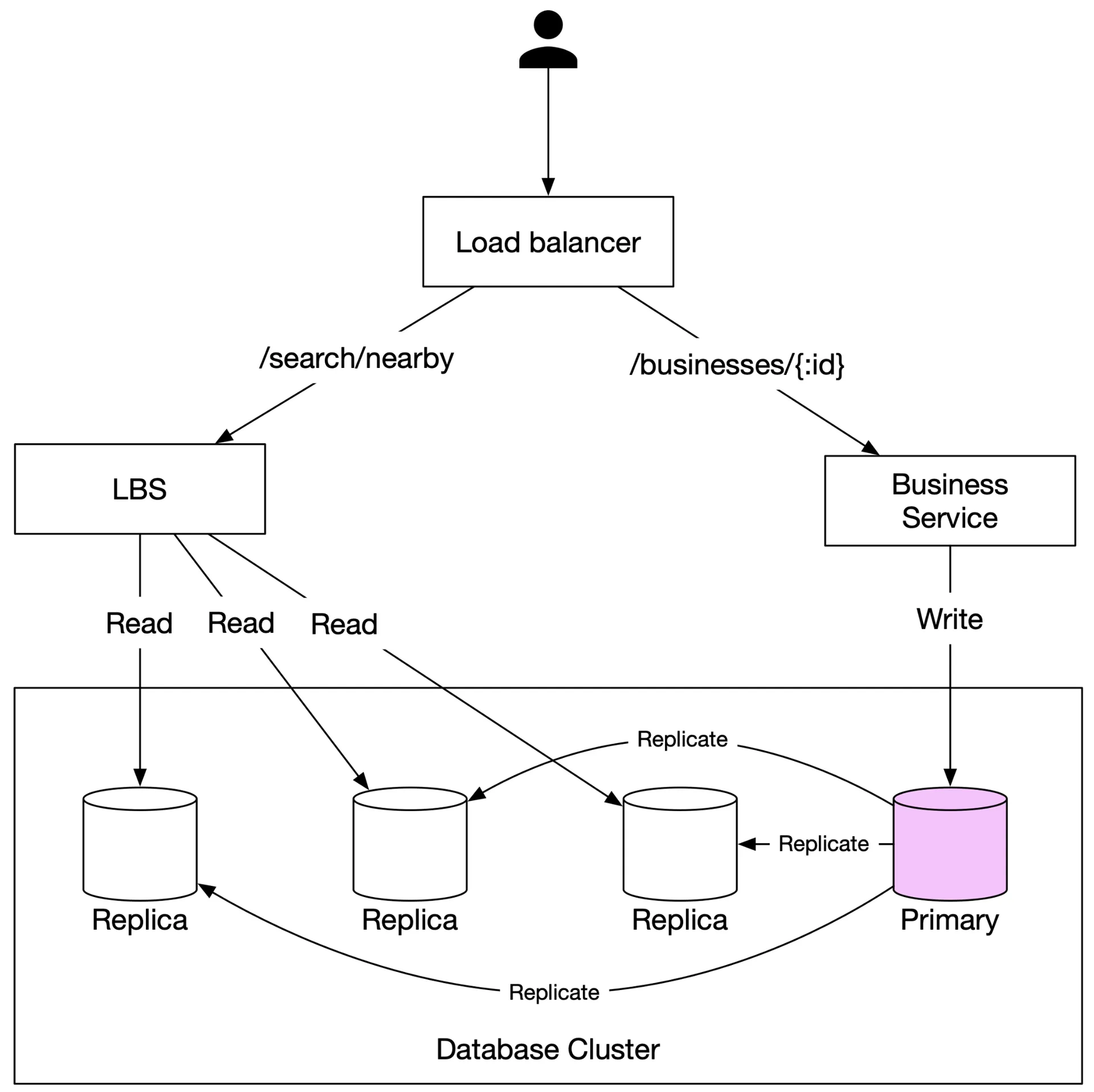
Figure 2: High-level design
- Load balancer: distributes traffic across services; single DNS entry routes to appropriate services by URL path
- LBS (Location-Based Service): read-heavy, stateless, horizontally scalable. No write requests. High QPS at peak
- Business service: handles CRUD (low QPS writes) + detail views (high QPS reads)
- Database cluster: primary-secondary setup. Primary handles writes; replicas for reads. Replication lag acceptable for non-real-time business data
- Scalability: auto-scale for peak (mealtimes), scale down off-peak; multi-region deployment on cloud
Algorithms to fetch nearby businesses
Options: even grid, geohash, cartesian tiers (hash-based); quadtree, Google S2, RTree (tree-based).
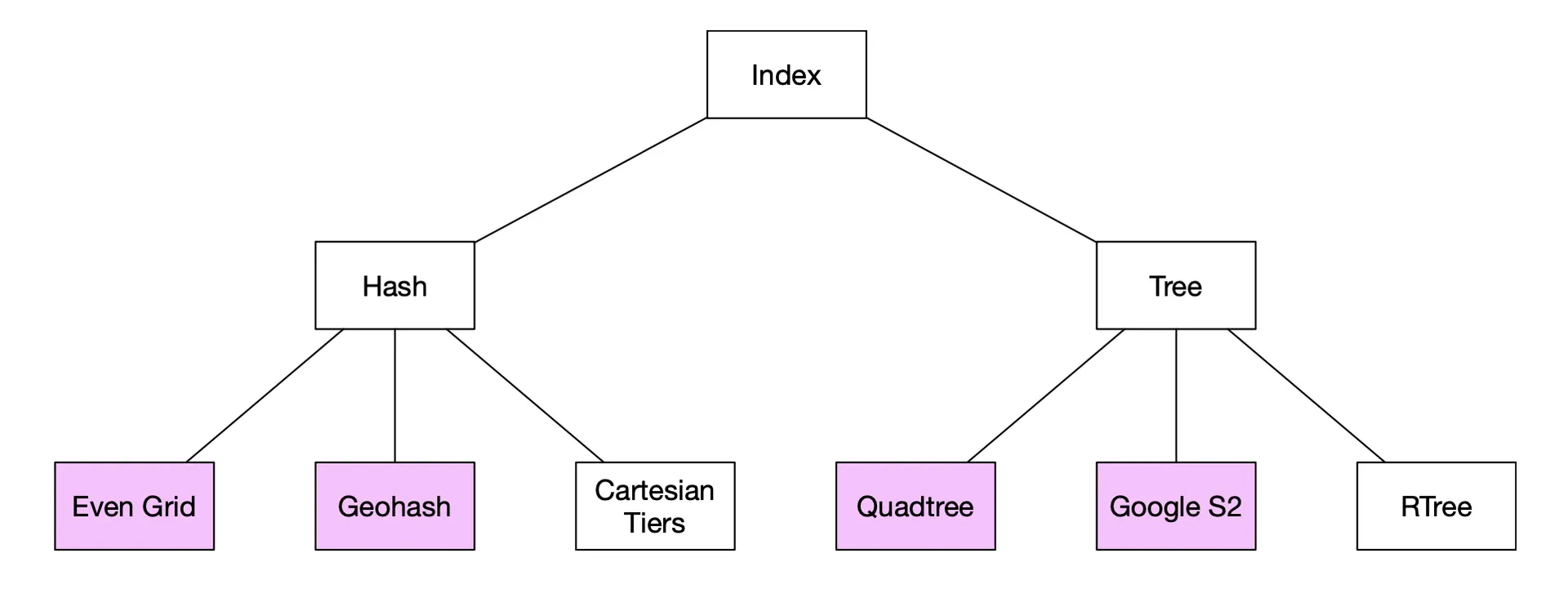
Figure 5: Geospatial index types
All divide the map into smaller areas and build indexes for fast search. Geohash, quadtree, and Google S2 are the most widely used.
Option 1: Two-dimensional search (naive)
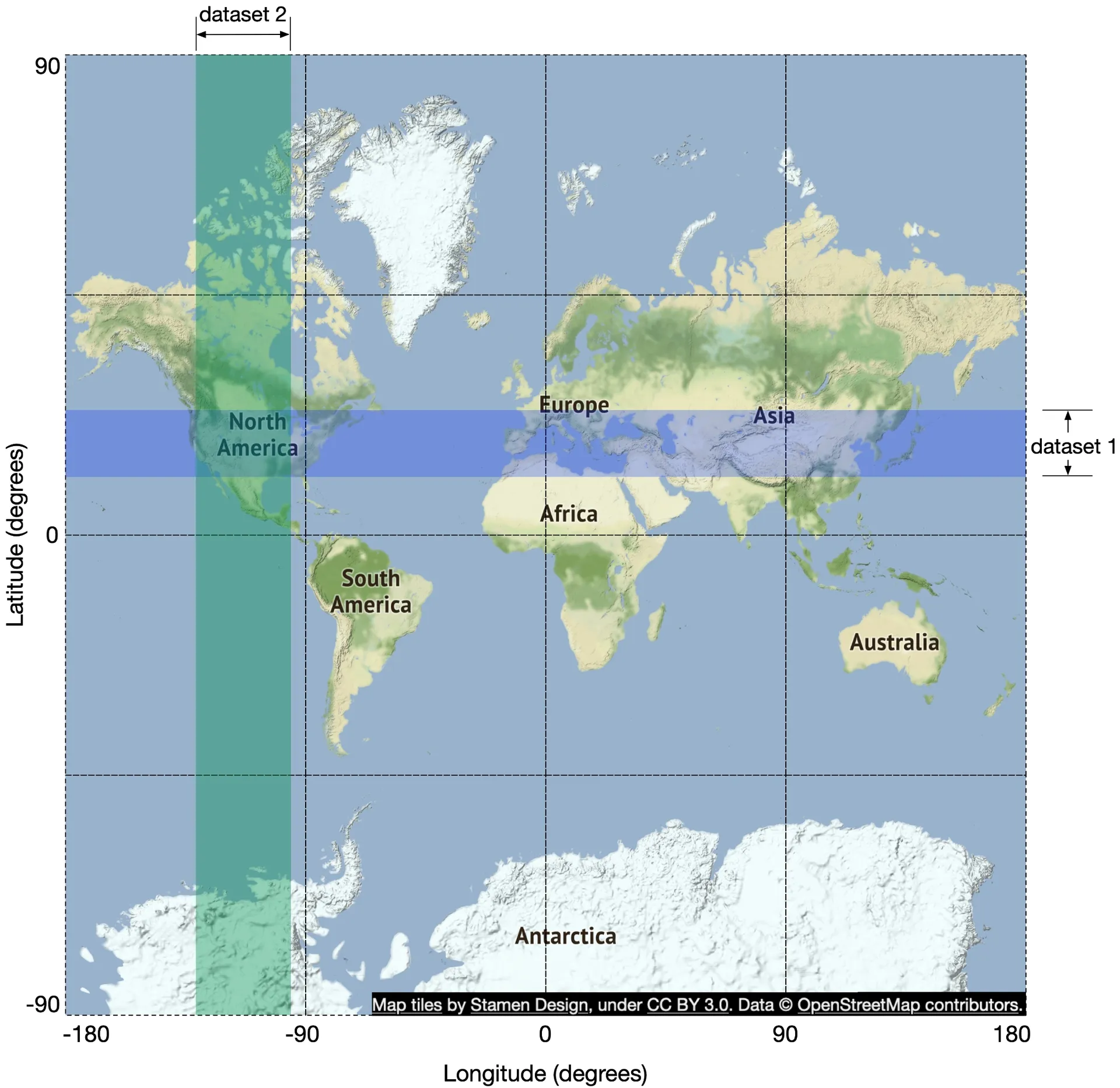
Draw a circle with the radius, find all businesses within it. Inefficient: requires a full table scan. Indexes on lat/lng columns help, but the intersect of two large 1D datasets is still slow.
Option 2: Evenly divided grid
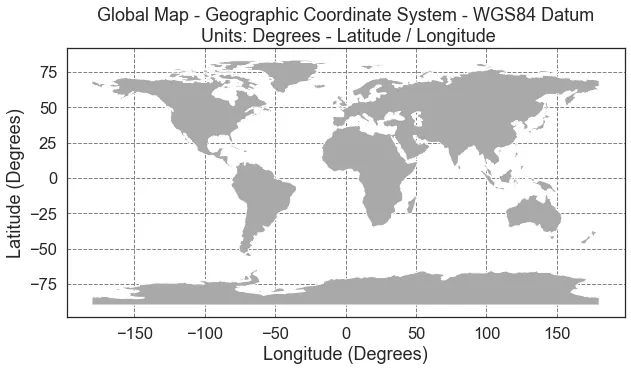
Divide the world into even grids. Problem: uneven business distribution (dense in NYC, empty in deserts). Need adaptive granularity.
Option 3: Geohash
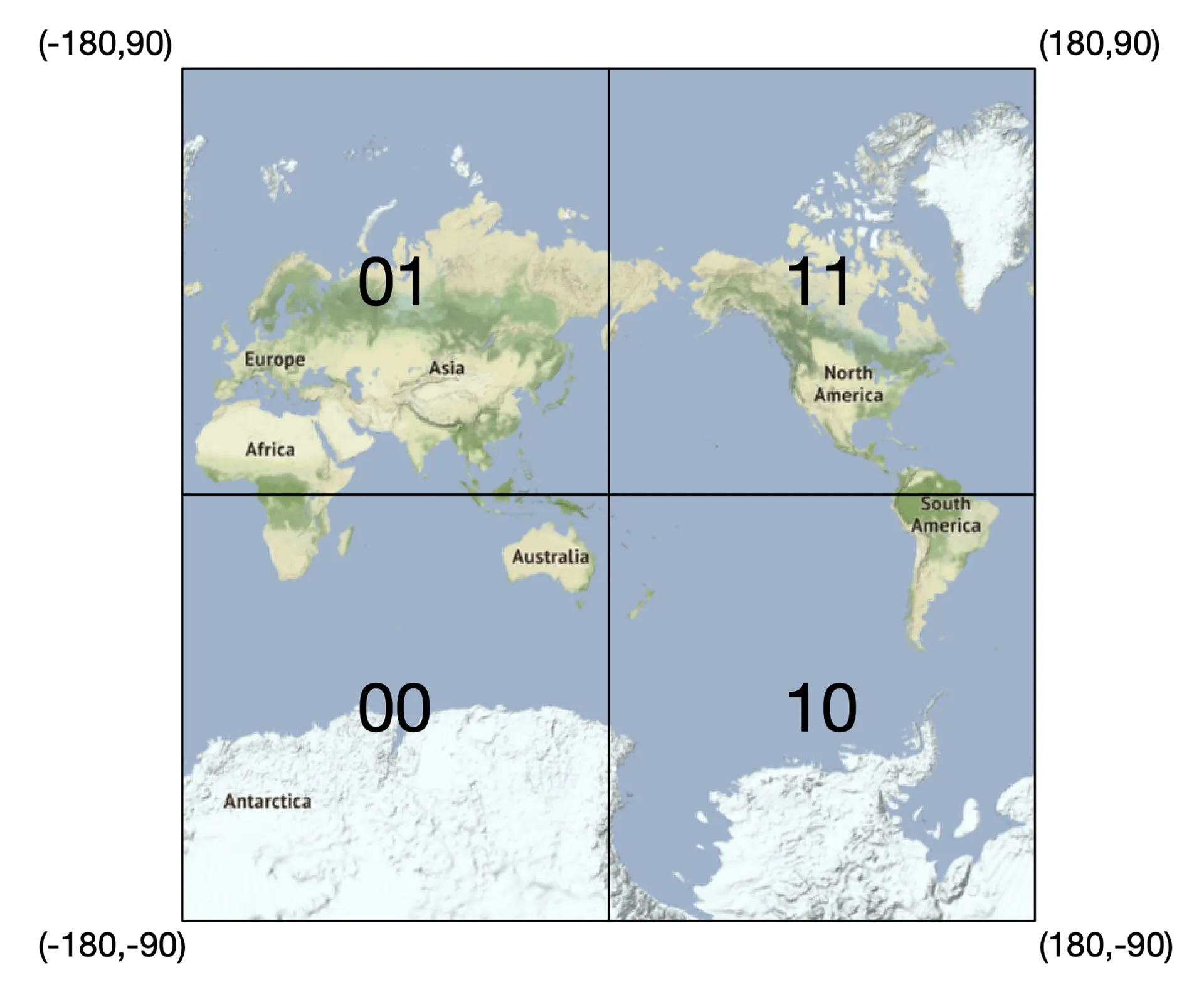
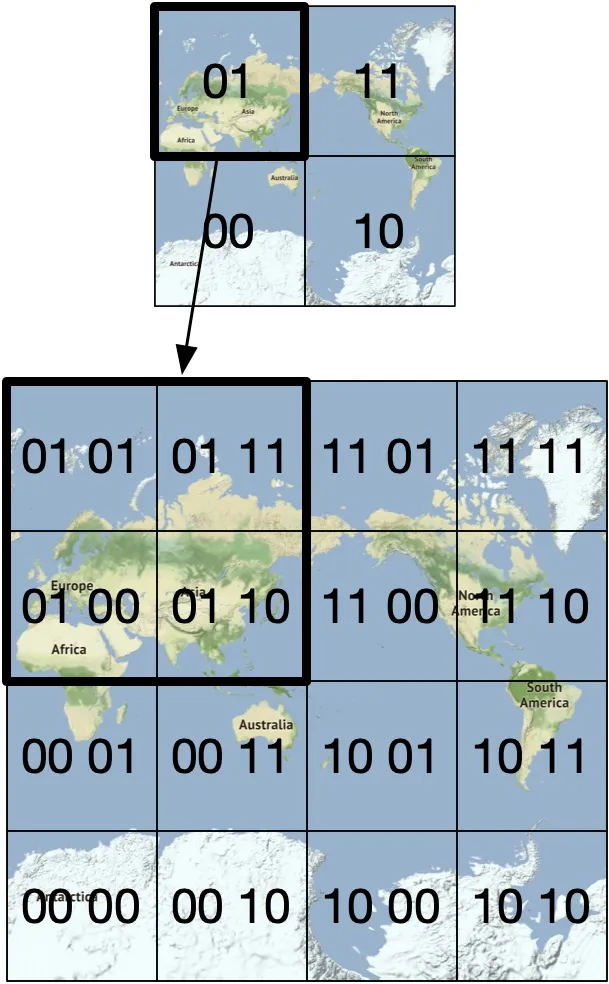
Reduces 2D lat/lng to a 1D string. Recursively subdivides the world into quadrants; each additional bit = finer precision. Uses base32 representation.
Examples: Google HQ → 9q9hvu, Facebook HQ → 9q9jhr.
Geohash precision table:
| Length | Grid size |
|---|---|
| 1 | 5,009km × 4,993km |
| 2 | 1,252km × 624km |
| 3 | 156.5km × 156km |
| 4 | 39.1km × 19.5km |
| 5 | 4.9km × 4.9km |
| 6 | 1.2km × 609.4m |
| 7 | 152.9m × 152.4m |
| 8 | 38.2m × 19m |
Useful lengths: 4–6 (longer → too small; shorter → too large).
Radius → geohash mapping:
| Radius | Geohash length |
|---|---|
| 0.5 km | 6 |
| 1 km | 5 |
| 2 km | 5 |
| 5 km | 4 |
| 20 km | 4 |
Boundary issues:
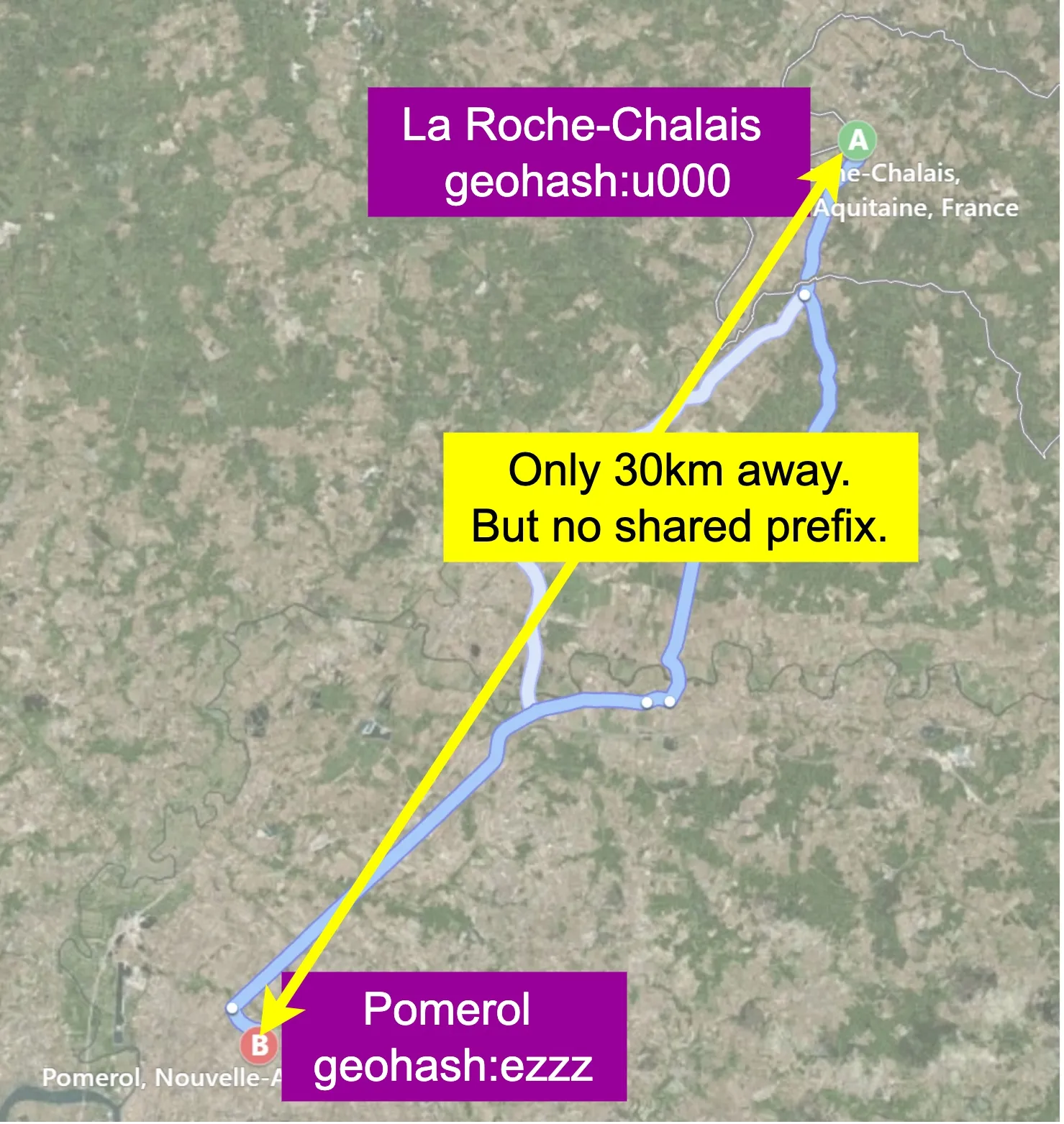
- Two close locations on opposite sides of the equator/meridian share no prefix (e.g.
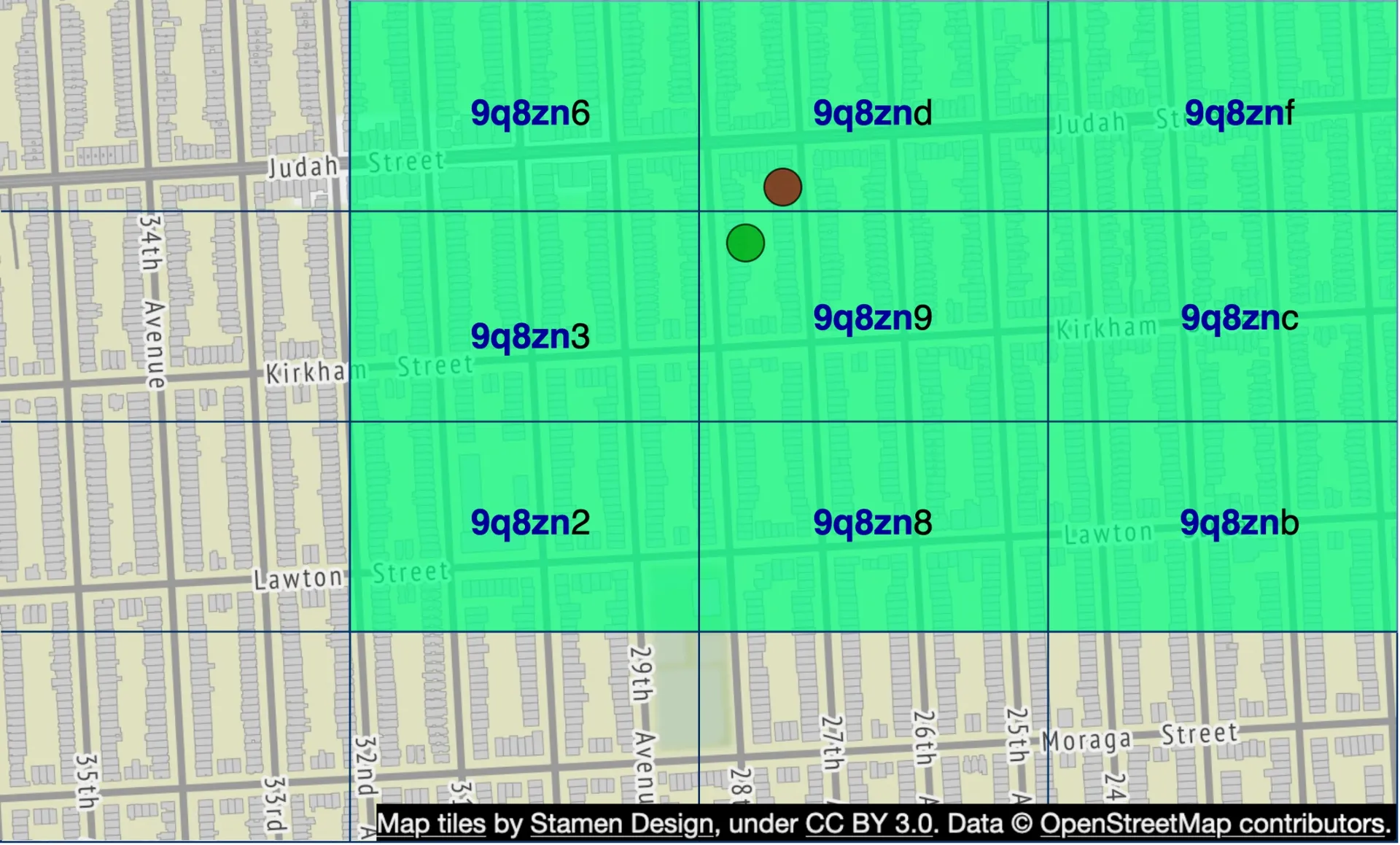
u000andezzz30km apart in France) - A long shared prefix doesn't guarantee the same grid: must also query neighbor grids
- Solution: fetch from the current grid + all 8 neighbors. Neighbor geohashes computable in constant time
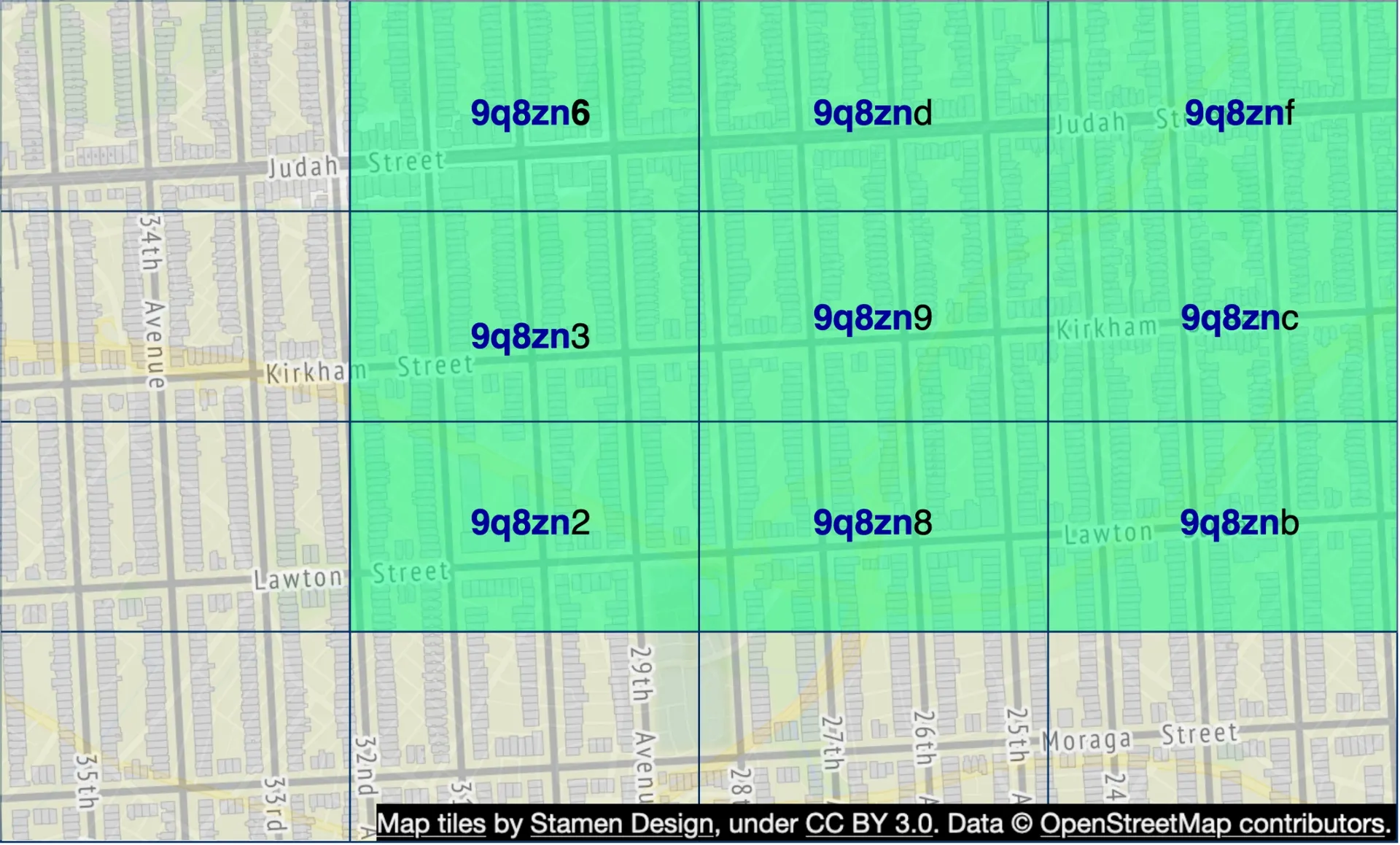
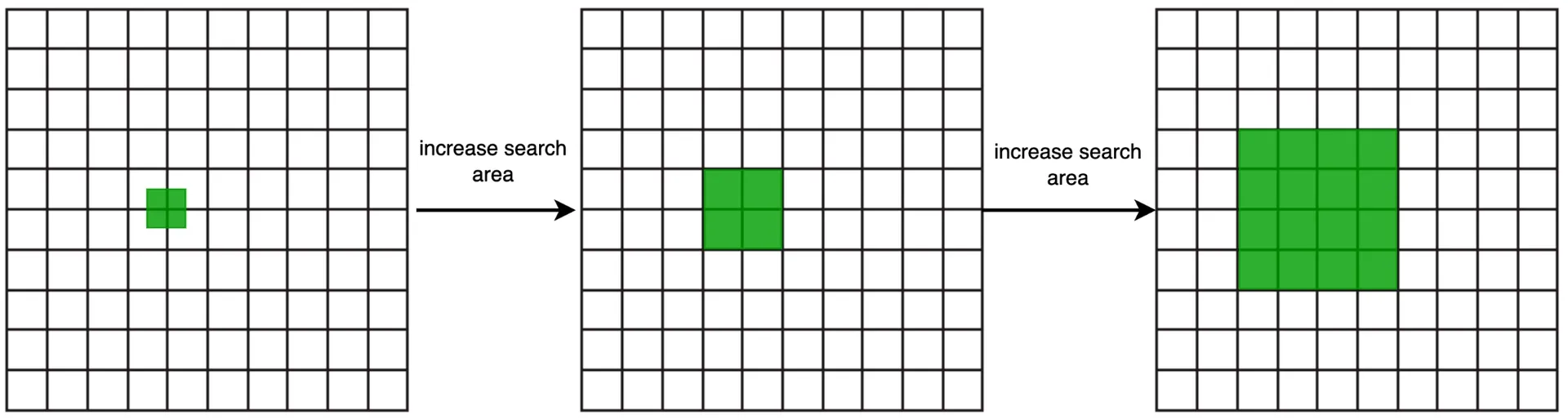
Not enough businesses: remove the last geohash digit to expand the search radius gradually until enough results are returned.
Option 4: Quadtree
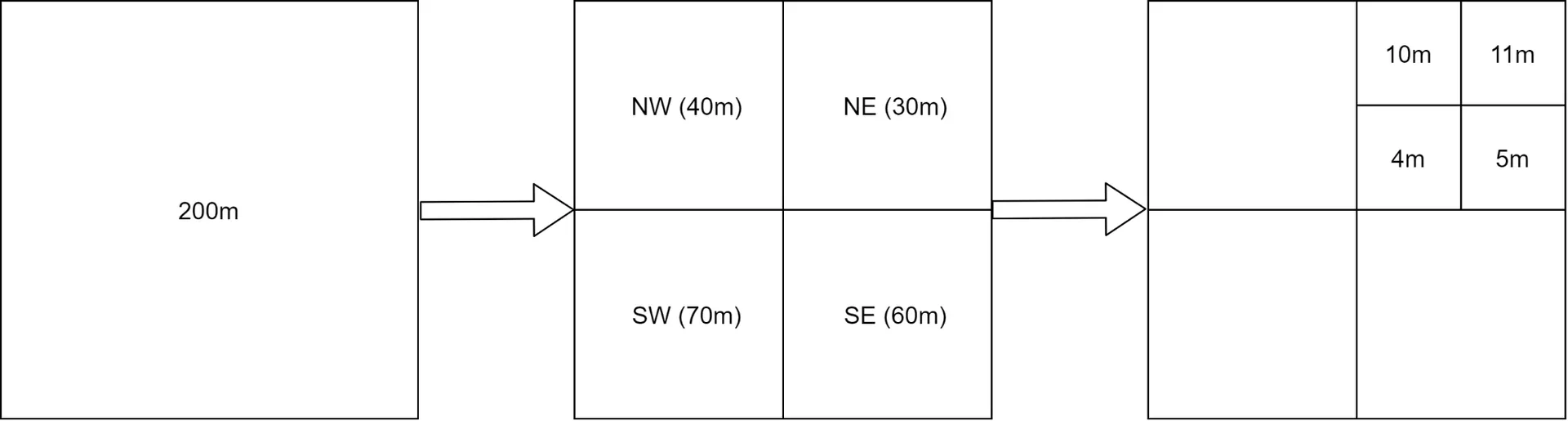
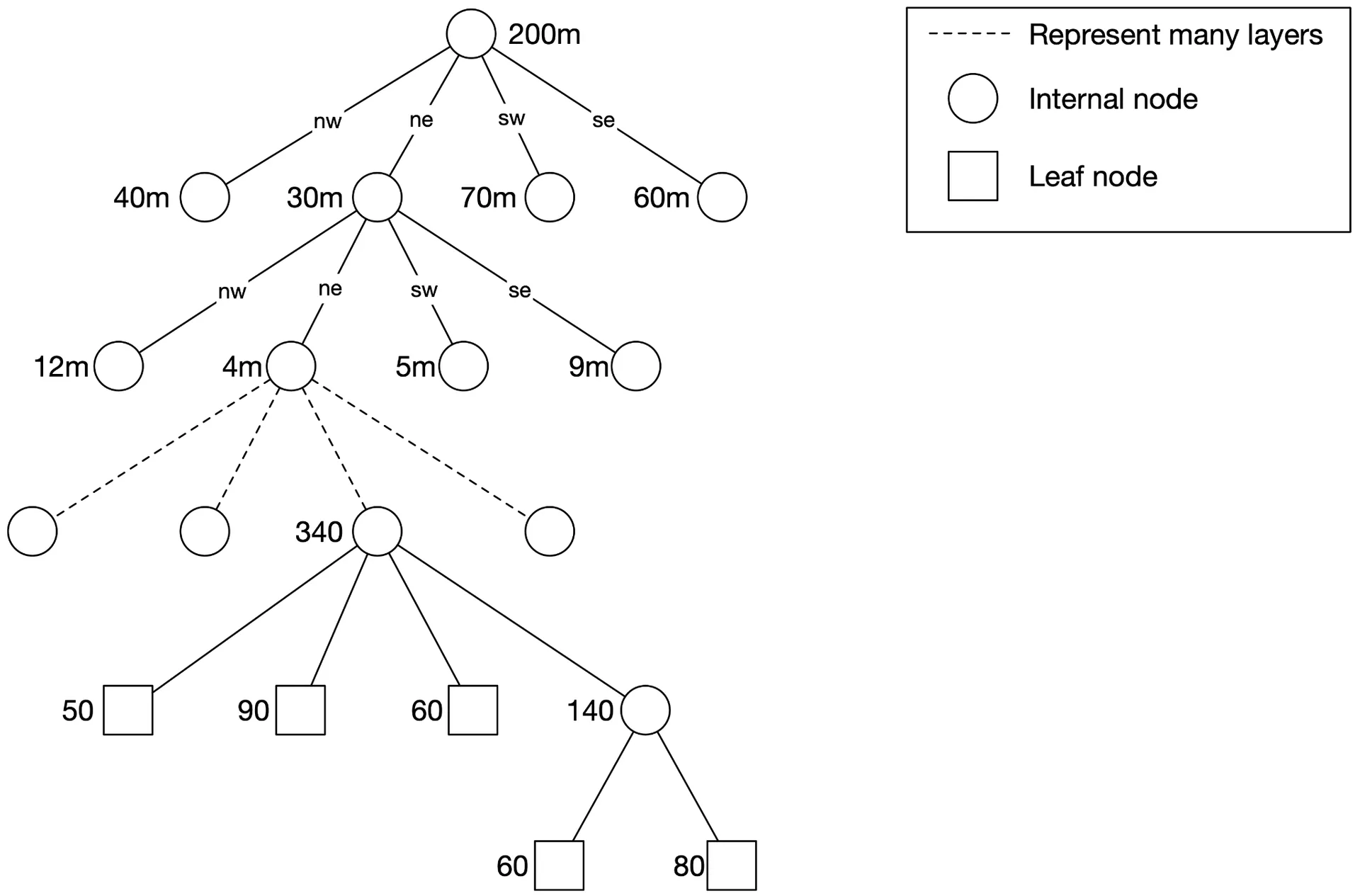
In-memory data structure (NOT a database). Recursively subdivides 2D space into 4 quadrants until a grid has ≤ N businesses (e.g. ≤100).
Memory estimation (200M businesses):
- Leaf nodes: ~200M / 100 = ~2M
- Internal nodes: ~0.67M (≈ 1/3 of leaf nodes)
- Leaf node size: 832 bytes (32B coords + 8B × 100 business IDs)
- Internal node size: 64 bytes (32B coords + 32B child pointers)
- Total: ~1.71 GB. Fits in one server's memory
Build time: O(n/100 log(n/100)): several minutes for 200M businesses.
Operational considerations:
- Long server start-up → incremental rollout (subset of servers at a time) or blue/green deployment
- Updates: nightly rebuild (acceptable per "next day effective" agreement). On-the-fly update requires locking → complex
- Quadtree supports k-nearest queries (unlike geohash's fixed radius). Dynamically adjusts grid size by density
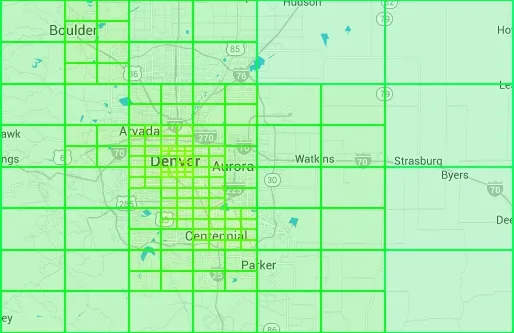 : Real-world quadtree near Denver
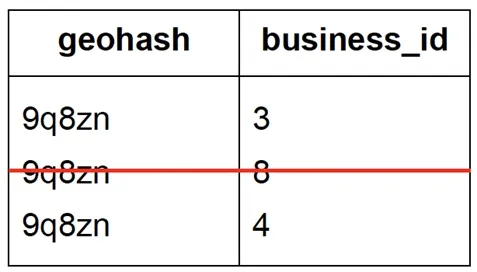 : Remove a business from geohash index
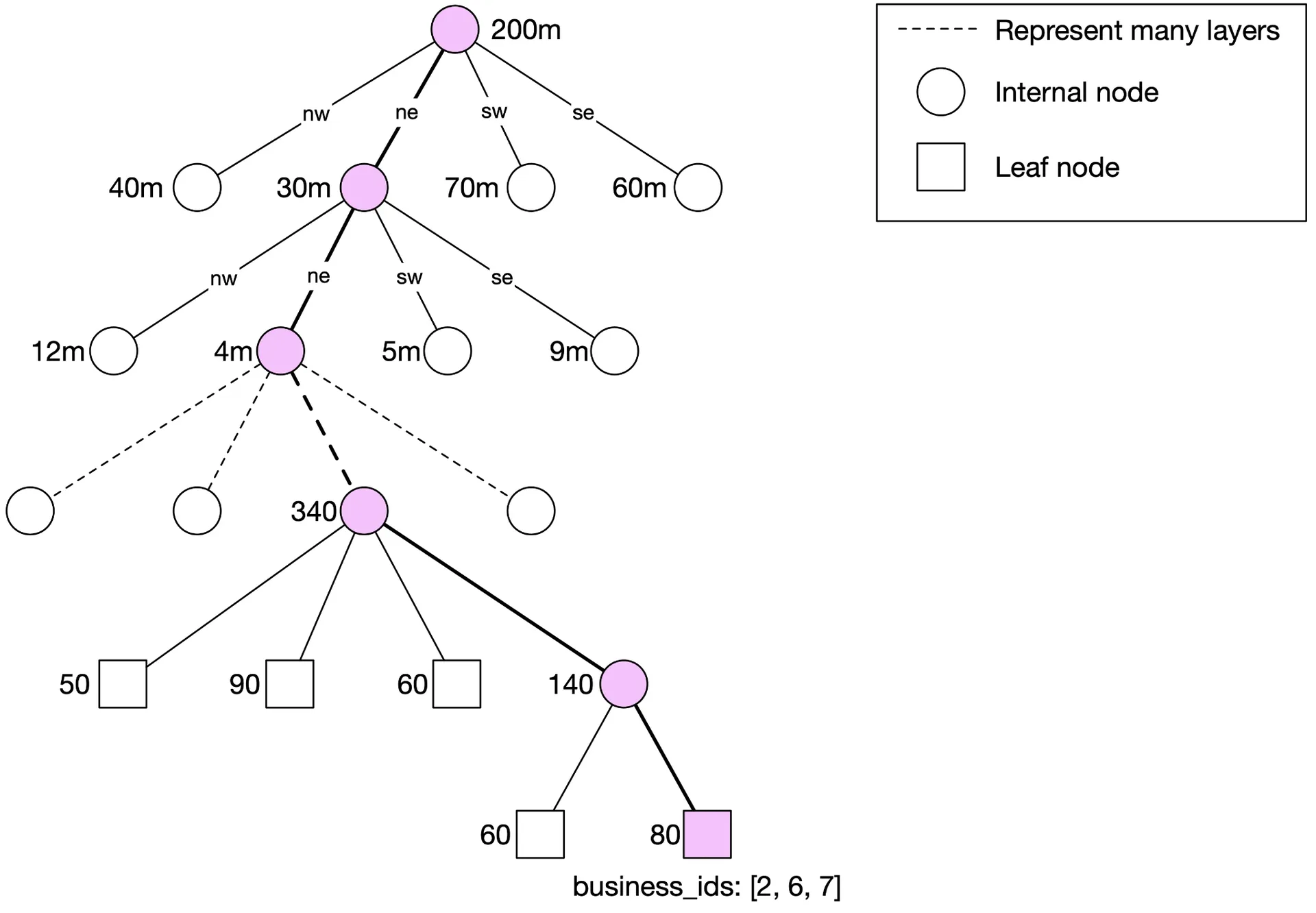 : Update quadtree (O(log n) but needs locking)
Option 5: Google S2
Maps the sphere to a 1D index via the Hilbert curve. Two close points on the curve are close in 1D. Advantages: geofencing with arbitrary areas at varying levels; flexible Region Cover algorithm (min/max level + max cells).
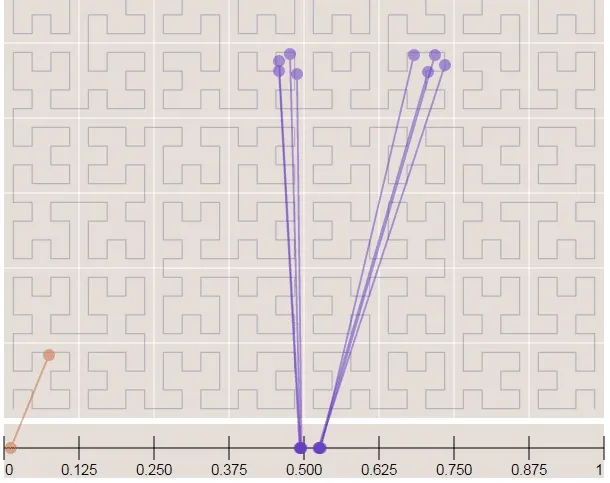 : Hilbert curve
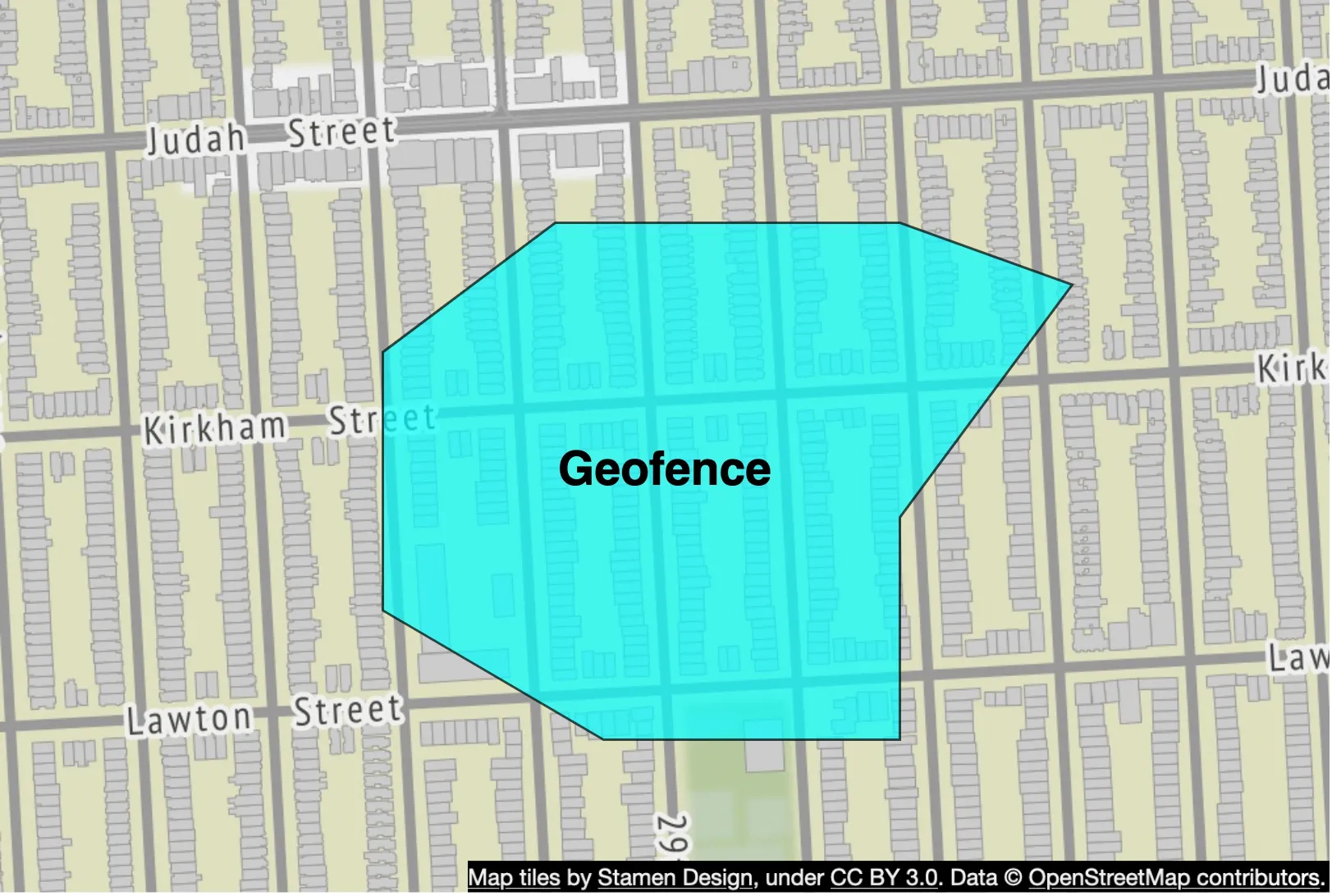 : Geofence
Industry adoption
| Geo Index | Companies |
|---|---|
| Geohash | Bing Maps, Redis, MongoDB, Lyft |
| Quadtree | Yext |
| Both | Elasticsearch |
| S2 | Google Maps, Tinder |
Geohash vs Quadtree comparison
Geohash: easy to implement; fixed precision → fixed grid size; simple index updates (remove row); supports radius-based queries.
Quadtree: harder (tree build needed); supports k-nearest queries; dynamic grid sizing by density; updating is O(log n) but complex with locking.
Recommendation for the interview: choose geohash or quadtree (S2 too complex to explain).
Step 3 of 4: Design deep dive
Goal: scale the DB, caching, regions, filtering.
Scale the database
Business table: shard by business_id: even load distribution, easy to maintain.
Geospatial index table (geohash-based): two schema options:
- Option 1: single row per geohash with a JSON array of business IDs: complex updates (scan array, lock row, handle duplicates)
- Option 2: compound key
(geohash, business_id)with one row per business: simple add/remove, no locking needed. Recommended
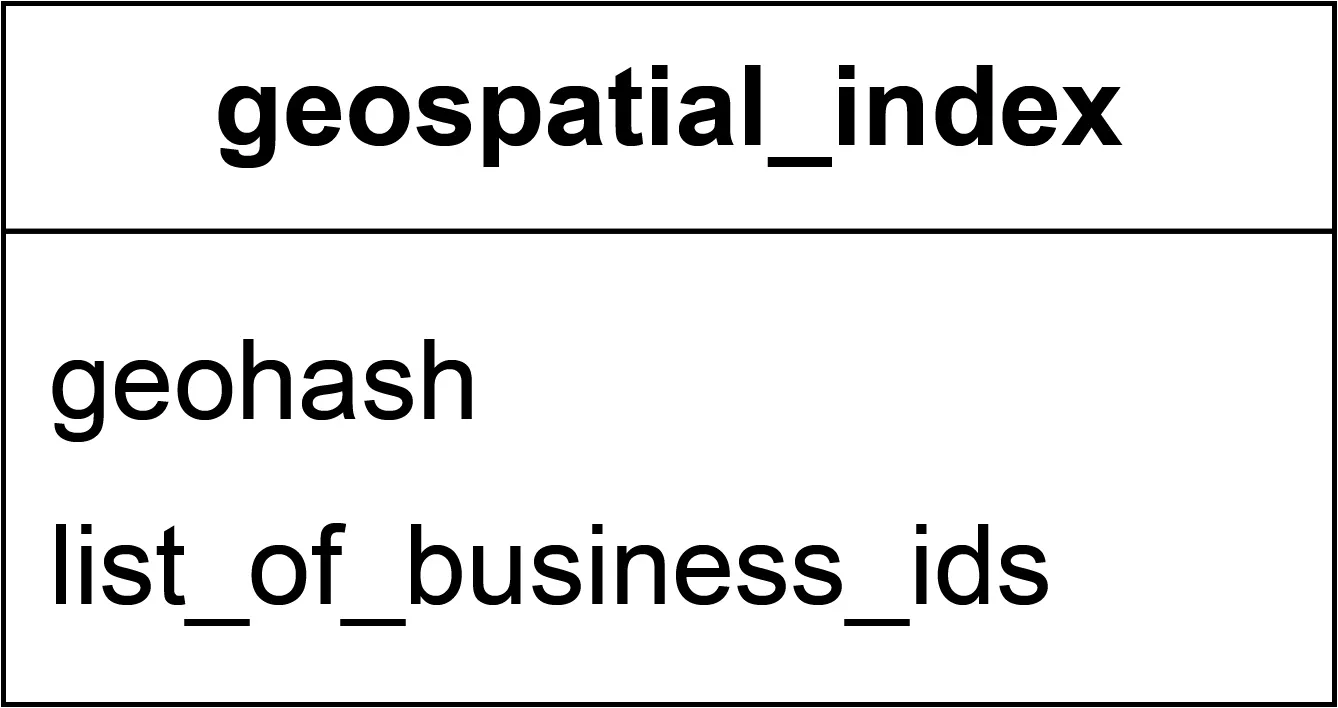
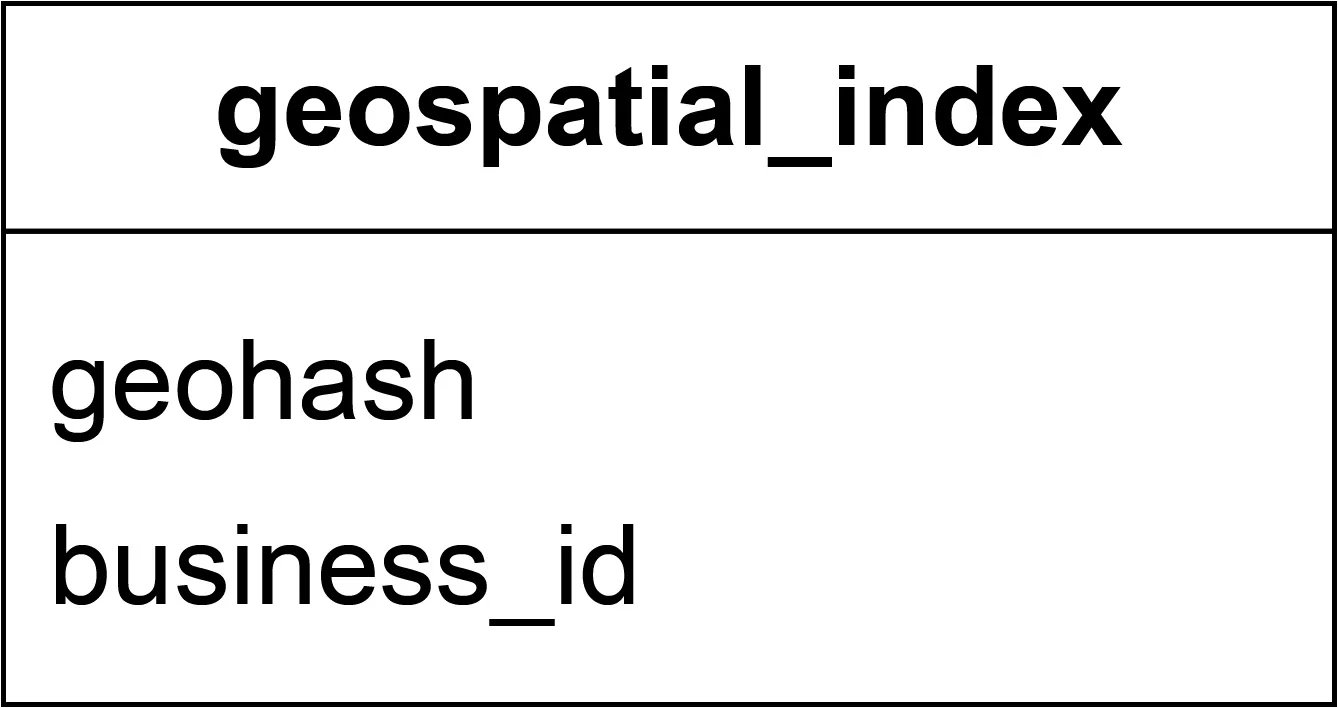
Scaling: the full geospatial index fits in the working set of a modern DB (~1.71GB). No need to shard: use read replicas instead. Sharding adds application-layer complexity unnecessarily.
Caching
Heavily read-heavy, small dataset → DB queries are already fast. Caching requires careful benchmarking. If beneficial:
Cache key: geohash (not raw lat/lng, which varies slightly with each reading). Small location changes map to the same geohash.
Cache data types:
| Key | Value |
|---|---|
| geohash | List of business IDs |
| business_id | Business object |
Memory for Redis geohash cache (3 precisions):
- 8 bytes × 200M × 3 = ~5 GB
- One modern Redis server sufficient; deploy a global Redis cluster for HA and low cross-continent latency
- Radii mapping: 500m→geohash_6, 1km/2km→geohash_5, 5km→geohash_4
Business info cache: key = business_id, value = business object. Updated nightly via batch job.
Region and availability zones
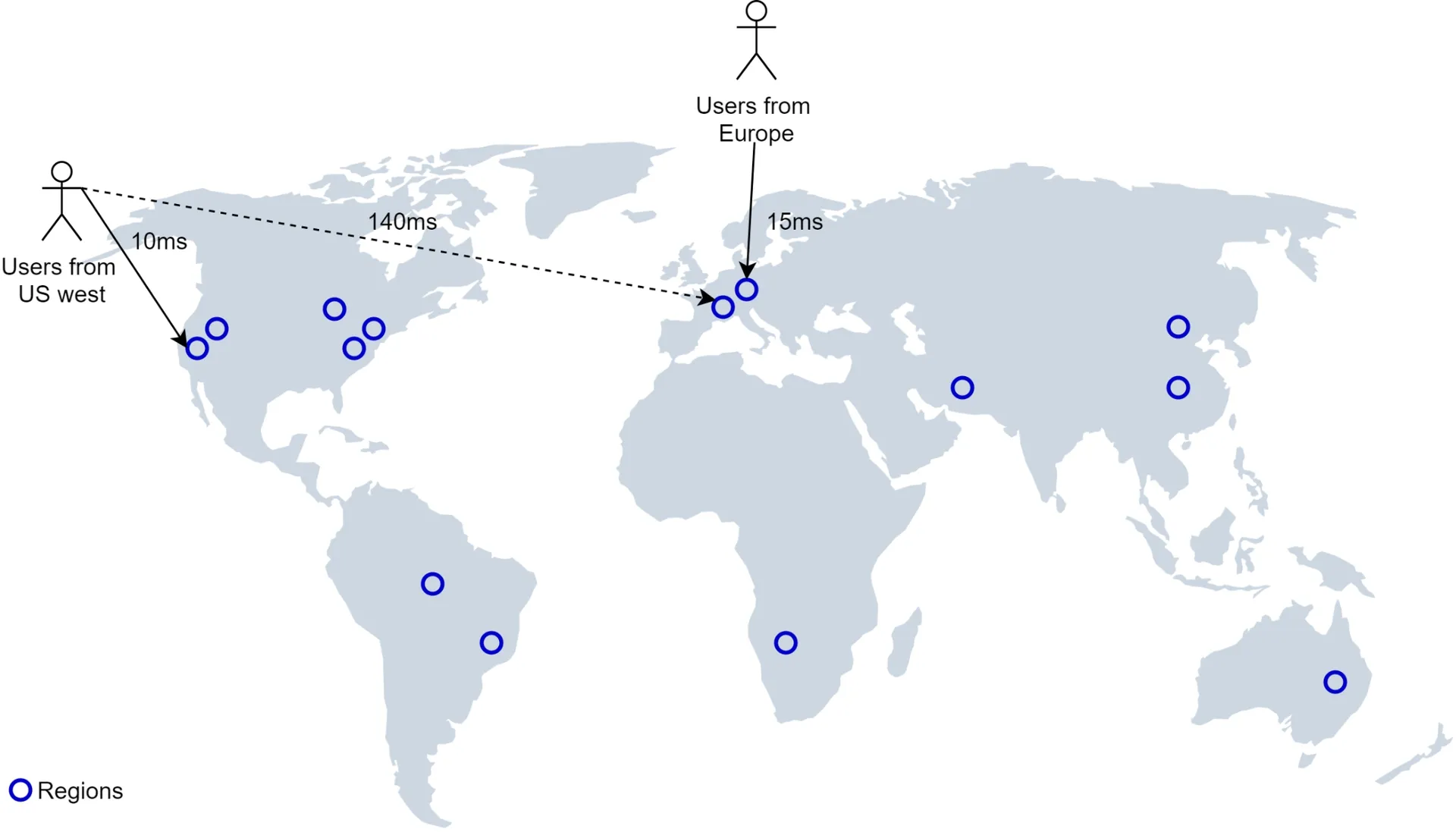
Deploy LBS to multiple regions:
- Users physically closer to servers
- Spread traffic across dense regions (Japan, Korea → separate regions or multi-AZ)
- Comply with local privacy laws (country-specific deployments via DNS routing)
Filter results by time or business type
Return business IDs first, hydrate business objects, then filter on opening time/type. The result set is small enough (per-grid) for this approach.
Final design diagram
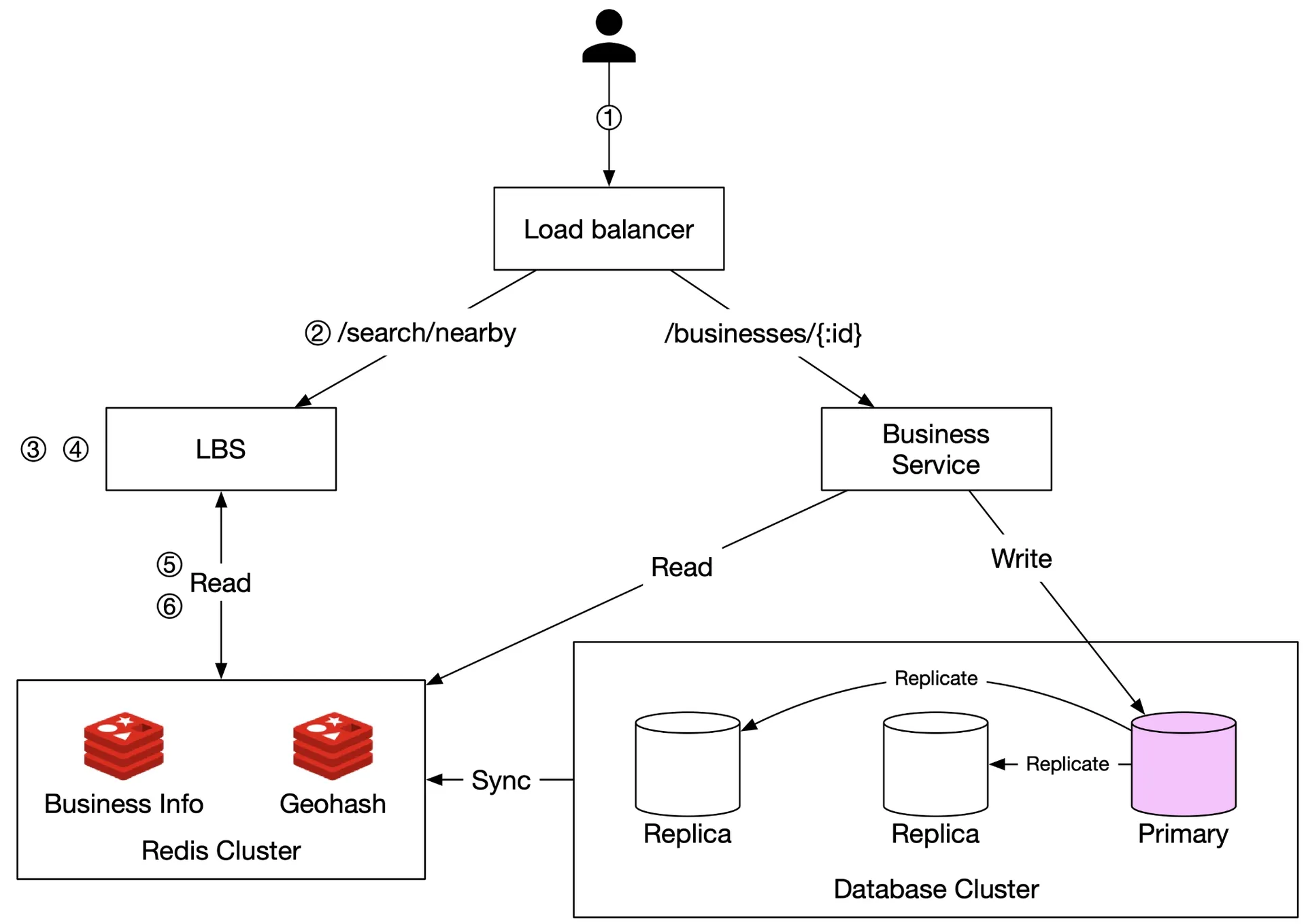
Figure 21: Design diagram
Flow for nearby search (500m radius example):
- Client sends (lat=37.776720, lng=-122.416730, radius=500m) to load balancer
- LBS receives request
- LBS maps 500m → geohash length 6 (per Table 5)
- LBS computes neighboring geohashes → list of 9 geohashes
- LBS fetches business IDs from "Geohash" Redis (parallel calls per geohash)
- LBS fetches hydrated business info from "Business info" Redis, computes distances, ranks, returns to client
Business CRUD flow: business service handles all. Checks the "Business info" cache first; falls back to DB. Cache updated nightly.
Step 4 of 4: Wrap up
What we designed:
- Geospatial indexing options covered: 2D search, even grid, geohash, quadtree, Google S2 (geohash chosen for simplicity)
- Caching with Redis reduces latency
- Database scaled via replication and sharding
- Multi-region deployment for availability, latency, and privacy compliance