Design YouTube
6 min read- What it is: upload + watch videos; 5M DAU, avg video 300 MB, max 1 GB: use cloud CDN + blob storage (don't build from scratch)
- Numbers: 150 TB/day storage; CDN cost ~150,000/day(US,150,000/day (US, 0.02/GB)
- Two flows: upload (actual video → original storage → transcode → CDN) runs parallel with metadata update
- Transcoding is a DAG: inspection → encodings/thumbnails/watermark, executed by 6 components (preprocessor → DAG scheduler → resource manager → workers)
- Optimizations: client-side GOP chunking (resumable uploads), pre-signed upload URLs, message queues between stages
- Cost: serve only popular videos from CDN (long-tail distribution), own CDN + ISP partnerships
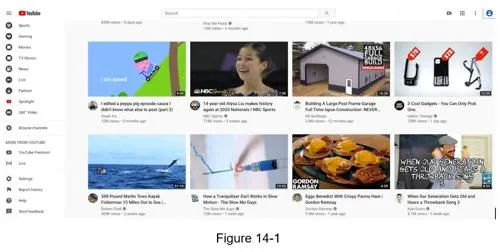
YouTube stats (2020): 2B MAU, 5B videos watched/day, 50M creators, $15.1B ad revenue, 37% of mobile internet traffic, 80 languages.
Step 1 of 4: Understand the problem and establish design scope
Goal: lock in requirements and scale numbers.
Requirements:
- Core features: upload videos and watch videos
- Clients: mobile apps, web browsers, smart TV
- 5 million DAU, avg 30 min/day
- International users supported
- Accepts most video resolutions and formats
- Encryption required
- Max video size: 1 GB
- Leverage existing cloud infrastructure (CDN, blob storage)
Back of the envelope estimation:
- 5M DAU × 5 videos/day watched
- 10% of users upload 1 video/day
- Avg video size: 300 MB
- Daily storage: 5M × 10% × 300 MB = 150 TB
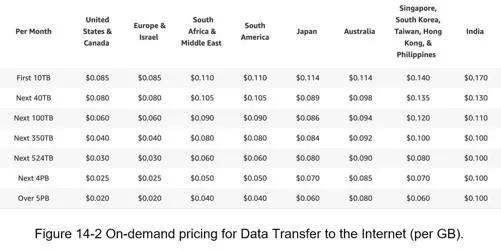
- CDN cost (US, 0.02/GB):5M×5×0.3GB×0.02/GB): 5M × 5 × 0.3GB × 0.02 = $150,000/day
Step 2 of 4: Propose high-level design and get buy-in
Goal: leverage the cloud: CDN + blob storage (building from scratch is too complex; even Netflix uses AWS, Facebook uses Akamai).
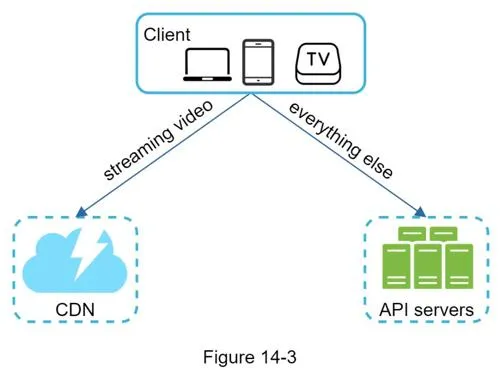
Three components: Client → CDN (video streaming) + API servers (everything else).
Video uploading flow
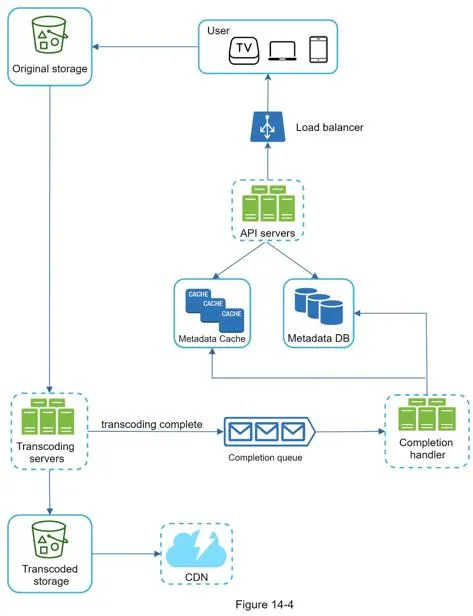
Components:
- Load balancer: distributes requests to API servers
- API servers: all non-streaming requests
- Metadata DB: video metadata (sharded, replicated)
- Metadata cache: video metadata + user objects
- Original storage: blob storage for source videos
- Transcoding servers: convert videos to different formats/bitrates
- Transcoded storage: blob storage for processed videos
- CDN: caches and serves videos
- Completion queue + Completion handler: message queue tracking transcoding completion; workers update metadata cache/DB
Two parallel processes:
Flow A: Upload actual video:
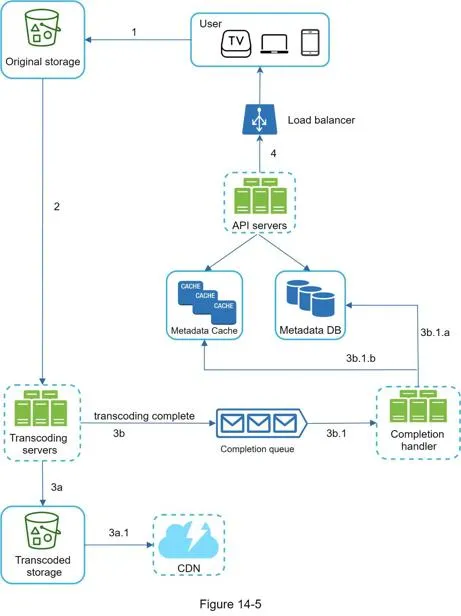
- Video uploaded to original storage → 2. Transcoding servers fetch and transcode → 3a. Transcoded videos → transcoded storage → CDN; 3b. Completion events → completion queue → completion handler updates metadata DB/cache → 4. API servers notify client
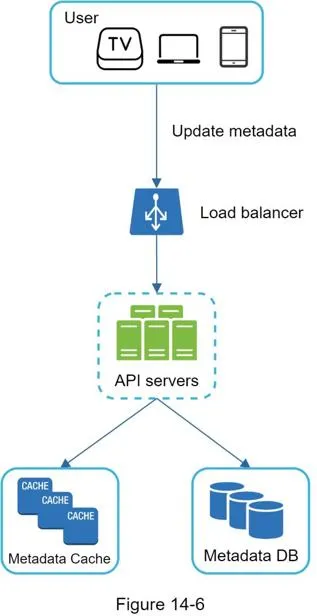
Flow B: Update metadata: client sends metadata (filename, size, format) in parallel; API servers update metadata cache + DB.
Video streaming flow
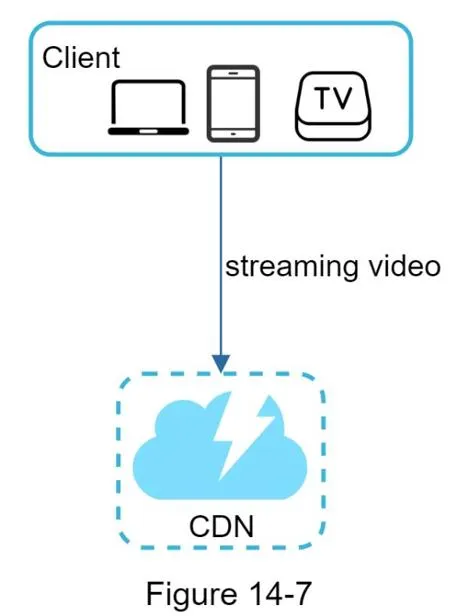
Streaming protocol options: MPEG-DASH, Apple HLS, Microsoft Smooth Streaming, Adobe HDS. Videos streamed directly from the CDN edge server closest to the user → minimal latency.
Step 3 of 4: Design deep dive
Goal: transcoding pipeline (DAG), optimizations, safety, cost.
Video transcoding
Why transcode:
- Raw video is huge: 1hr HD at 60fps → hundreds of GB
- Device/browser compatibility requires multiple formats
- Adaptive bitrate: high-res for high bandwidth, low-res for low bandwidth
- Network conditions change → auto/manual quality switching
Video format anatomy:
- Container: file extension (.avi, .mov, .mp4): wraps video, audio, metadata
- Codecs: compression algorithms: H.264, VP9, HEVC
Directed Acyclic Graph (DAG) model
Transcoding is computationally expensive. DAG defines tasks in stages for sequential/parallel execution (inspired by Facebook's SVE).
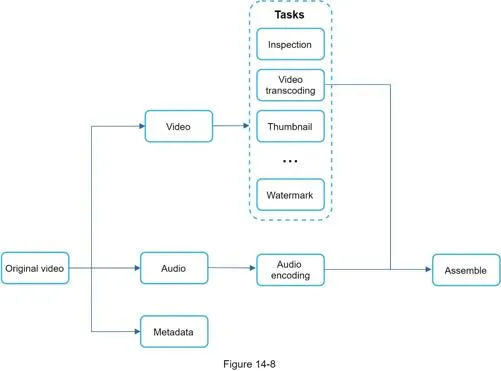
Tasks:
- Inspection: quality check, malformed detection
- Video encodings: different resolutions, codecs, bitrates
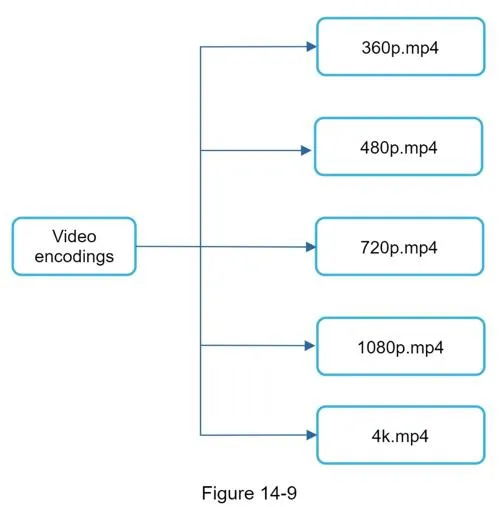
- Thumbnail: user-uploaded or auto-generated
- Watermark: identifying image overlay
Video transcoding architecture
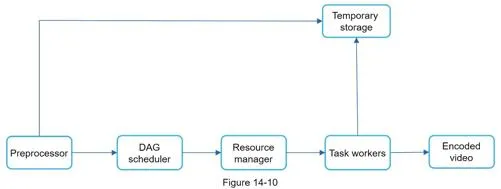
Six components:
Preprocessor:
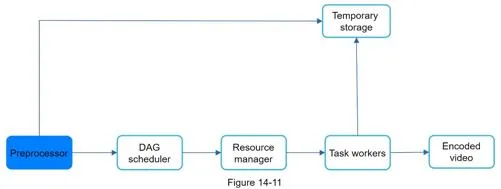
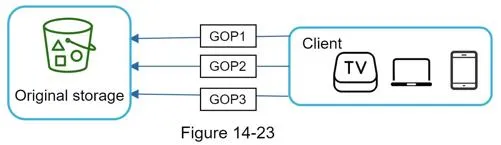
- Video splitting: split into GOP (Group of Pictures) chunks: each a few seconds, independently playable
- Handles old clients that can't split videos
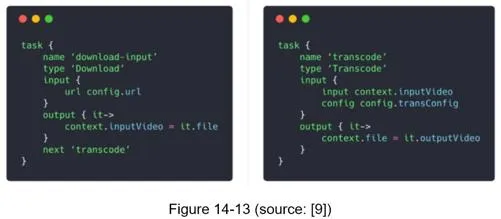
- DAG generation: from client programmer config files
- Cache data: store GOPs and metadata in temporary storage for retry on failure
DAG scheduler:
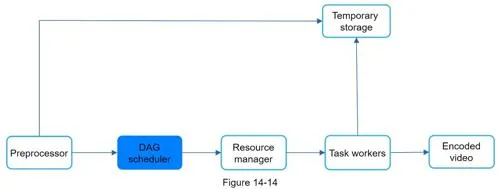
Splits DAG into task stages, puts them in the resource manager's task queue.
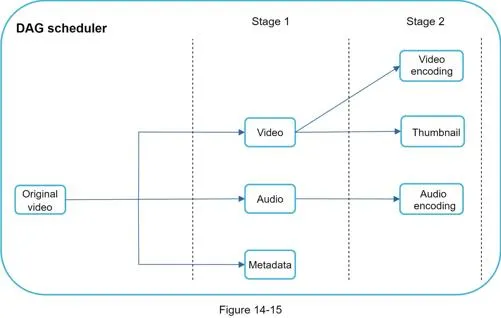
Example. Stage 1: video, audio, metadata split. Stage 2: video encoding + thumbnail from video; audio encoding from audio.
Resource manager:
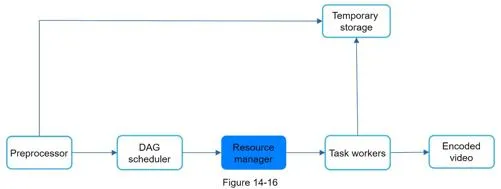
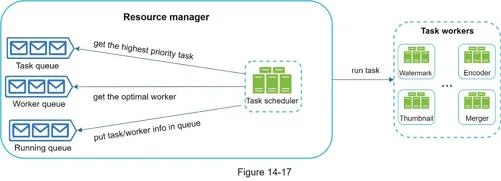
Three queues: Task queue (priority), Worker queue (worker utilization), Running queue (active task/worker bindings). Task scheduler picks the optimal task+worker, instructs execution.
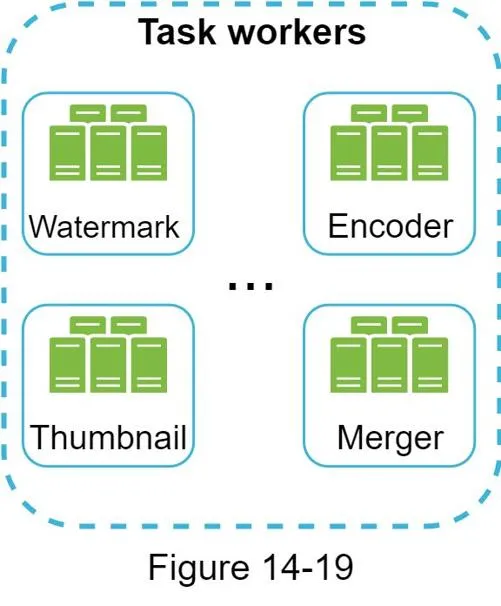
Task workers:
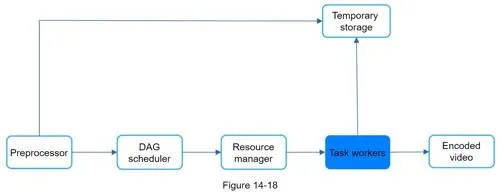
Run DAG-defined tasks. Different workers for different task types.
Temporary storage:
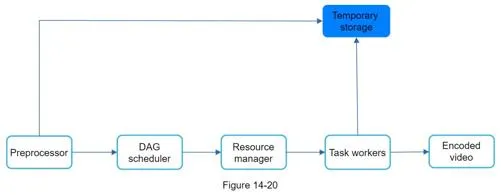
Multiple storage types: metadata in memory (small, frequent access); video/audio in blob storage. Freed after processing completes.
Encoded video:
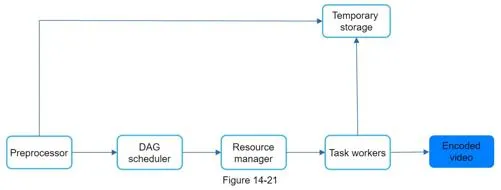
Final output, e.g. funny_720p.mp4.
System optimizations
Speed: Parallelize video uploading: split video into GOP chunks client-side. Enables fast resumable uploads.

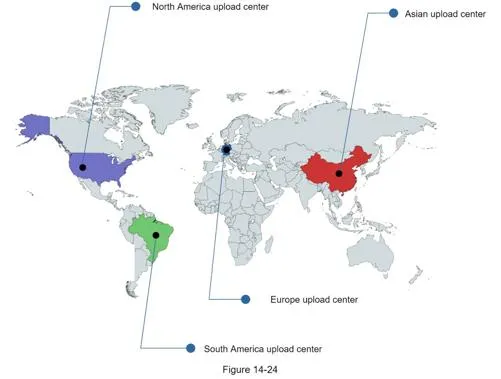
Speed: Upload centers close to users: multiple upload centers globally via CDN.
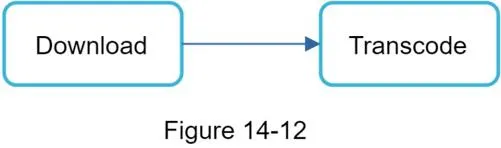
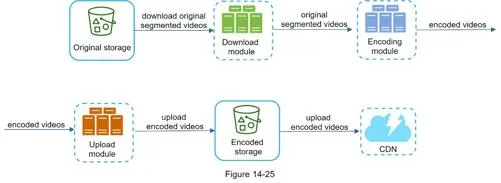
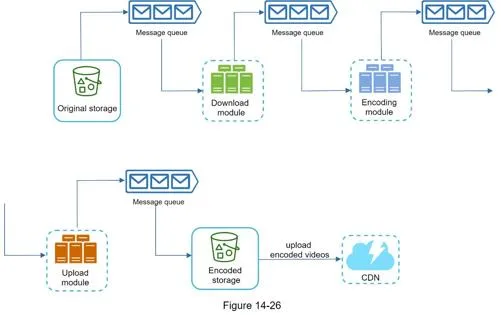
Speed: Parallelism everywhere: introduce message queues between processing stages to decouple modules. The encoding module doesn't wait for the download module's output: it processes events from the queue in parallel.
Safety: Pre-signed upload URL:
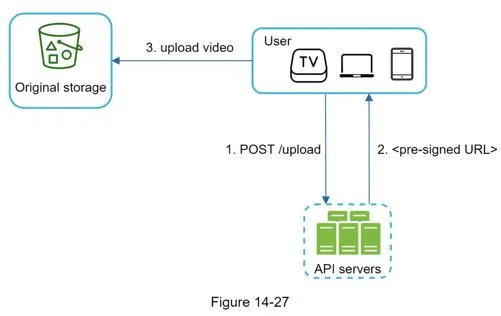
- Client requests a pre-signed URL from the API server → 2. API server returns URL → 3. Client uploads directly. Only authorized users can upload to the correct location (Amazon S3: "pre-signed URL"; Azure: "Shared Access Signature")
Safety: Protect videos:
- DRM: Apple FairPlay, Google Widevine, Microsoft PlayReady
- AES encryption: decrypt on playback; only authorized users
- Visual watermarking: company logo/name overlay
Cost-saving:
YouTube videos follow a long-tail distribution: few popular, many rarely viewed.
- Only serve popular videos from CDN; rest from high-capacity video servers
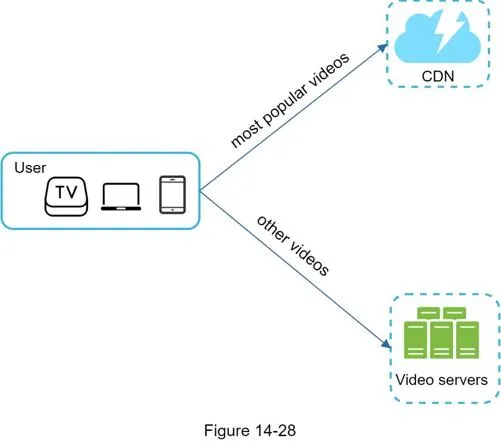
- Fewer encoded versions for less popular content; encode short videos on-demand
- Don't distribute region-specific popular videos globally
- Build your own CDN + partner with ISPs (Netflix model)
Error handling
| Component | Error handling |
|---|---|
| Upload | Retry a few times |
| Split video | Old clients: server-side splitting |
| Transcoding | Retry |
| Preprocessor | Regenerate DAG |
| DAG scheduler | Reschedule task |
| Resource manager queue | Use replica |
| Task worker | Retry on new worker |
| API server | Stateless → redirect to other server |
| Metadata cache | Multi-replica; replace dead node |
| Metadata DB master | Promote slave to master |
| Metadata DB slave | Use other slave + bring up replacement |
Step 4 of 4: Wrap up
Additional talking points:
- Scale API tier: stateless → easy horizontal scaling
- Scale database: replication and sharding
- Live streaming: higher latency requirements, lower parallelism needs, different error handling (no slow retries)
- Video takedowns: copyright violations, pornography: system detection on upload + user flagging
[1] YouTube by the numbers (Omnicore) [2] YouTube Demographics (HubSpot) [3] CloudFront Pricing [4] Netflix on AWS [5] Akamai [6] Binary large object (Wikipedia) [7] Streaming Protocols (Dacast) [8] SVE: Distributed Video Processing at Facebook Scale [9] Weibo video processing architecture (Chinese) [10] Shared Access Signature (Azure) [11] YouTube scalability talk [12] Characteristics of internet short video sharing (arXiv) [13] Content Popularity for Open Connect (Netflix)