Google Maps
6 min read- What it is: simplified Google Maps: location updates, navigation + ETA, map rendering (mobile-first)
- Scale: ~7,200 nav QPS (peak 36K); location updates ~200K QPS batched (peak 1M); ~100 PB of tiles
- Three building blocks: precomputed map tiles via CDN, routing tiles (3 hierarchy levels) for A* pathfinding, Cassandra + Kafka for locations
- Routing: geohash → routing tiles → A* with on-demand neighbor loading; switch to highway tiles via cross-resolution refs; ML ETA + ranker
- Adaptive ETA: track user → (current, parent, grandparent) tile; check only the largest tile: avoids O(n×m) scans
- Real-time updates: WebSocket (beats push/SSE for bidirectional last-mile)
Design a simplified Google Maps. Google Maps has 1B DAU, 99% world coverage, 25M location updates daily. Focus on: location update, navigation (including ETA), and map rendering. Primary devices: mobile phones.
Step 1 of 4: Understand the problem and establish design scope
Goal: lock in features, constraints, and scale.
Key features
- User location update
- Navigation service (including ETA)
- Map rendering
Scope notes: support driving, walking, bus modes. Multi-stop directions out of scope. Traffic conditions important for accurate ETA. Road data: TBs of raw data from external sources.
Non-functional requirements:
- Accuracy: no wrong directions
- Smooth navigation: smooth map rendering on client
- Data and battery: minimal data/energy usage on mobile
- General scalability and availability
Map 101
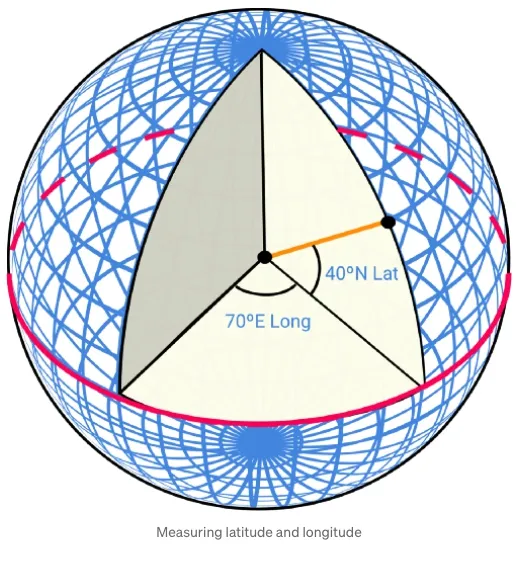
- Positioning: latitude (north/south), longitude (east/west)
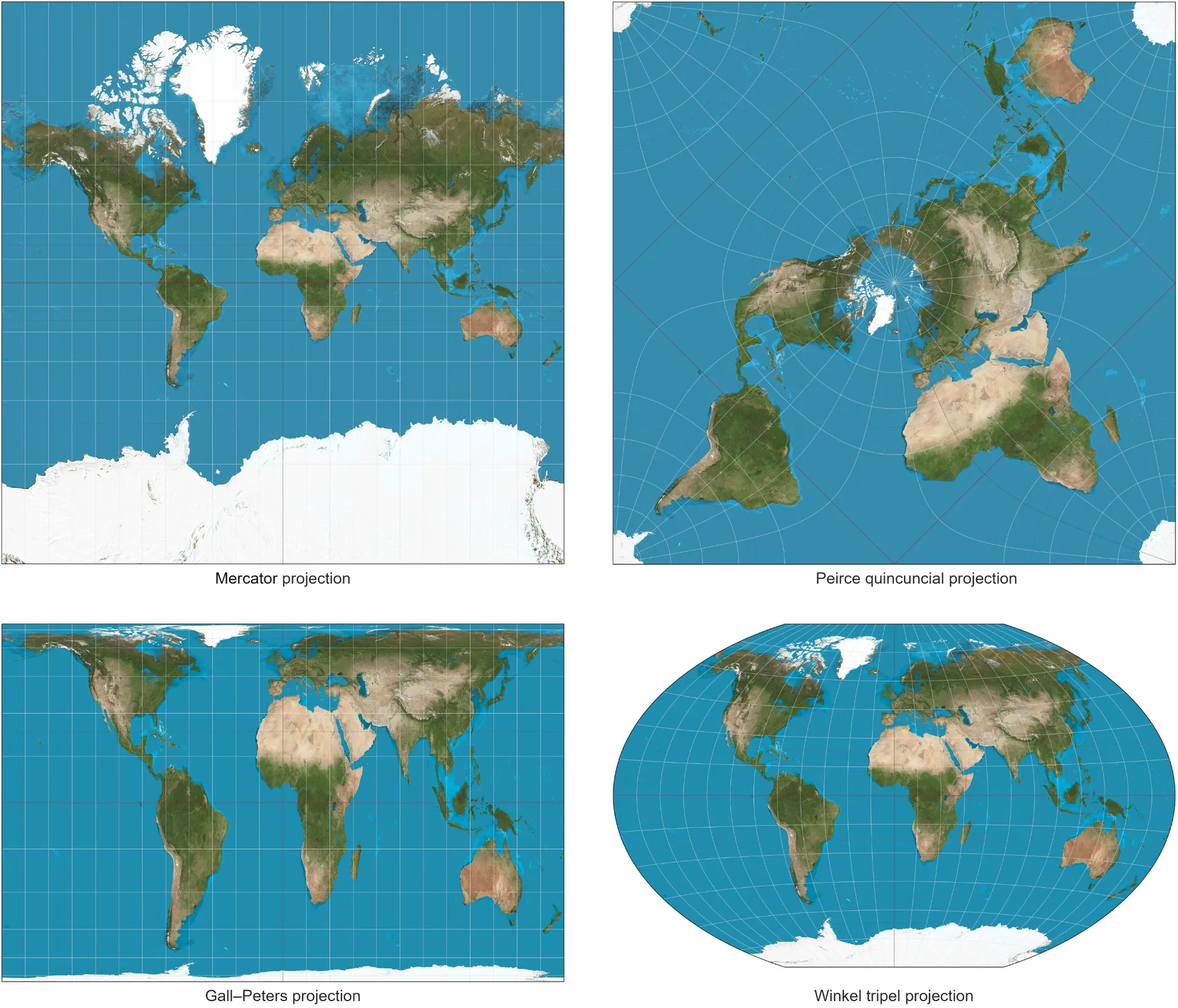
- Map projection: 3D globe → 2D plane. Google Maps uses Web Mercator (modified Mercator)
- Geocoding: address → lat/lng (e.g. "1600 Amphitheatre Parkway, Mountain View, CA" → 37.423021, -122.083739). Reverse geocoding: lat/lng → address. Uses interpolation from GIS data
- Geohashing: encodes a geographic area into a short string. Recursively divides grids into sub-grids. Used for map tiling in this design
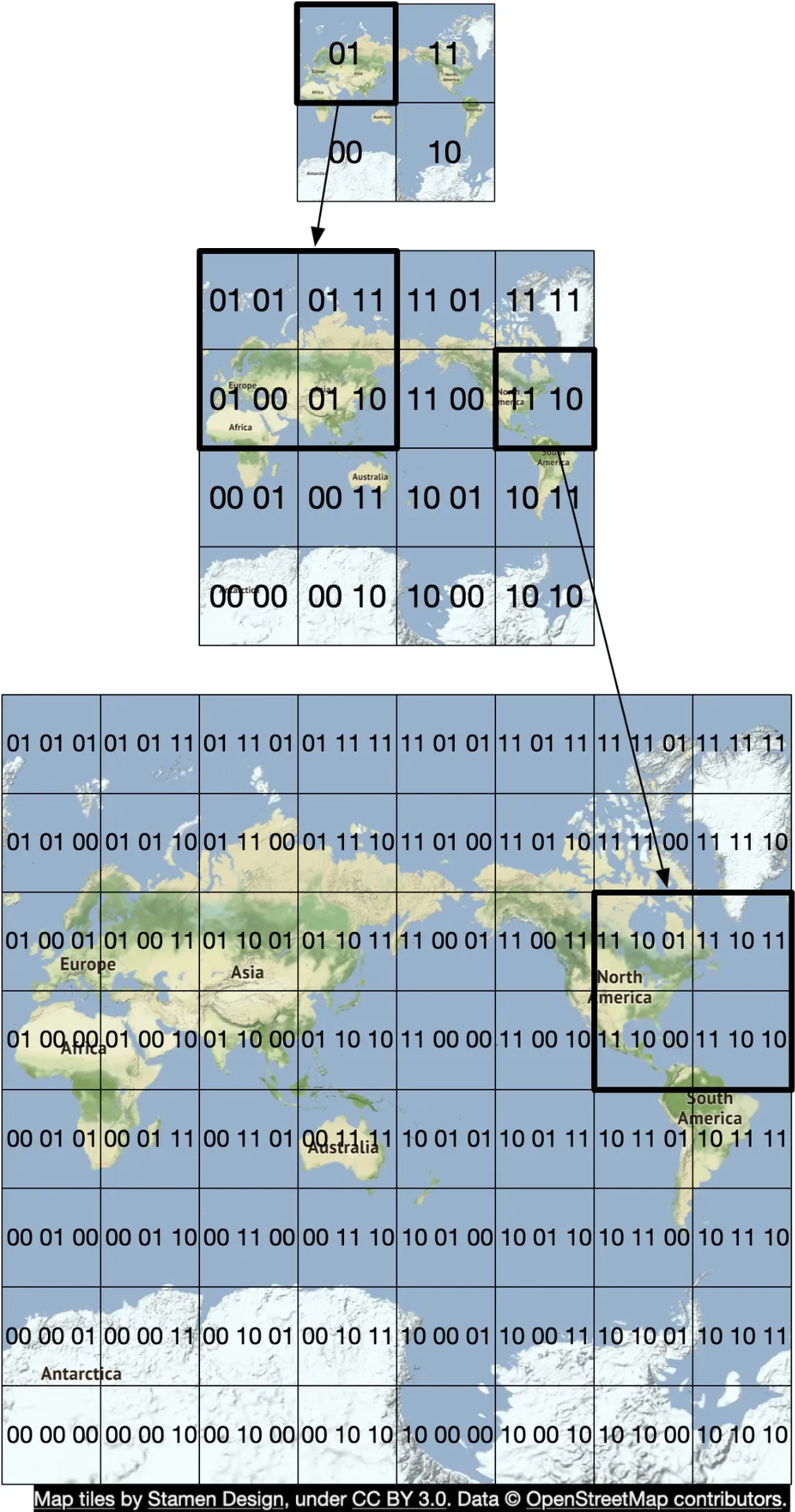
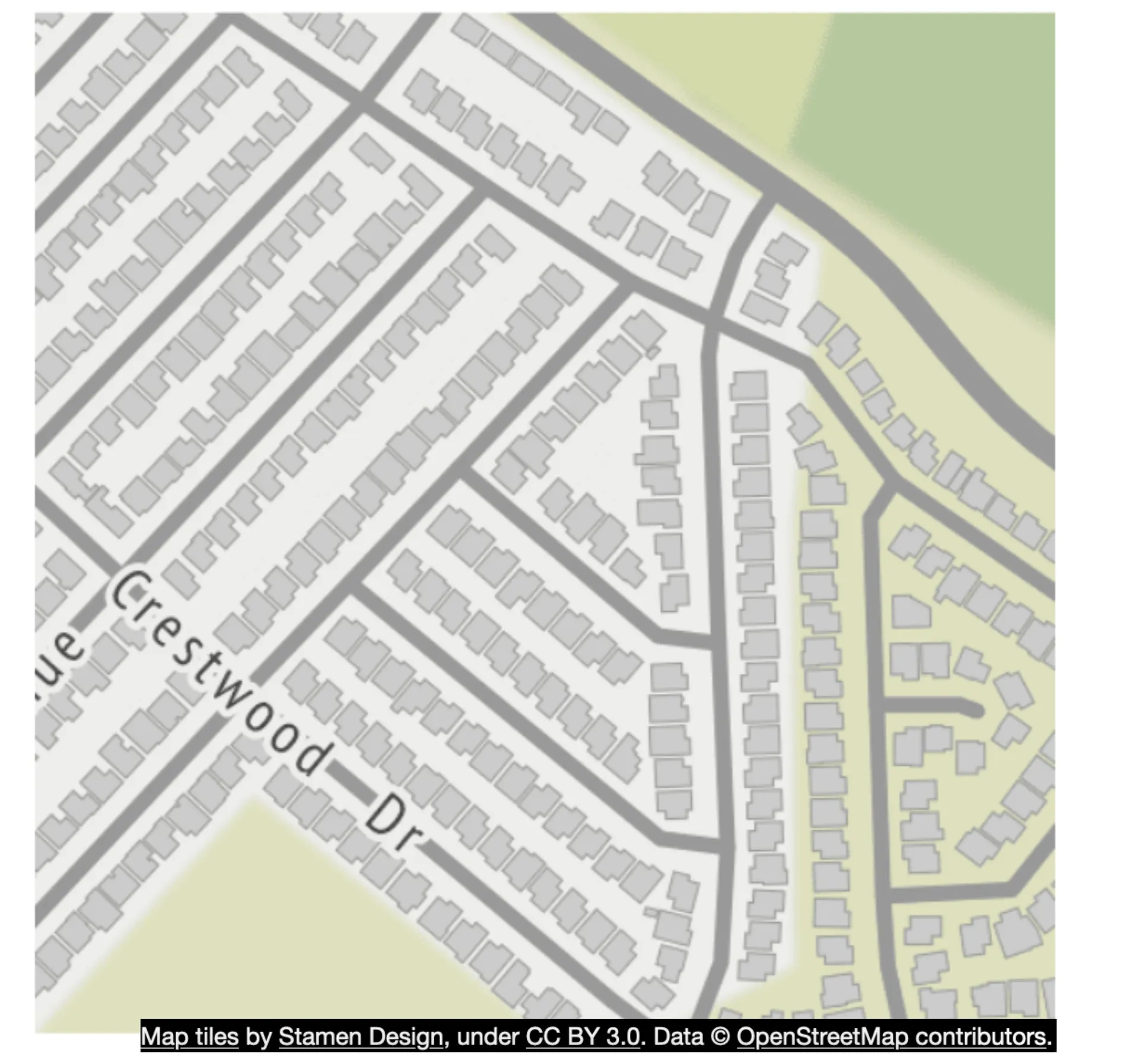
- Map rendering: the world is broken into tiles (256×256 px PNGs at different zoom levels). Client downloads only the relevant tiles for its viewport + zoom level and stitches them together
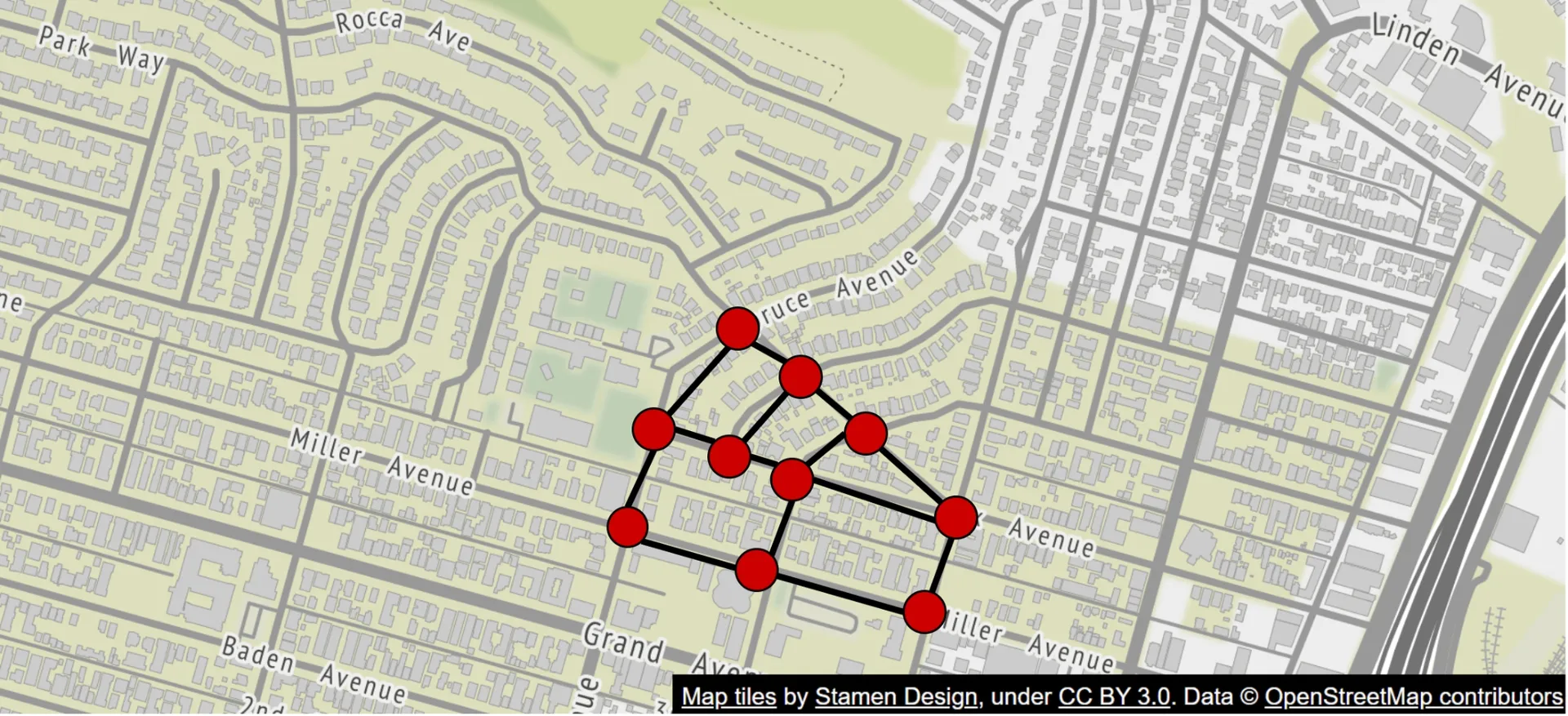
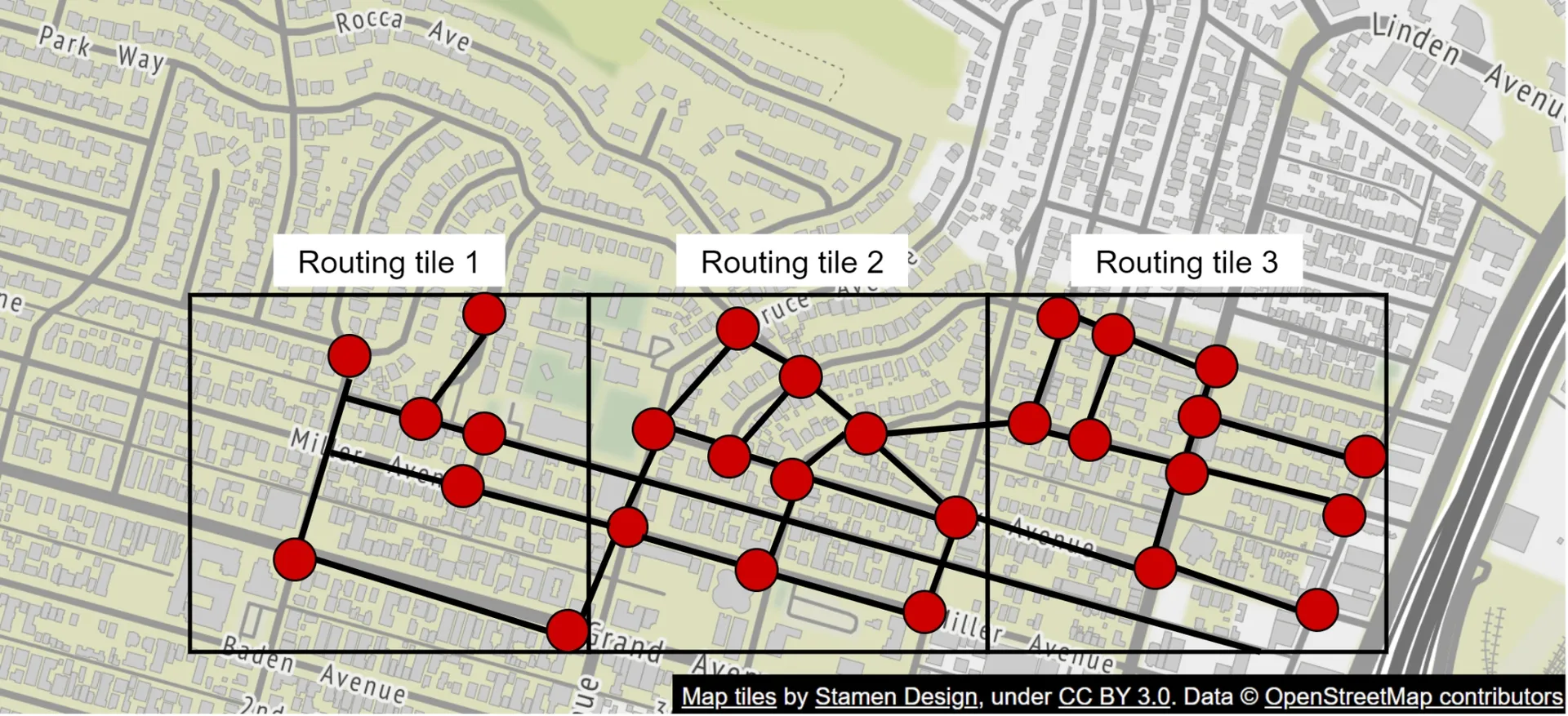
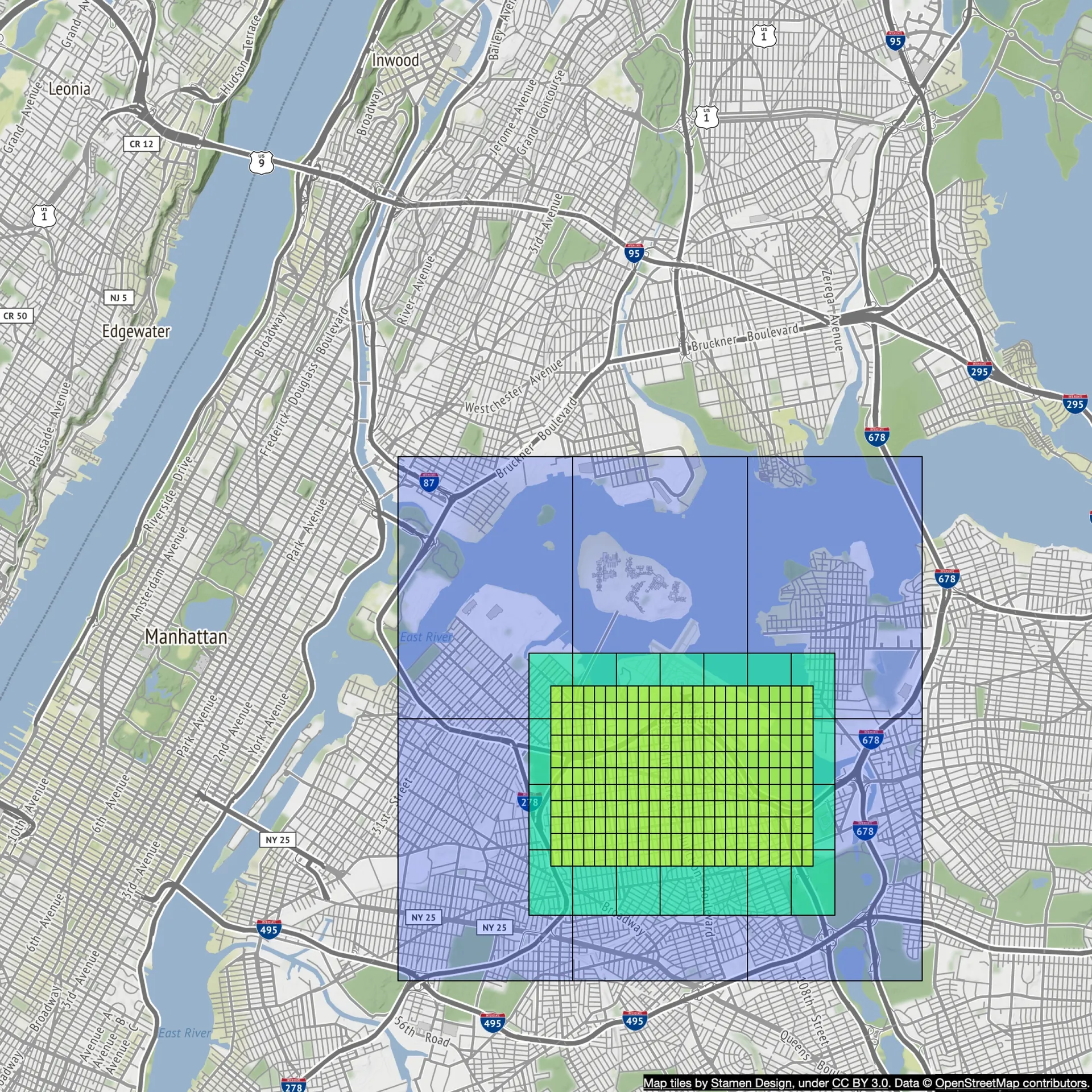
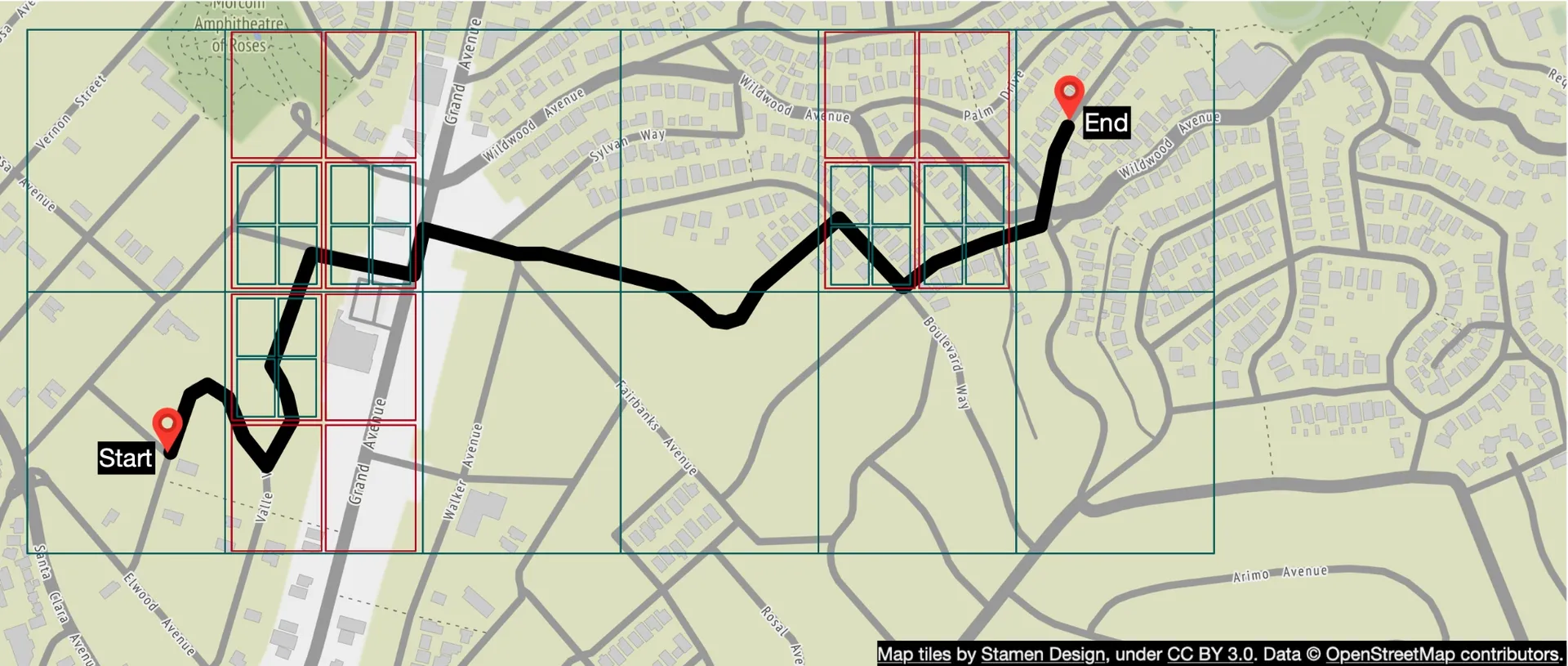
- Road data processing for navigation: routing algorithms (Dijkstra/A* variants) operate on graphs (intersections = nodes, roads = edges). World graph too large → break into routing tiles (binary files of road data per grid). Three hierarchical levels: local roads, arterial roads, major highways. Higher-level tiles cover larger areas with fewer details. Tiles reference connected tiles at the same/different zoom levels
Back-of-the-envelope estimation
Storage (map tiles):
- Zoom level 21: ~4.4 trillion tiles × 100KB = 440 PB raw
- ~90% is ocean/desert/mountain → highly compressible → reduce 80-90% → ~50 PB at highest zoom
- Each lower zoom = 4× fewer tiles. Total: 50 + 50/4 + 50/16 + ... = ~67 PB. Rough estimate: ~100 PB for all zoom levels
Server throughput:
- Navigation: 1B DAU × 5 trips/week ÷ 7 ÷ 10⁵ = ~7,200 QPS (avg). Peak: ~36,000 QPS (5×)
- Location updates: 5B nav minutes/day × 60 = 300B requests/day = 3M QPS (every 1s). Batched every 15s → 200,000 QPS (avg). Peak: ~1M QPS
Step 2 of 4: Propose high-level design and get buy-in
Goal: agree on the three services and the tile-based map pipeline.
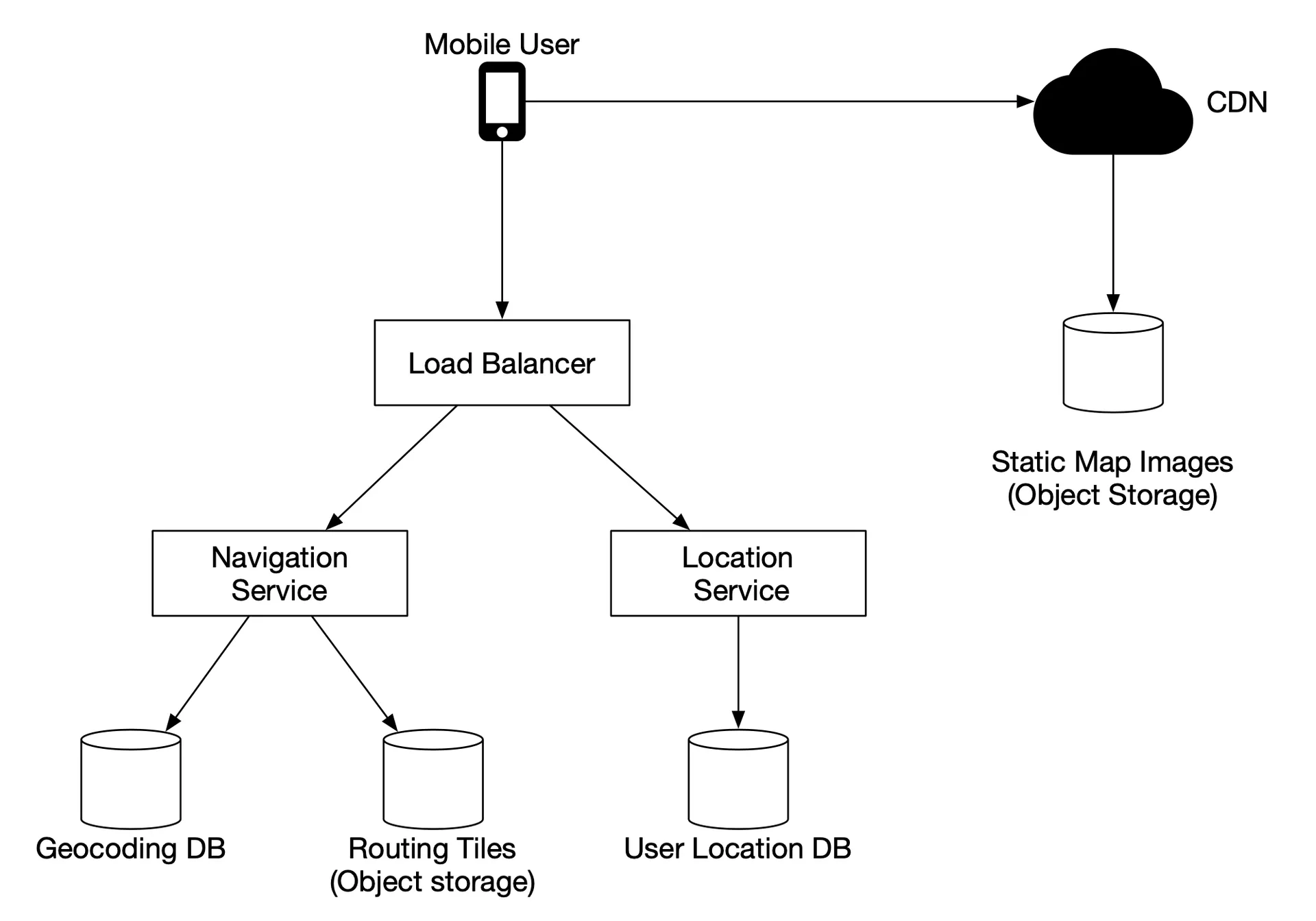
Figure 7: High-level design
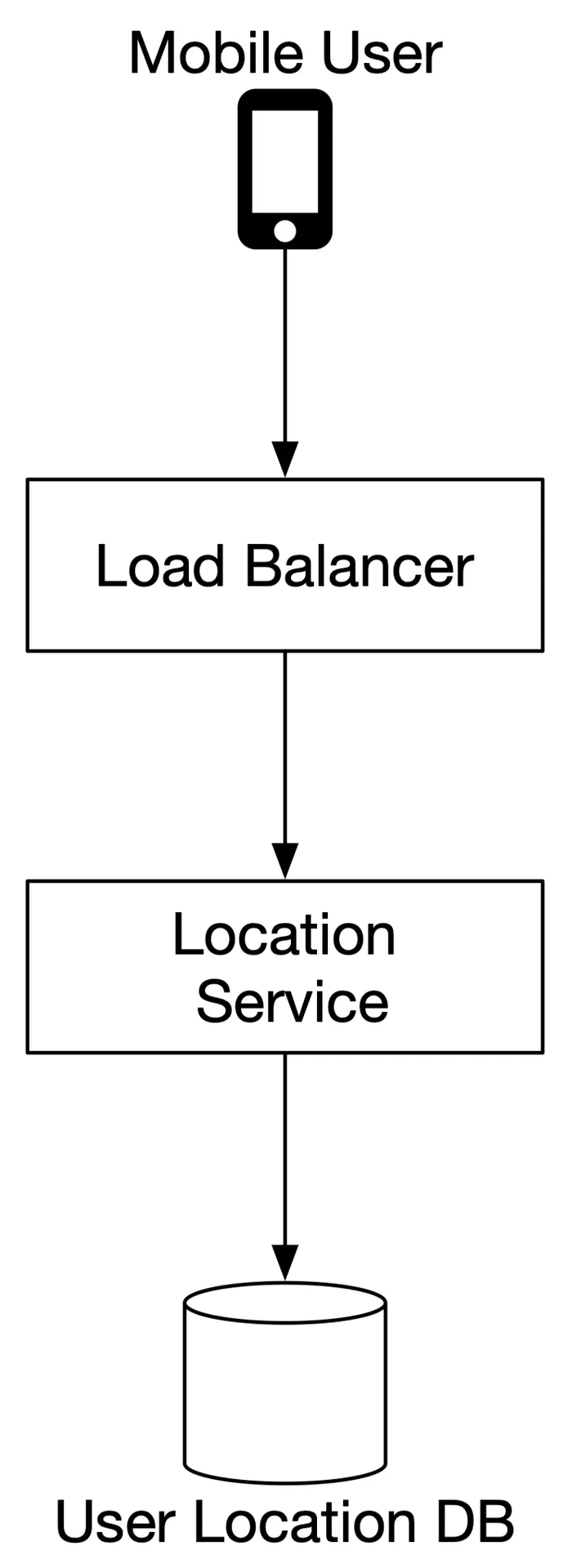
Location service
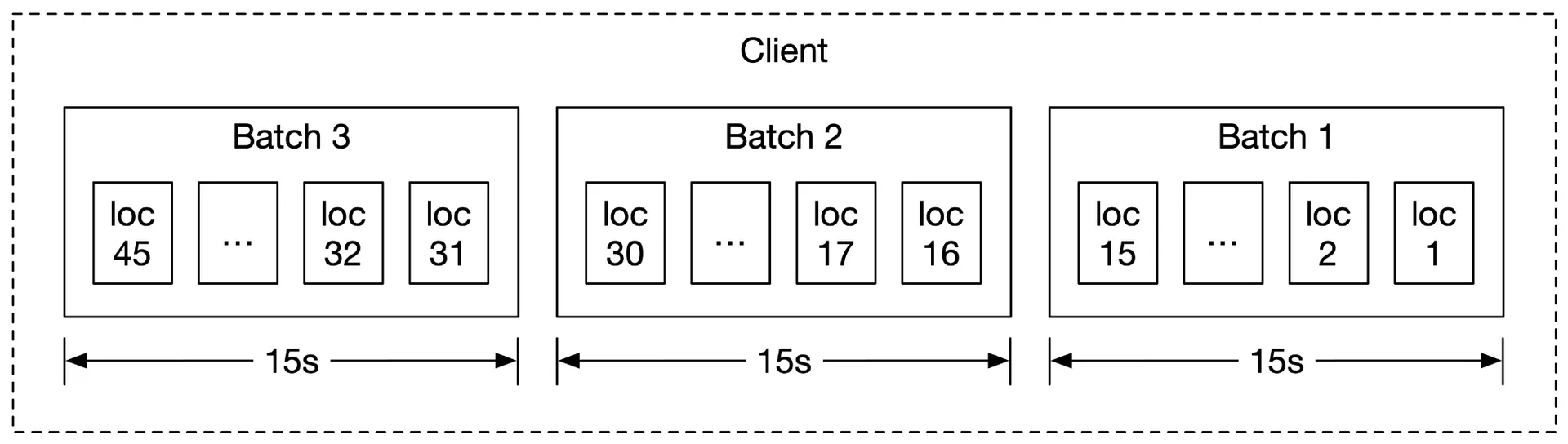
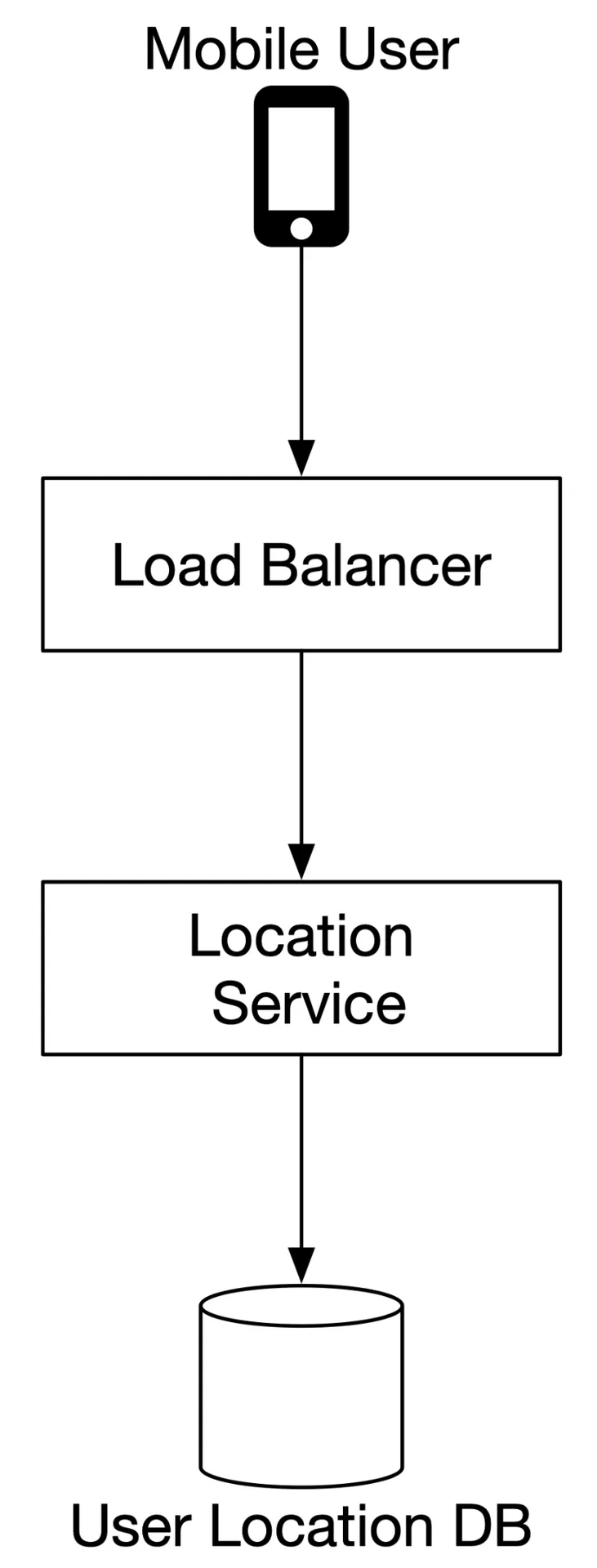
Clients send location updates every X seconds (configurable). Batched: record every 1s, send batch every 15s → reduces traffic. Uses:
- HTTP with keep-alive
POST /v1/locationswith a JSON-encoded array of (lat, lng, timestamp) tuples- Database: Cassandra (high write volume, scalable) + Kafka for stream processing
Navigation service
Finds a reasonably fast route A→B. Accuracy critical, can tolerate some latency.
GET /v1/nav?origin=...&destination=...- Returns: distance, duration, start/end location, polyline, HTML instructions, travel mode
Map rendering
Pre-generated static map tiles (option 2): not dynamically generated. Each tile at a zoom level covers a fixed geohash grid. Served via CDN from the nearest POP.
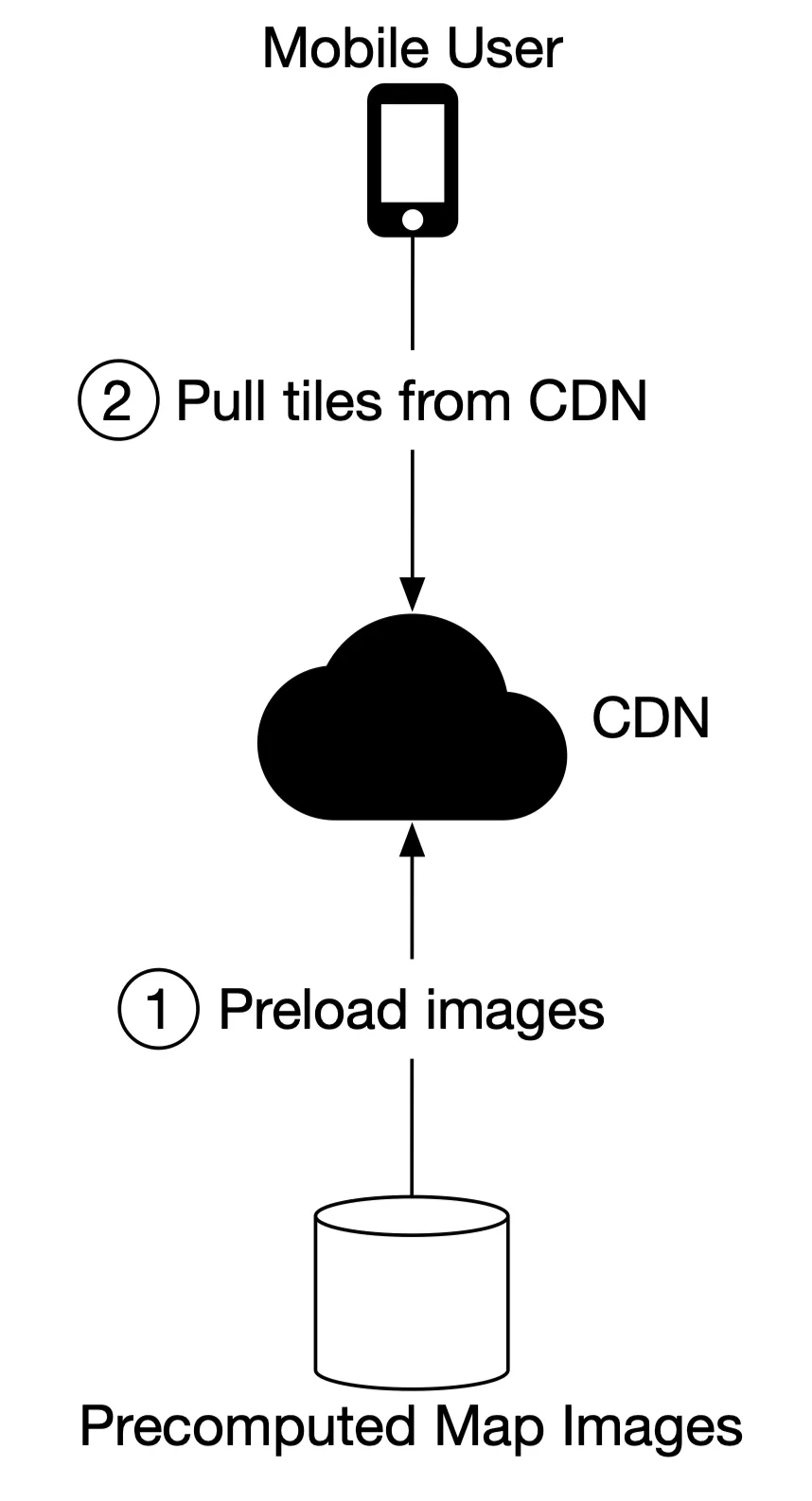
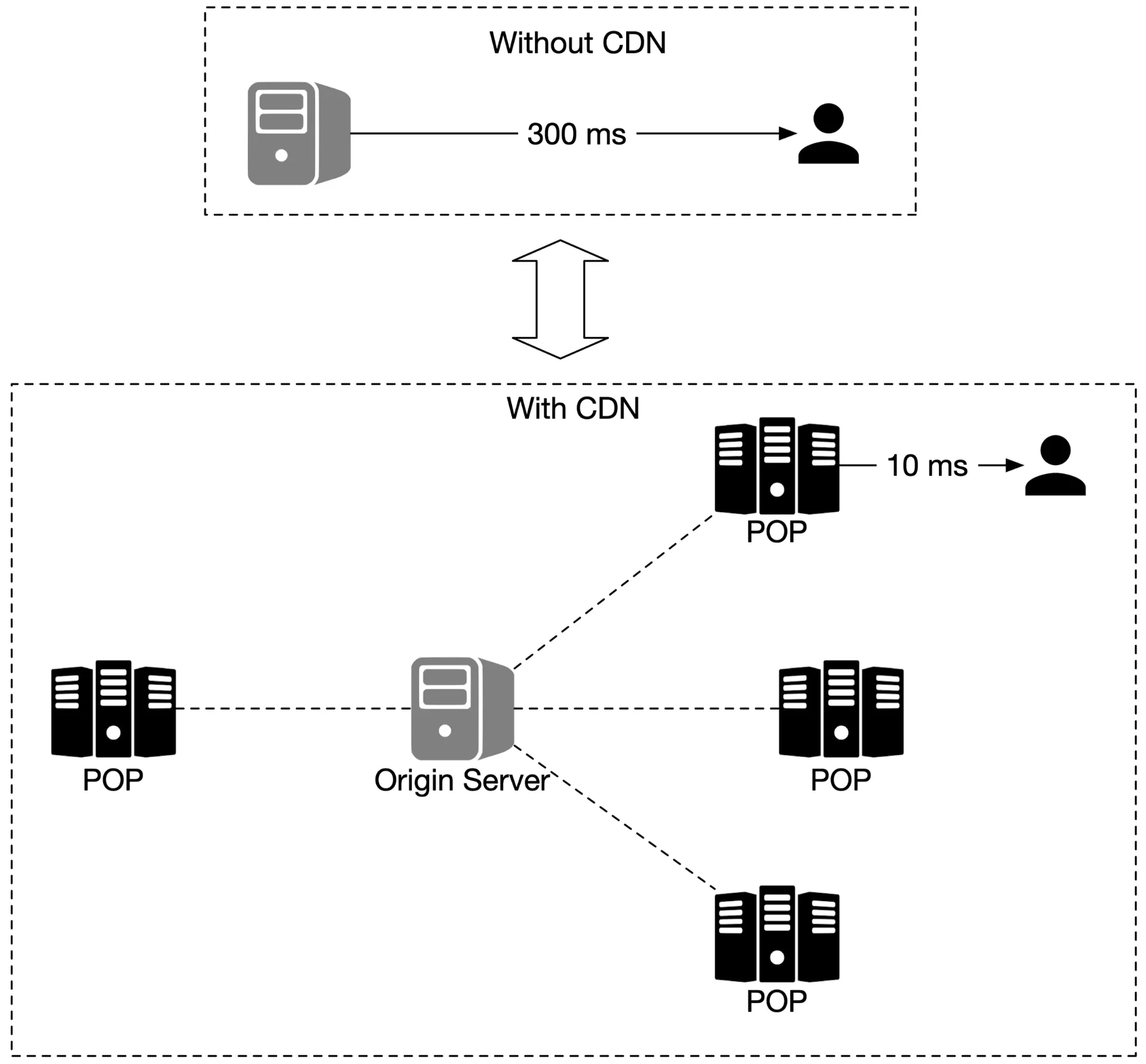
Data usage: at 30km/h, 200m×200m tiles (100KB each), 25 tiles per 1km² = 2.5MB data → 75MB/hour or 1.25MB/minute.
CDN traffic: 5B nav minutes/day × 1.25MB/min = 6.25B MB/day = ~62,500 MB/sec through CDN. With 200 POPs → a few hundred MB/sec each.
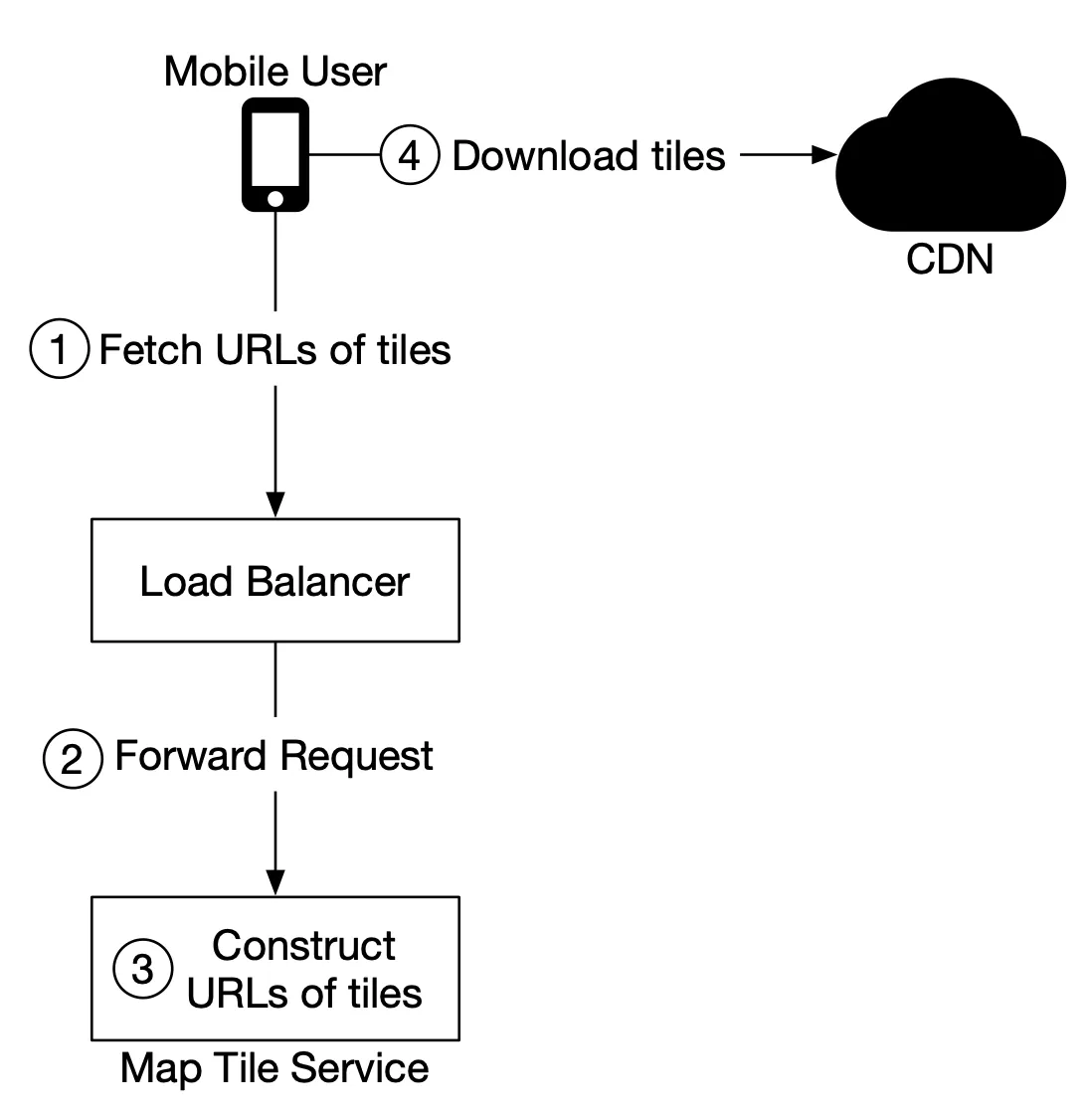
Tile URL construction: client converts lat/lng + zoom → geohash → URL (e.g. https://cdn.map-provider.com/tiles/9q9heb.png). Alternative: map tile service as intermediary for operational flexibility (avoid hardcoding geohash logic in clients).
Step 3 of 4: Design deep dive
Goal: data model, then each service: with the adaptive ETA trick.
Data model
Routing tiles:
- Raw road data (TBs) → offline routing tile processing service → routing tiles at 3 resolutions
- Stored as adjacency lists serialized to binary files in object storage (S3), organized by geohash
- Aggressively cached on the routing service. DB not needed
User location data (Cassandra):
| user_id | timestamp | user_mode | driving_mode | location |
|---|---|---|---|---|
| 101 | 1635740977 | active | driving | (20.0,30.5) |
Partition key: user_id. Clustering key: timestamp. Efficient time-range queries per user. Prioritizes availability over consistency (CAP: AP).
Geocoding database: Redis key-value store: place → lat/lng. Frequent reads, infrequent writes.
Precomputed map images: stored on CDN backed by cloud storage (S3). Precomputed at 21 zoom levels.
Services
Location service:
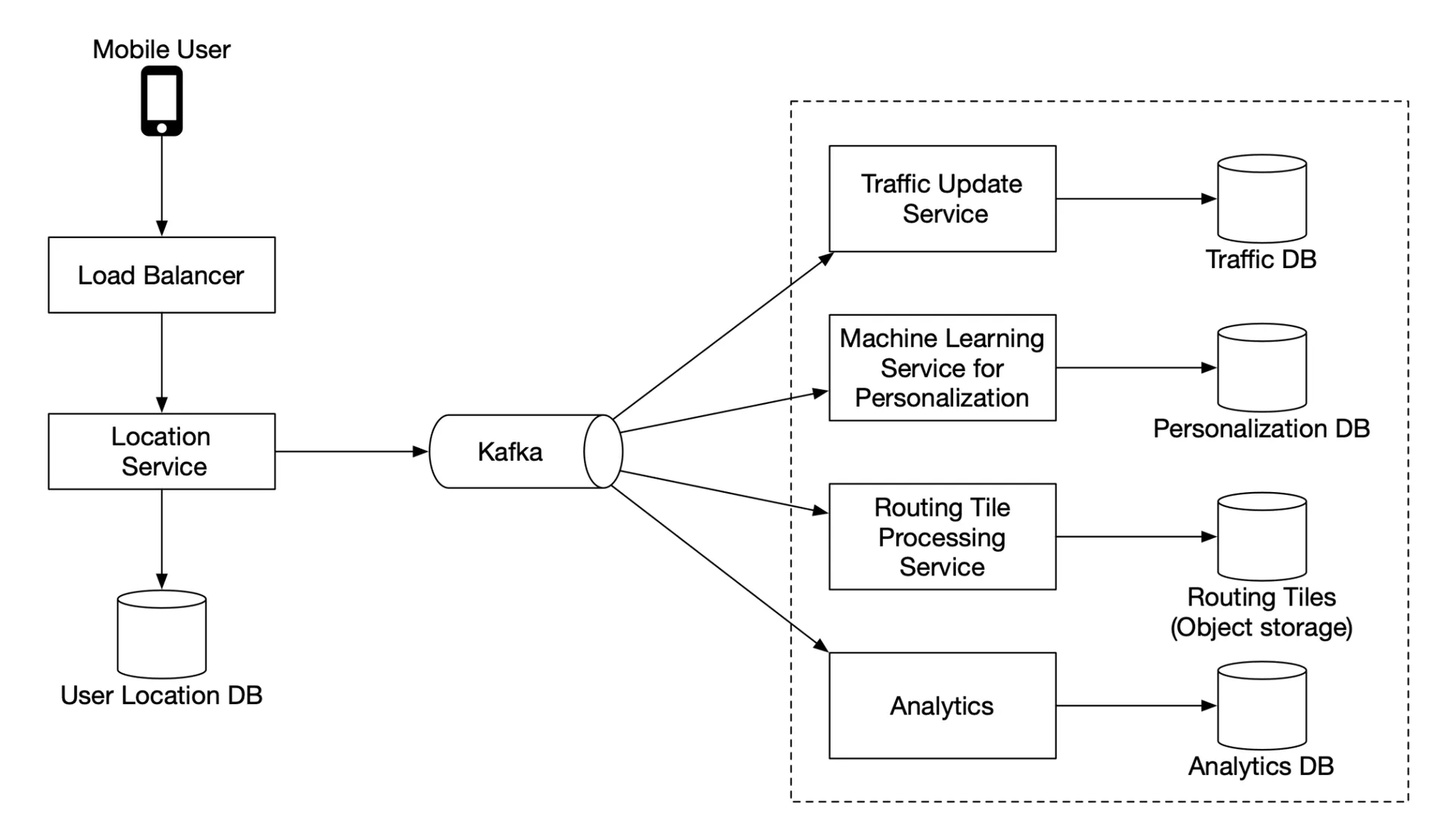
Location data logged to Kafka. Downstream consumers:
- Live traffic service → updates the live traffic DB
- Routing tile processing service → detects new/closed roads, updates routing tiles in object storage
- Other services tap the stream for various purposes
Map rendering:
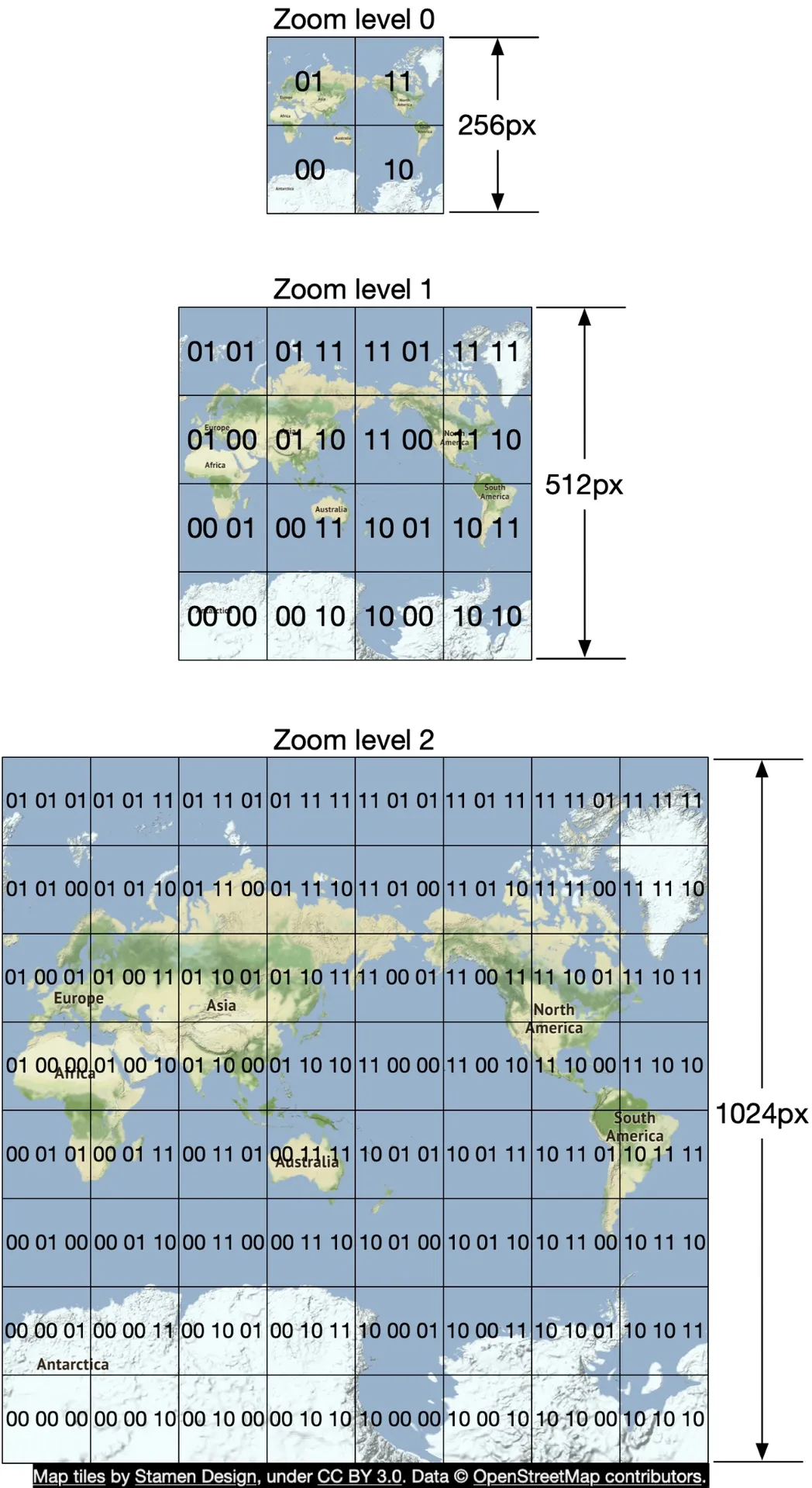
21 zoom levels. Level 0: 1 tile (256×256, entire world). Each increment: 4× tiles, 4× pixels.
Vector optimization: send vector info (paths, polygons) instead of raster PNGs. Better compression, smoother zooming (no pixelation). Client draws from vectors via WebGL.
Navigation service:
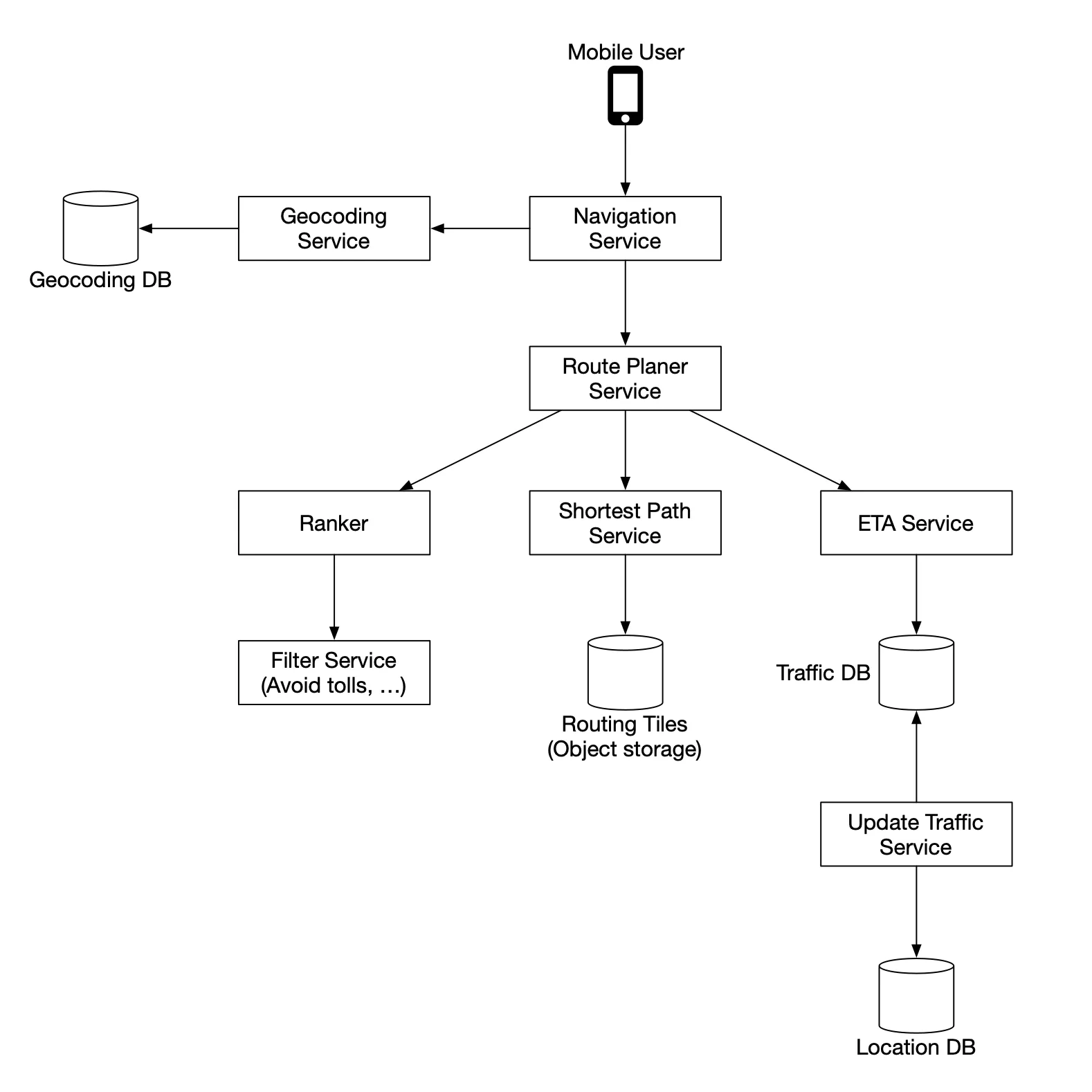
- Geocoding service: resolves address → lat/lng. Uses key-value DB (Redis)
- Route planner service: orchestrates pathfinding
- Shortest-path service: A* variant against routing tiles in object storage:
- Convert origin/destination lat/lng → geohashes → load start/end routing tiles
- Traverse the graph, load neighboring tiles on demand from object storage (or local cache)
- Can switch to higher-level tiles (highways) through cross-resolution references
- Continue until the best routes are found
- ETA service: ML-based prediction using current traffic + historical data. Predicts traffic 10-20 min ahead
- Ranker service: filters routes by user preferences (avoid tolls, avoid freeways), ranks fastest to slowest, returns top-k
- Updater services: consume the Kafka location stream. Traffic update service → live traffic DB. Routing tile processing service → updated routing tiles
Adaptive ETA and rerouting
Naive approach: store user → [routing tiles] mapping. Traffic incident on tile s₂ → scan all rows to find affected users. O(n × m): too slow.
Improved: store user → [current tile, parent tile, grandparent tile]. Check only the largest tile in each row. Fast filtering.
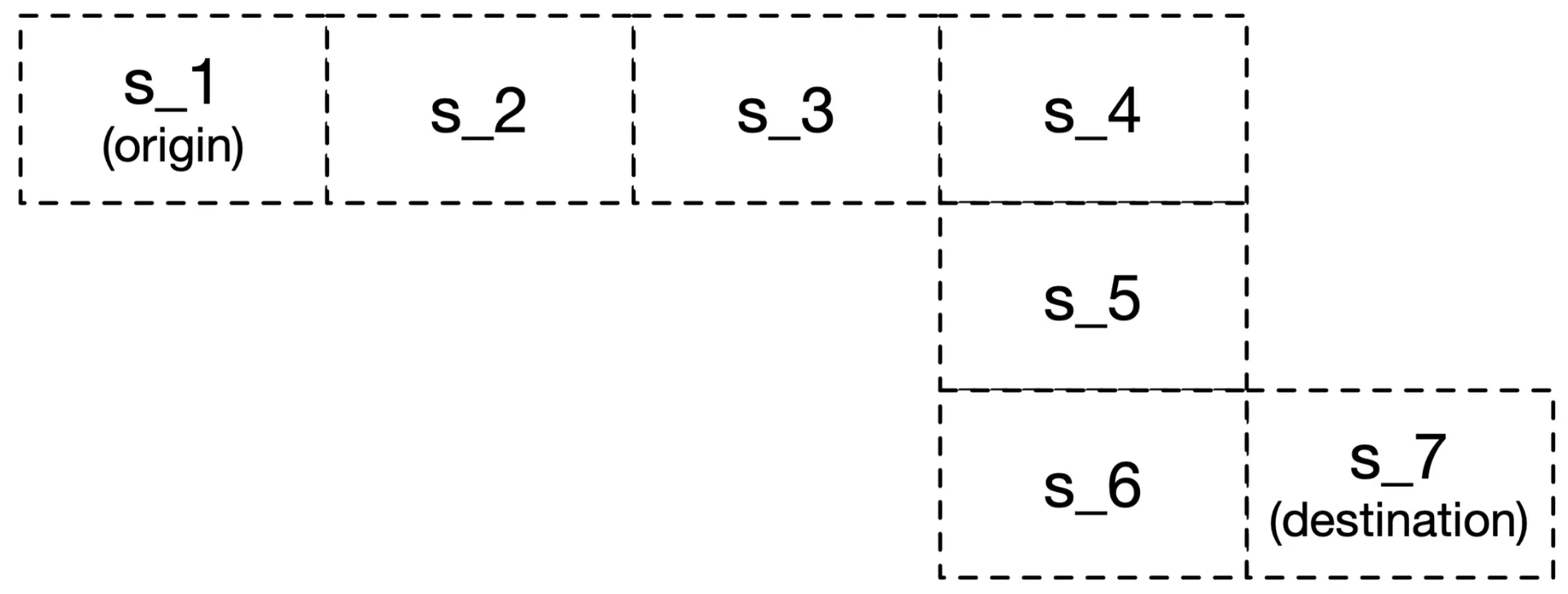
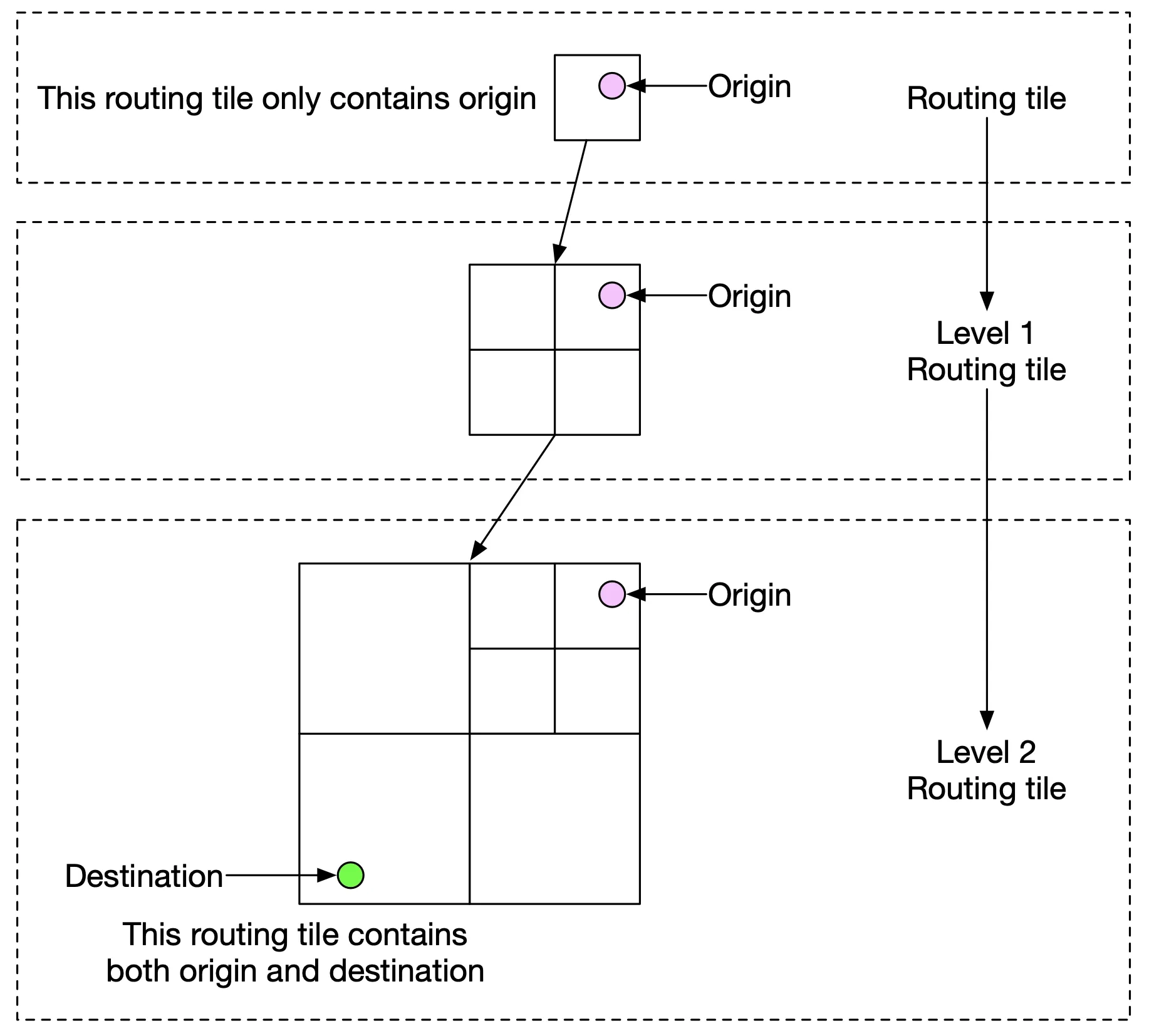
Delivery protocol: WebSocket preferred over mobile push (limited payload, no web support) and long polling. Bi-directional communication supports last-mile delivery. SSE also viable.
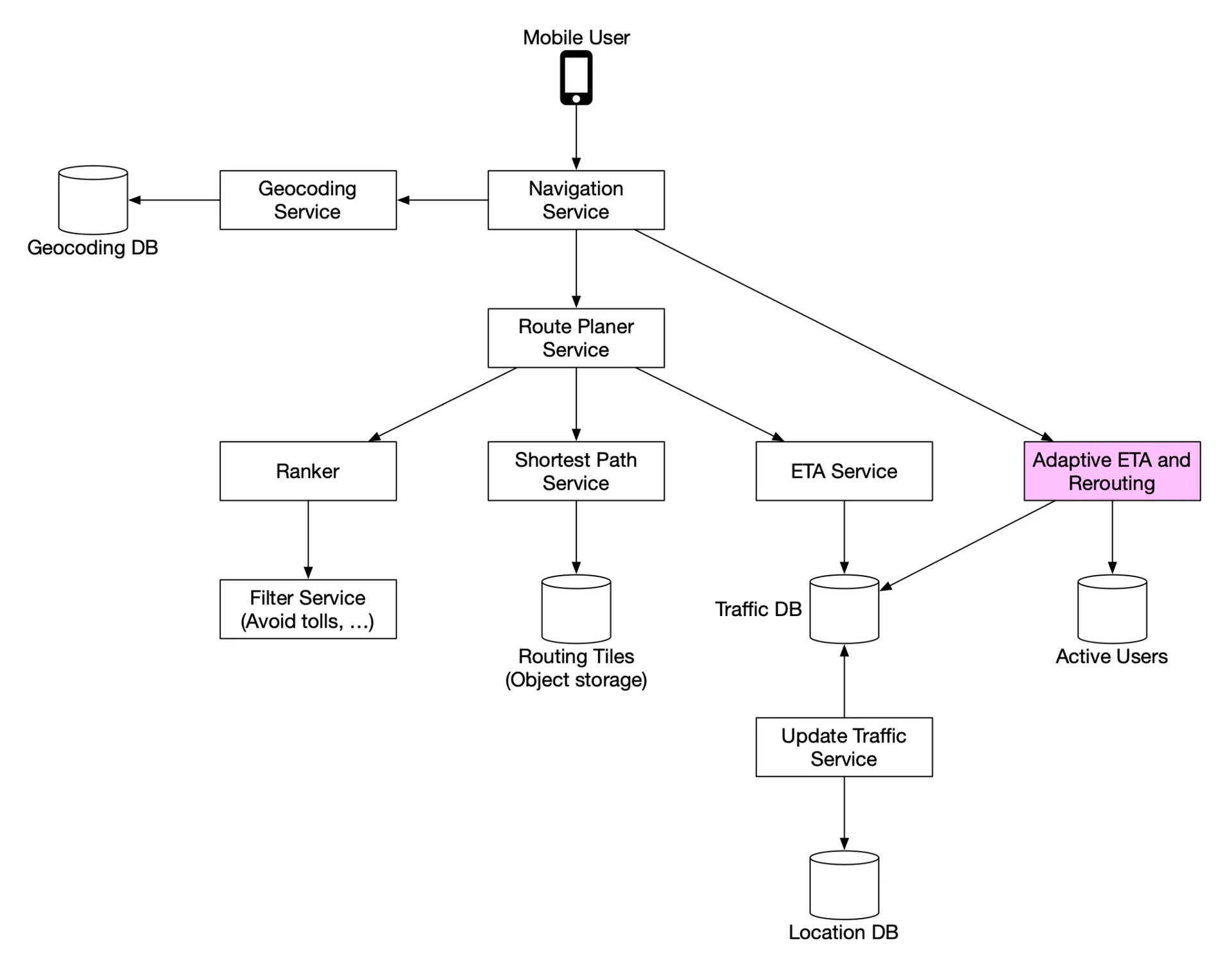
Figure 21: Final design
Step 4 of 4: Wrap up
What we designed:
- Location update (Cassandra + Kafka)
- ETA/route planning (A* with routing tiles + ML ETA)
- Map rendering (precomputed tiles + CDN + vectors)
- Adaptive ETA uses hierarchical tile tracking
Potential expansion: multi-stop navigation for enterprise (e.g. delivery services).