Distributed Message Queue
8 min read- What it is: Kafka/Pulsar-style queue: 2-week retention, repeated consumption, ordering, configurable delivery semantics
- 3 design choices for throughput: WAL storage (sequential I/O), zero-copy message format, batching everywhere
- Core concepts: topic → partitions (FIFO, offsets); consumer groups → point-to-point or pub/sub; Zookeeper/etcd for coordination
- Replication: 3 replicas, leader writes, ISR tracking; ACK=all / 1 / 0 trades durability vs latency
- Delivery semantics: at-most-once (commit before process), at-least-once (commit after → duplicates), exactly-once (expensive)
- Pull model with long polling: consumers control rate, can batch and catch up
Design a distributed message queue with event-streaming features: long data retention (2 weeks), repeated consumption, message ordering.
Benefits of message queues: decoupling, improved scalability (scale producers/consumers independently), increased availability, better performance (async communication).
Note: traditional message queues (RabbitMQ, ActiveMQ) differ from event streaming platforms (Kafka, Pulsar), but features are converging (RabbitMQ added streams; Pulsar works as both). This design targets the richer feature set.
Step 1 of 4: Understand the problem and establish design scope
Goal: lock in requirements before designing.
Functional requirements
Must have:
- Producers send messages; consumers consume them
- Messages can be consumed repeatedly or only once
- Historical data truncated (retention: 2 weeks)
- Message size: KB range, text only
- Messages consumed in production order
- Delivery semantics: at-least-once, at-most-once, exactly-once (configurable)
- High throughput for log aggregation; low latency for traditional queue use cases
Non-functional:
- Configurable throughput vs latency
- Scalable and distributed; handles traffic surges
- Persistent and durable: data persisted on disk, replicated across nodes
Traditional message queue adjustments: traditional queues have no strong retention, no ordering guarantees, smaller on-disk overflow. These simplifications reduce design complexity (noted where applicable).
Step 2 of 4: Propose high-level design and get buy-in
Goal: agree on the core abstractions: topics, partitions, brokers, consumer groups.

Figure 2: Key components
Messaging models
- Point-to-point: one message → one consumer. Traditional model. Message removed after ack
- Publish-subscribe: one message → all subscribers of a topic
This design supports both. Pub/sub via topics; point-to-point via consumer groups (single consumer in group per partition).
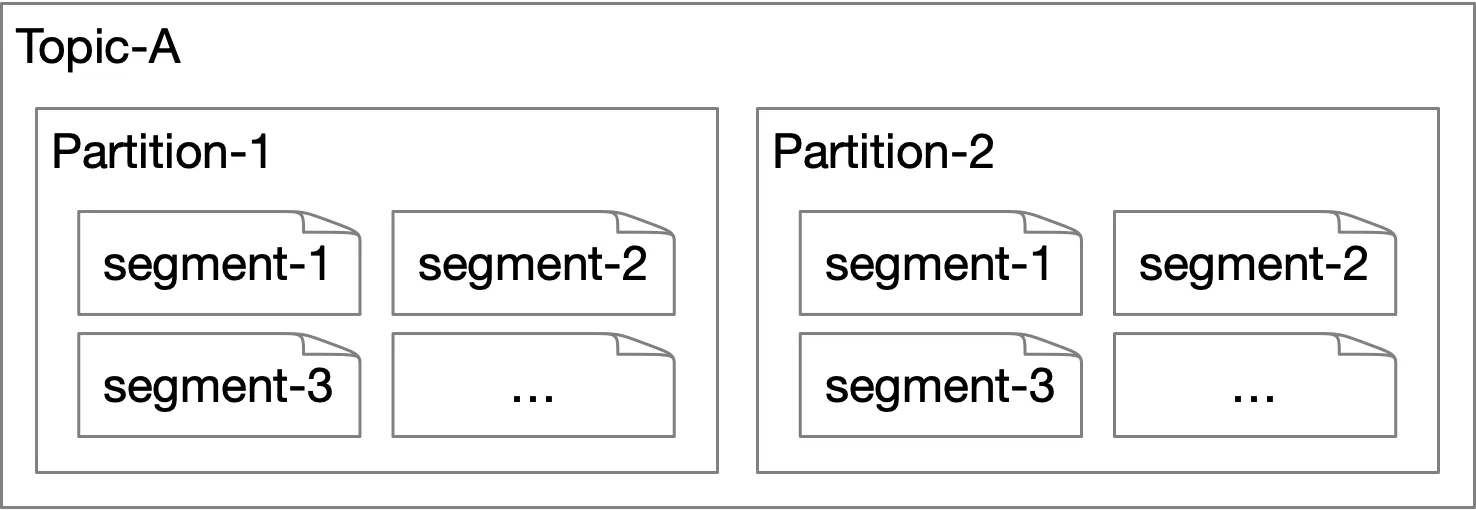
Topics, partitions, and brokers
- Topic: logical category. Partition: shard of a topic. Messages distributed across partitions
- Partition = FIFO queue. Position = offset
- Message key →
hash(key) % numPartitionsdetermines partition. No key → random - Broker: server holding partitions. Partitions distributed across brokers for scalability
- Consumer: subscribes to a topic, pulls from one or more partitions


Consumer group
Set of consumers working together. Each group maintains its own consuming offsets. One partition → one consumer per group (constraint for ordering). More partitions than consumers → scale by adding consumers.
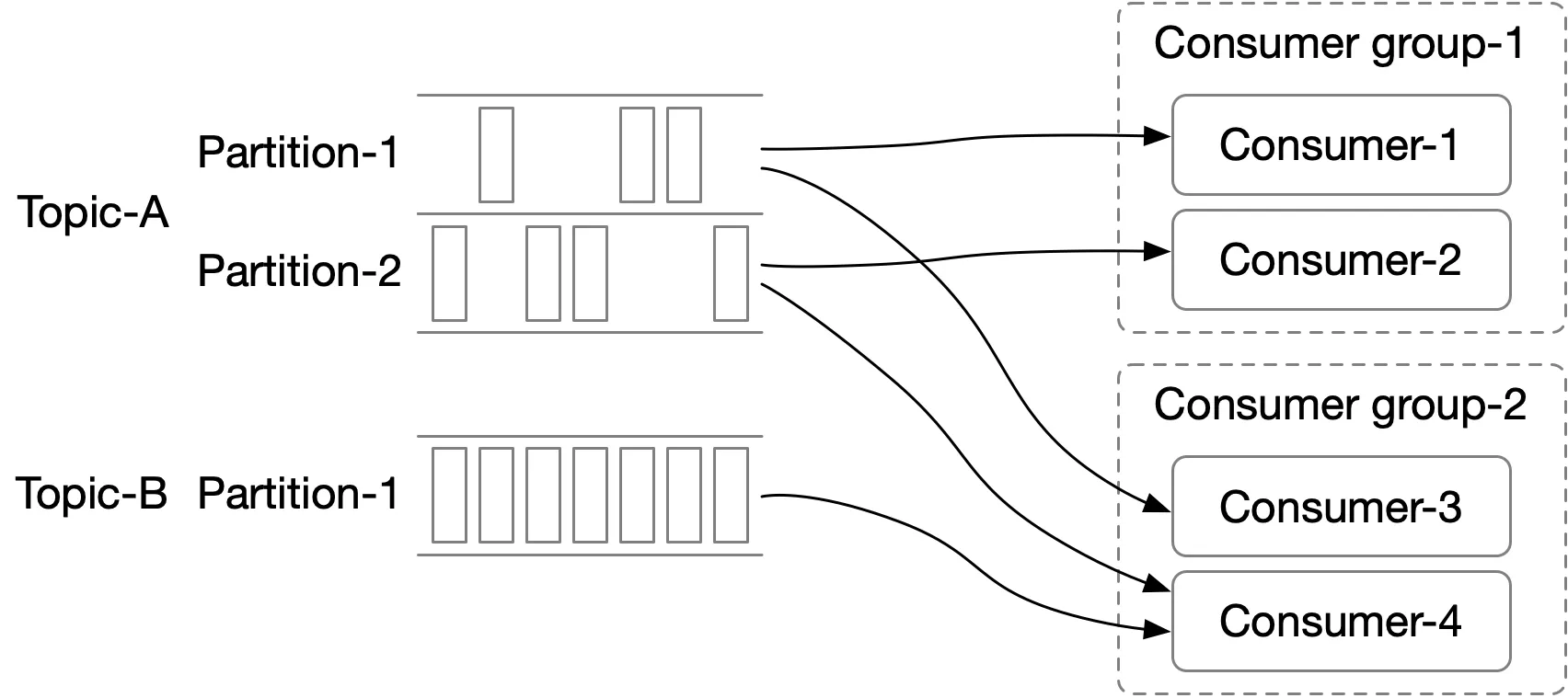
If all consumers are in one group → point-to-point model (each partition consumed by exactly one consumer).
High-level architecture
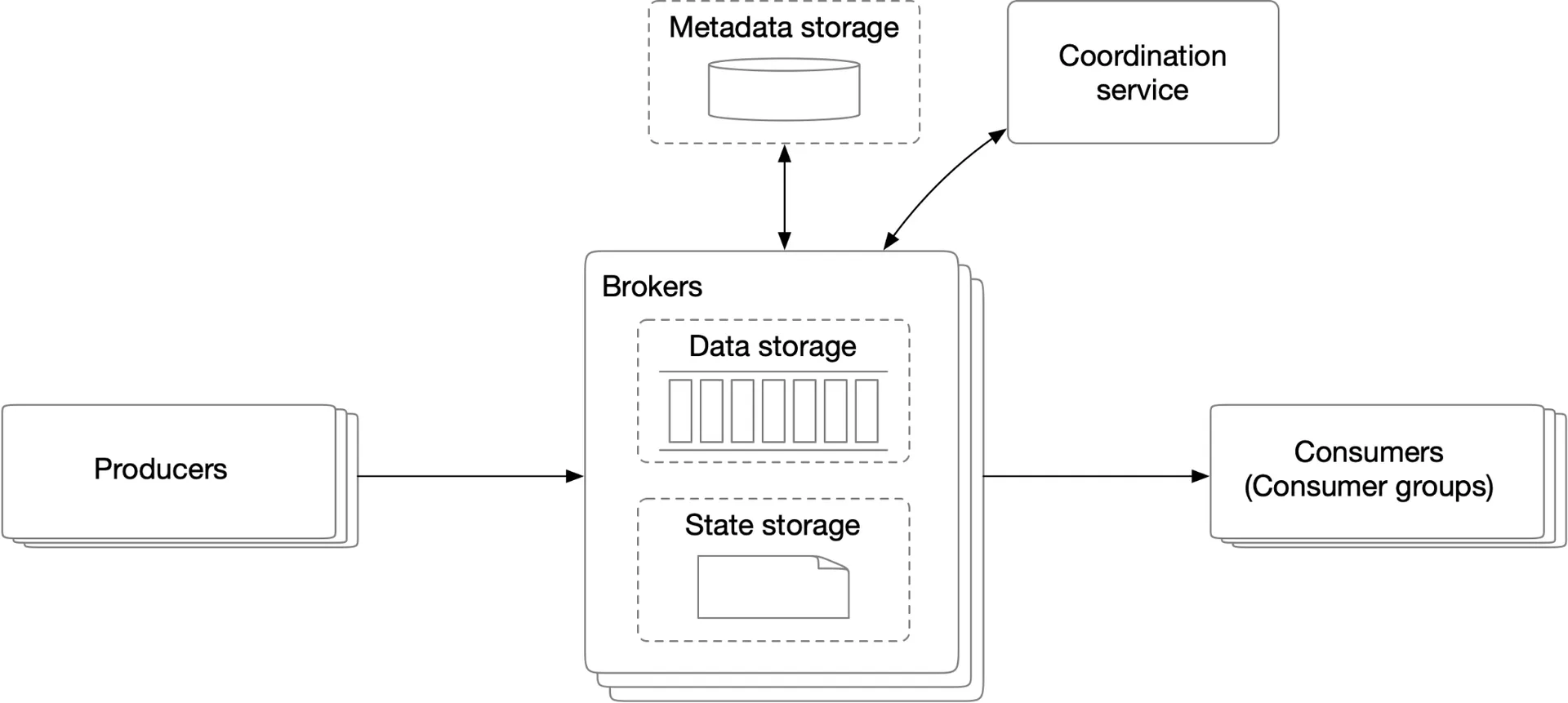
Figure 8: High-level design
- Clients: producers push to topics; consumer groups subscribe
- Broker: holds partitions
- Storage: data storage (messages in partitions), state storage (consumer offsets), metadata storage (topic config, partitions, retention, replica distribution)
- Coordination service: service discovery (alive brokers), leader election (active controller assigns partitions). Uses Zookeeper or etcd
Step 3 of 4: Design deep dive
Goal: three key design choices for high throughput + data retention:
- On-disk data structure optimized for sequential access (rotational disk)
- Message data structure allows zero-copy from producer → queue → consumer
- Batching everywhere: producers, queue, consumers
Data storage
Traffic pattern: write-heavy, read-heavy. No updates/deletes. Predominantly sequential access.
- Option 1: database. Not ideal. Hard to design for both write-heavy + read-heavy at scale
- Option 2: write-ahead log (WAL). Recommended. Append-only log file. Sequential read/write. Rotational disks in RAID → several hundred MB/sec. OS aggressively caches disk data in main memory
Segments: active segment (appends) → when full → becomes inactive (read-only). Old segments truncated after the retention period.
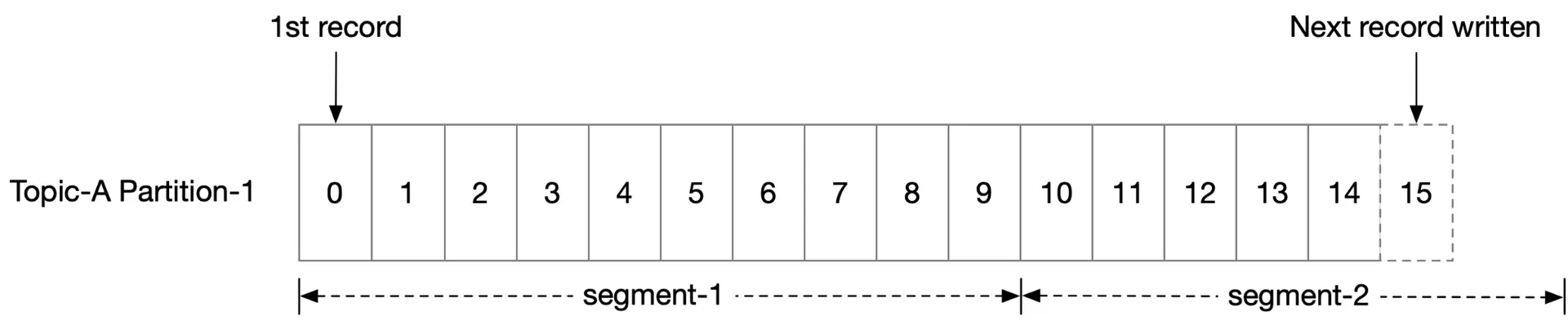
Message data structure
| Field | Type |
|---|---|
| key | byte[] |
| value | byte[] |
| topic | string |
| partition | integer |
| offset | long |
| timestamp | long |
| size | integer |
| crc | integer |
- Key: determines partition via
hash(key) % numPartitions. Not unique. Not equivalent to partition number - Value: payload (plain text or compressed binary)
- CRC: integrity check
No data copying through the pipeline: producers, queue, and consumers agree on the format.
Batching
Critical for performance:
- OS groups messages in a single network request (amortizes round trips)
- Brokers write in large chunks → larger sequential writes, larger contiguous disk cache
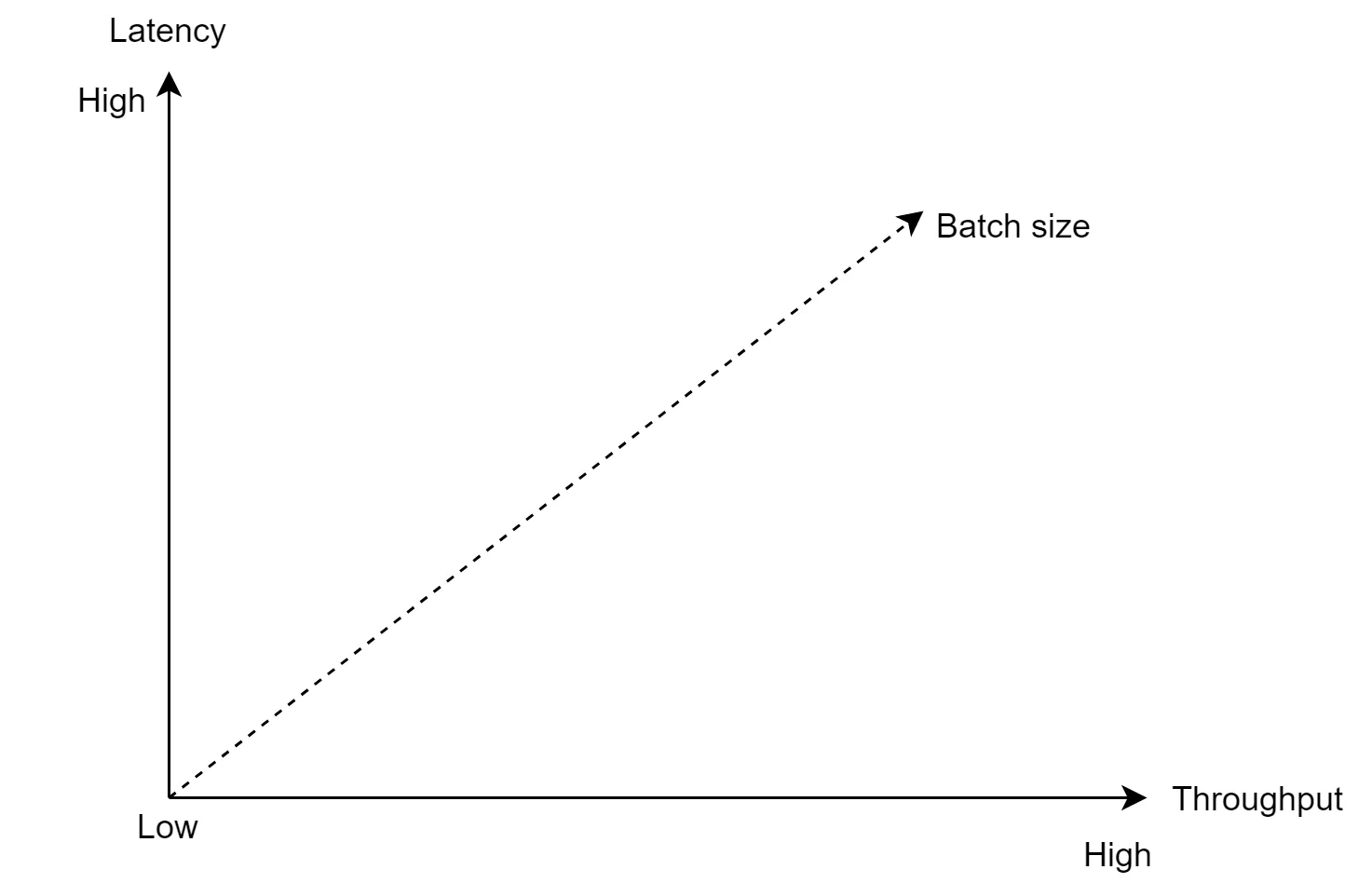
Tradeoff: large batch → higher throughput, higher latency. Configurable per use case.
Producer flow
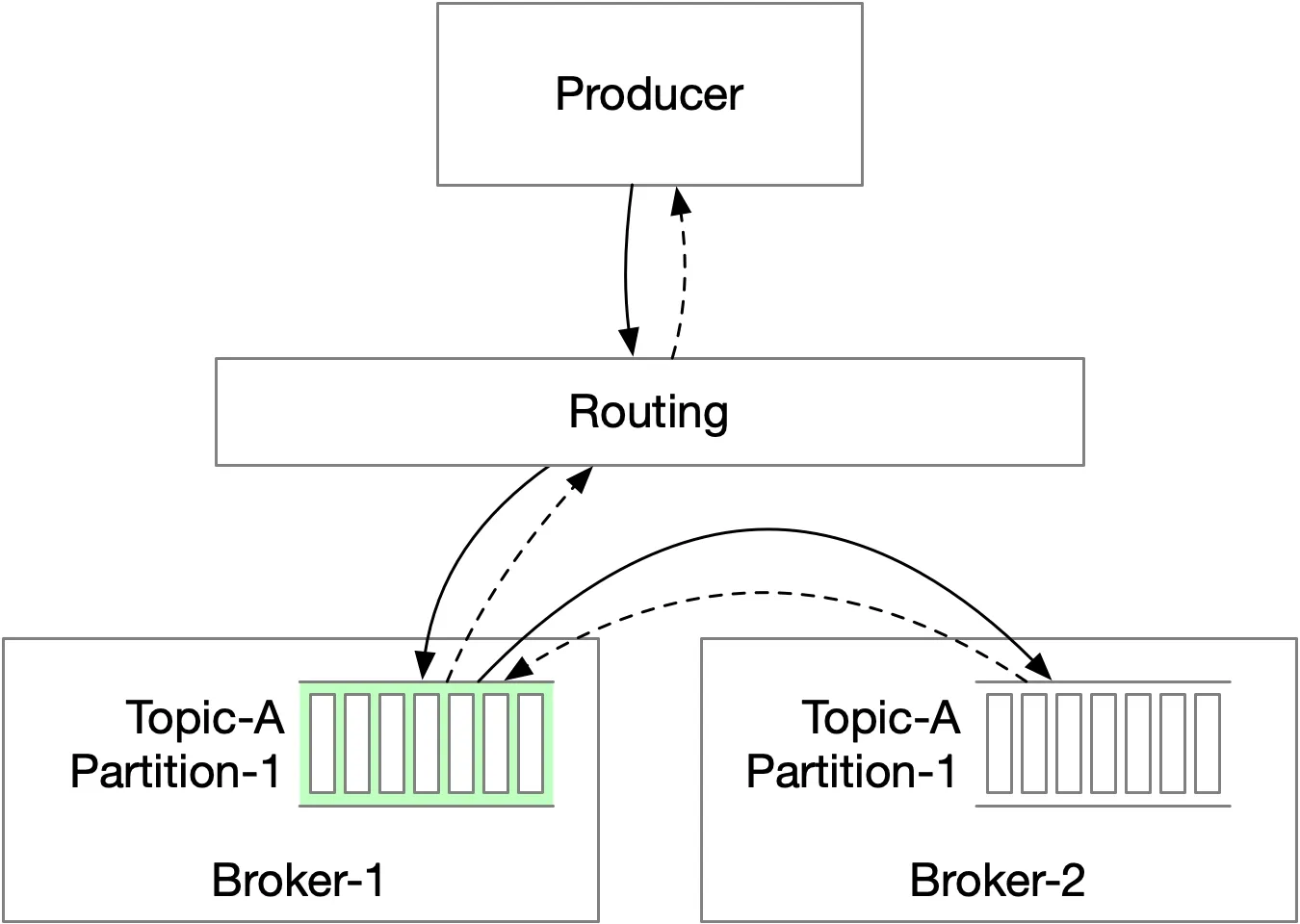
Option 1 (routing layer): extra network hop, no batching → rejected.
Option 2 (routing in the producer client library): improved. Buffer + routing in the producer. Benefits: fewer hops, producer controls partition logic, batching in memory → large batches → higher throughput.
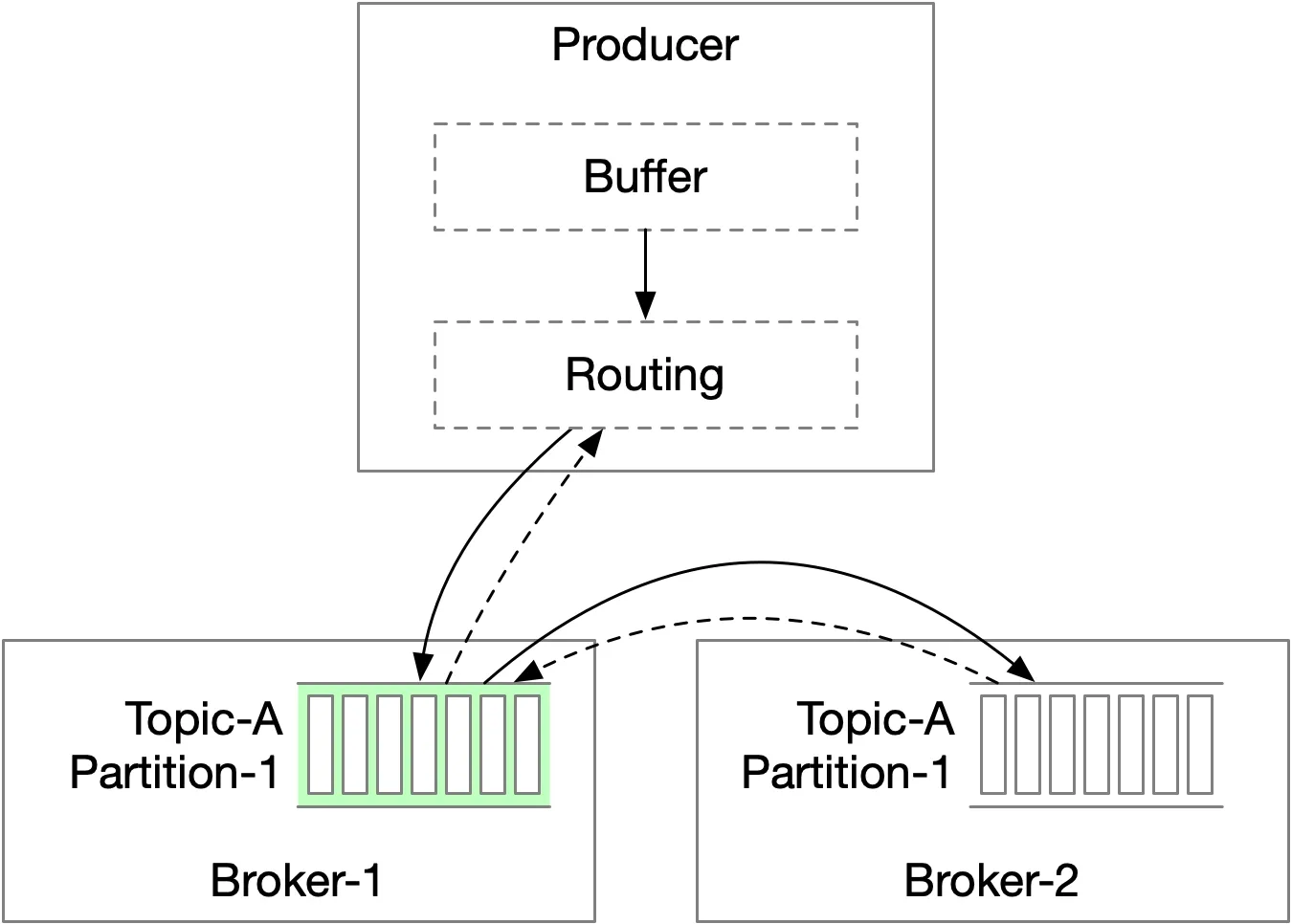
Batch size tradeoff: large = high throughput + high latency; small = low latency + low throughput.
Consumer flow (pull model)
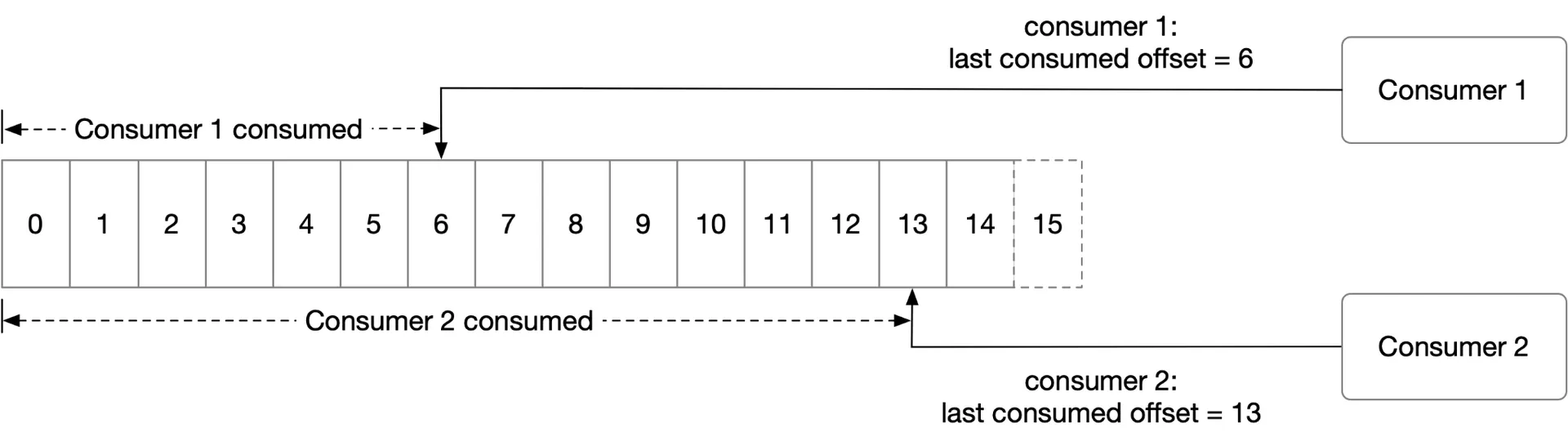
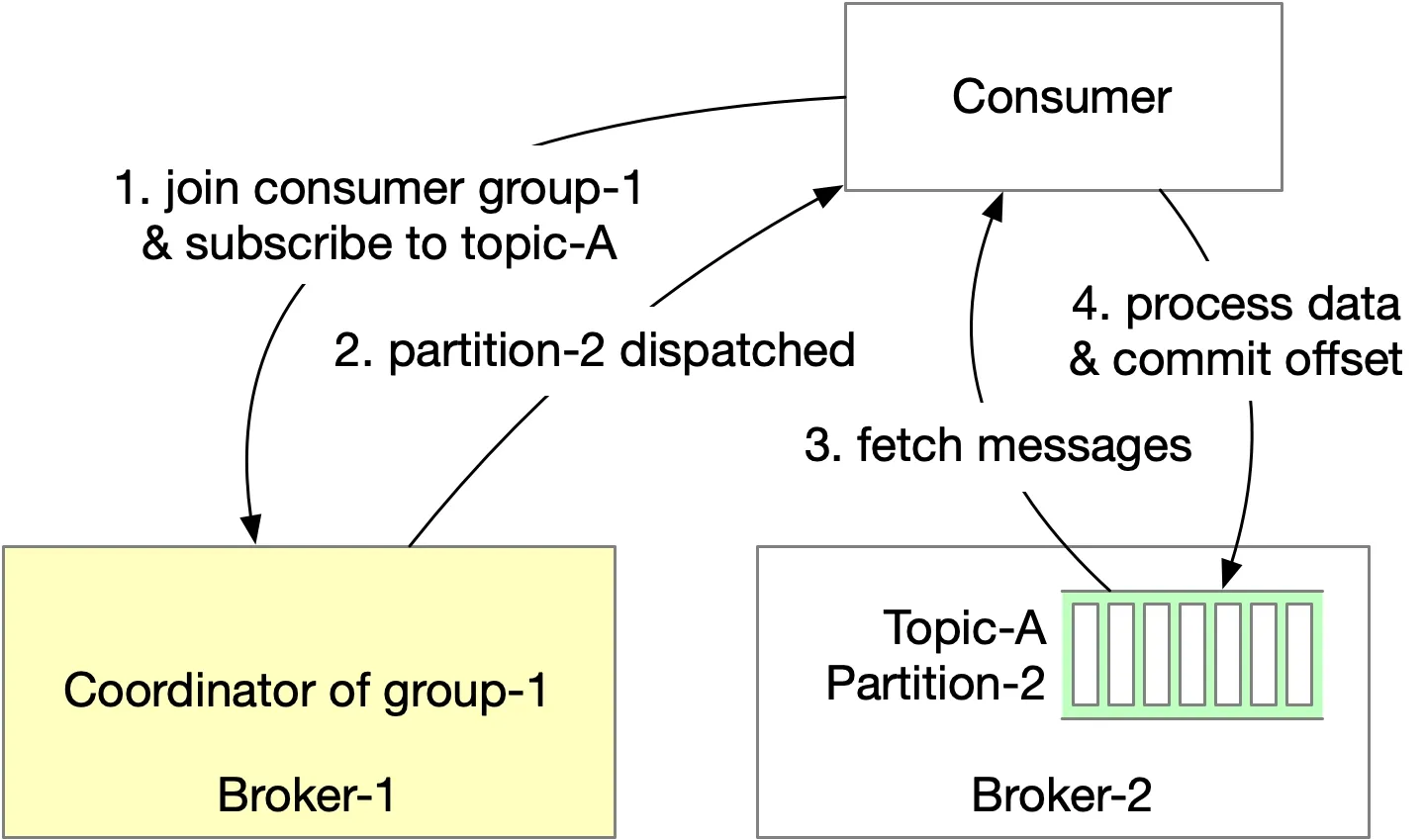
Push vs Pull:
| Model | Pros | Cons |
|---|---|---|
| Push | Low latency (immediate) | Consumers can be overwhelmed; hard with diverse processing power |
| Pull | Consumers control rate; better for batching; can catch up later | Wastes resources when idle (mitigated by long polling) |
Pull model chosen. Long polling: wait a specified time for new messages when the queue is empty.
Consumer flow:
- New consumer joins a group, finds the coordinator by hashing the group name
- Coordinator assigns partitions (round-robin, range, etc.)
- Consumer fetches from the last committed offset (state storage)
- Consumer processes, commits the offset. Commit timing affects delivery semantics
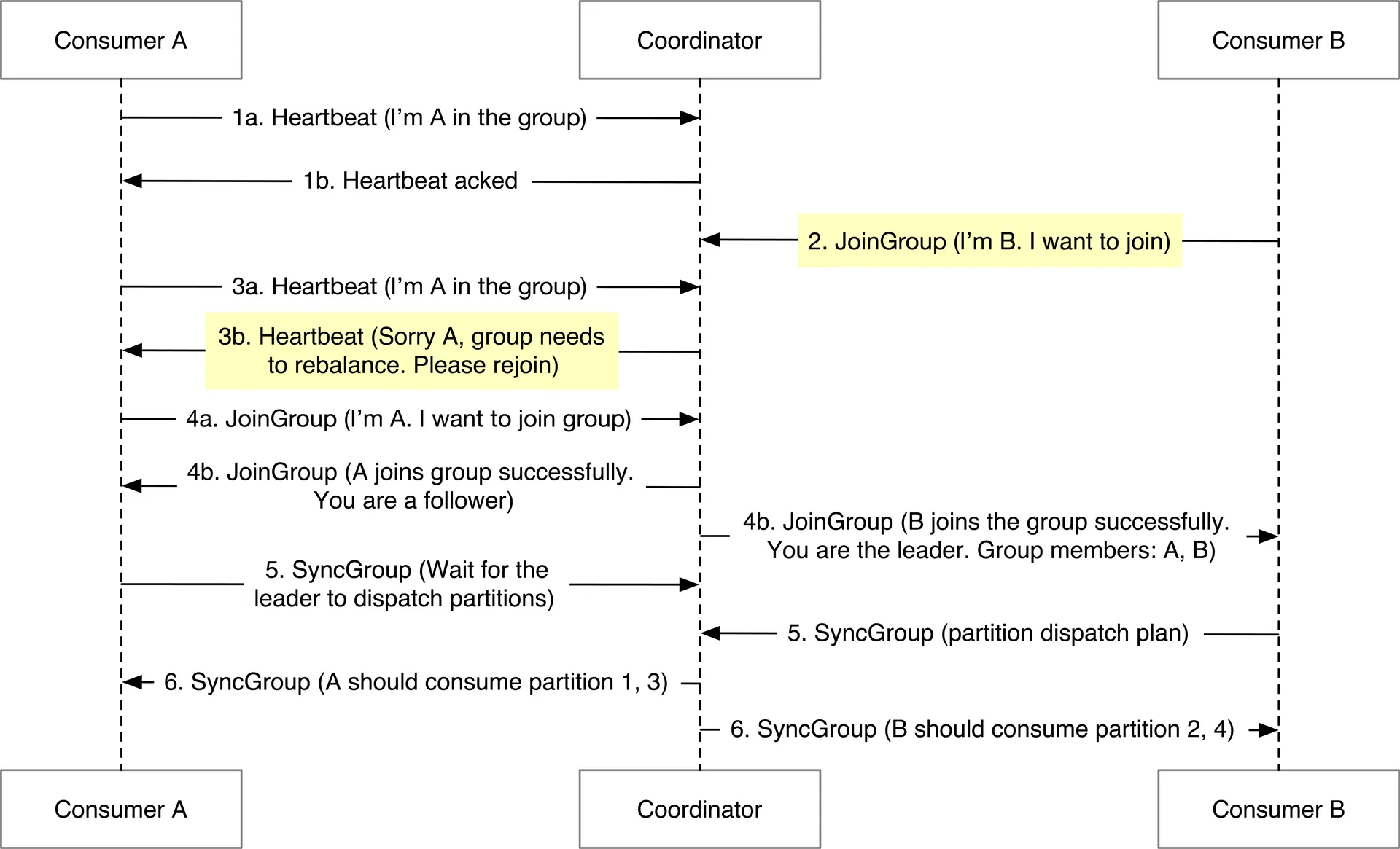
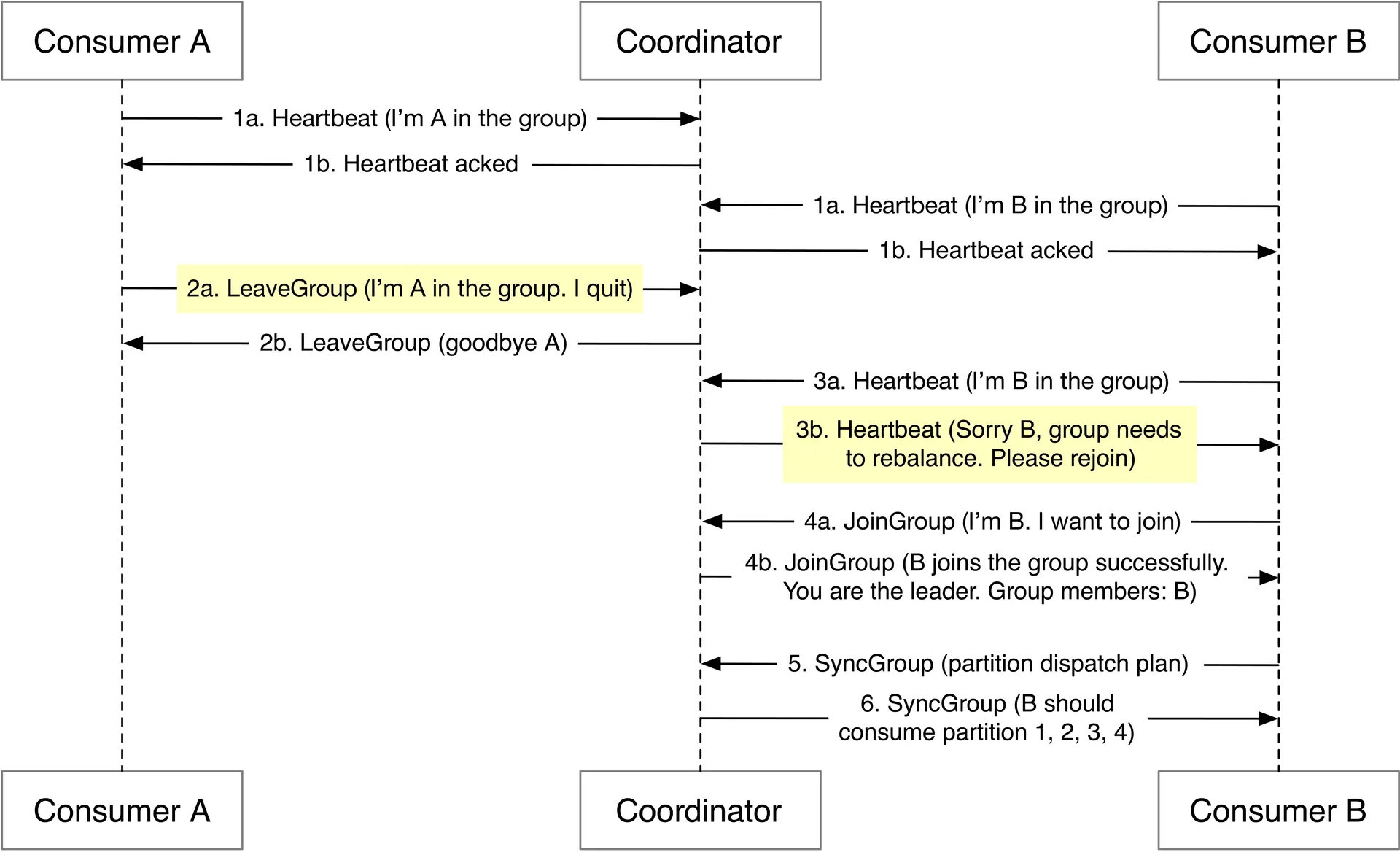
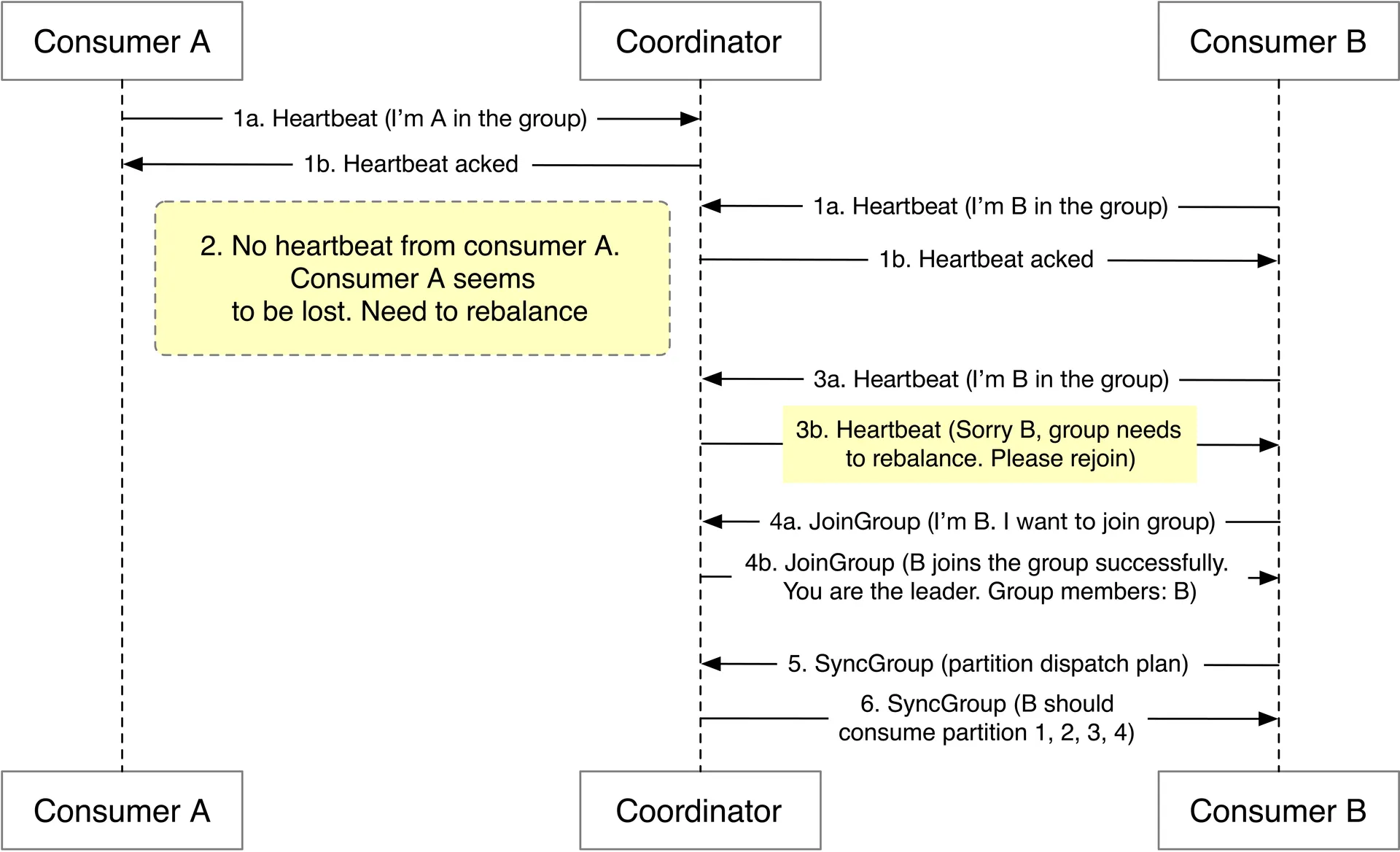
Consumer rebalancing: triggered by consumer join/leave/crash or partition change. The coordinator manages heartbeats, elects a group leader; the leader generates a partition dispatch plan → coordinator broadcasts.
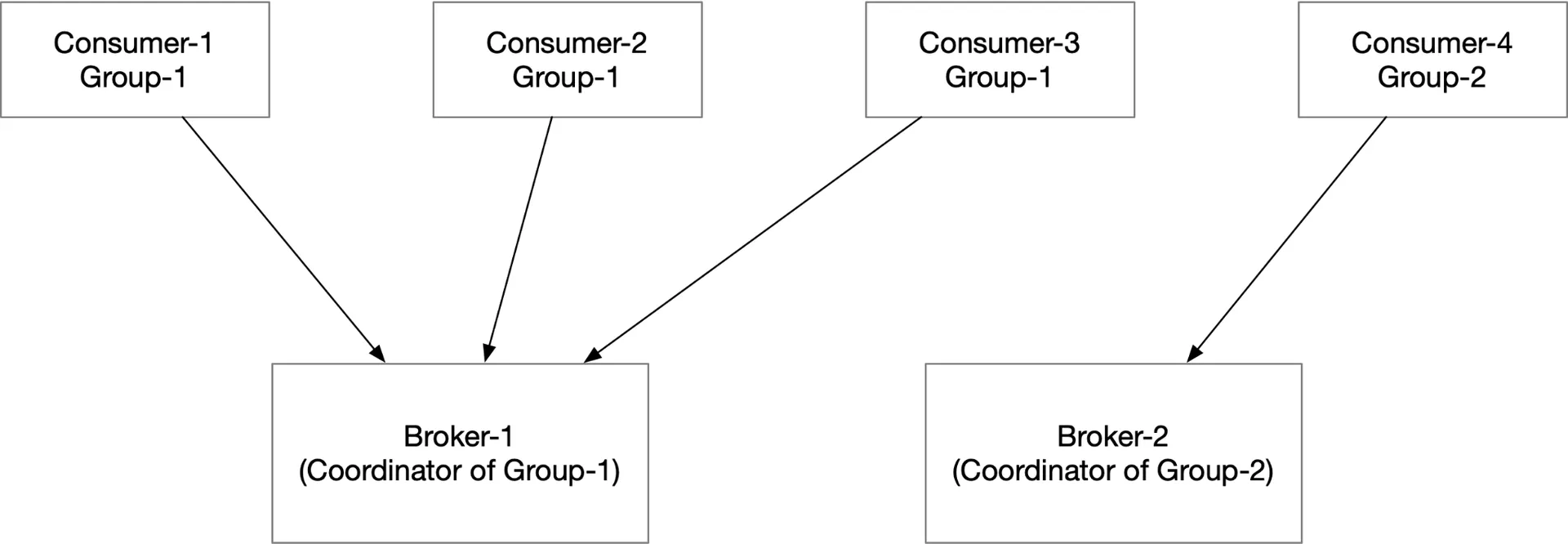
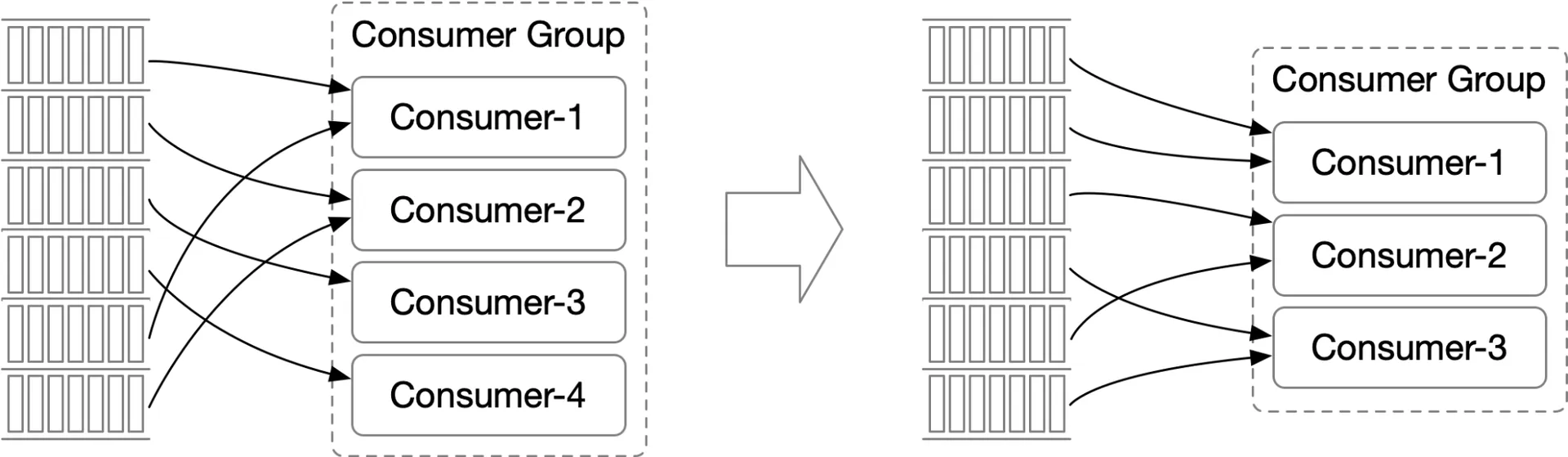
State storage
Stores: partition↔consumer mapping, last consumed offset per consumer group per partition.
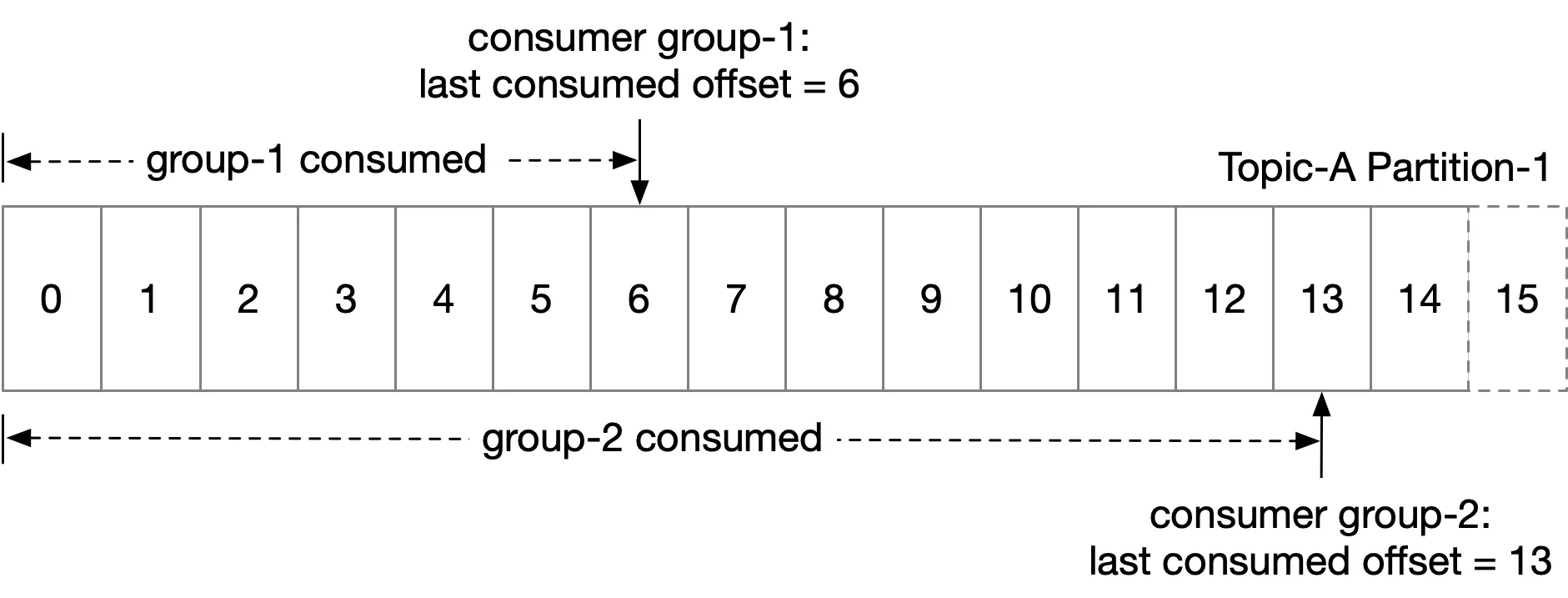
Access pattern: frequent read/write (low volume), rarely deleted, random access, consistency important → Zookeeper (KV store) is a good fit (Kafka later moved offset storage to brokers).
Metadata storage
Topic config: number of partitions, retention period, replica distribution. Low volume, high consistency → Zookeeper.
Zookeeper consolidation
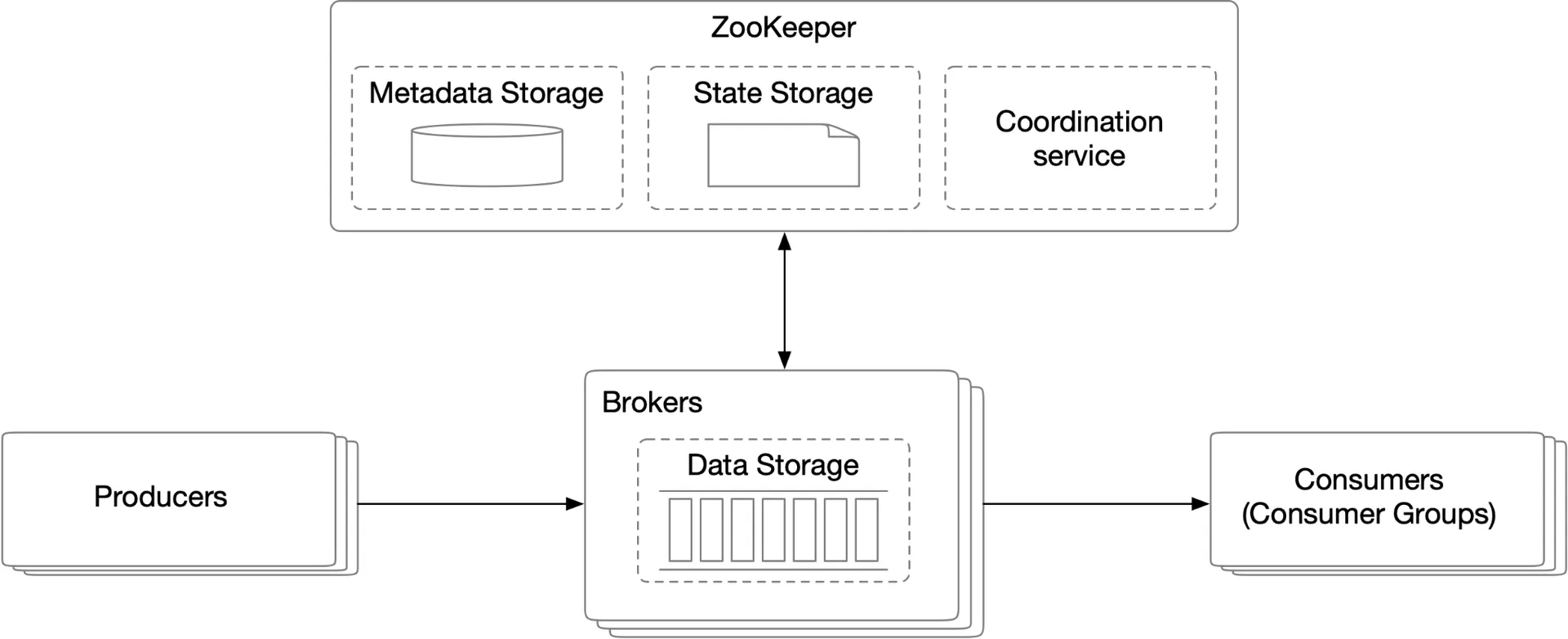
Zookeeper handles: metadata storage, state storage (consumer offsets), broker leader election. The broker now only maintains message data storage.
Replication
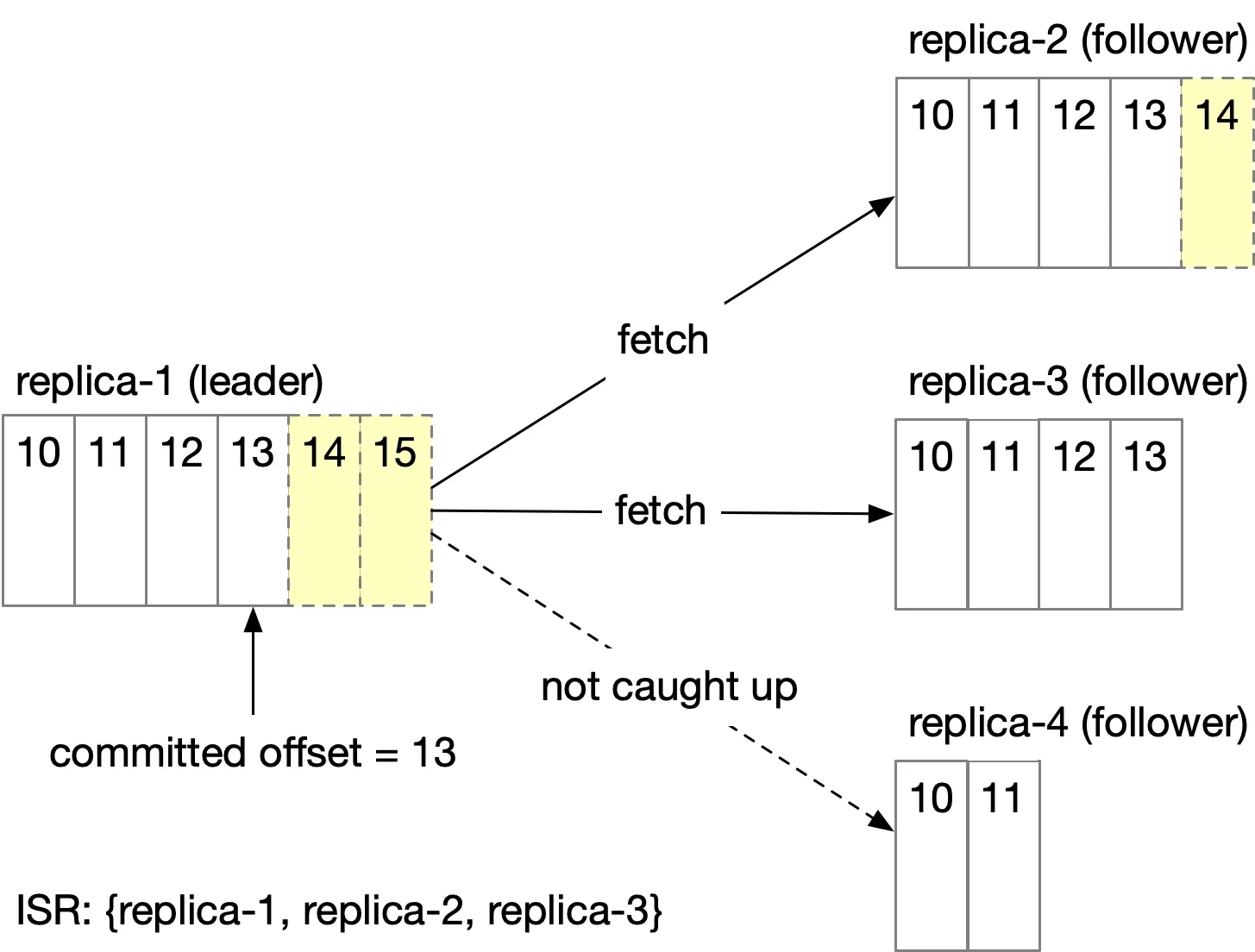
Each partition: 3 replicas across different brokers. Leader handles writes; followers pull from the leader. Producer acks after "enough" replicas sync.
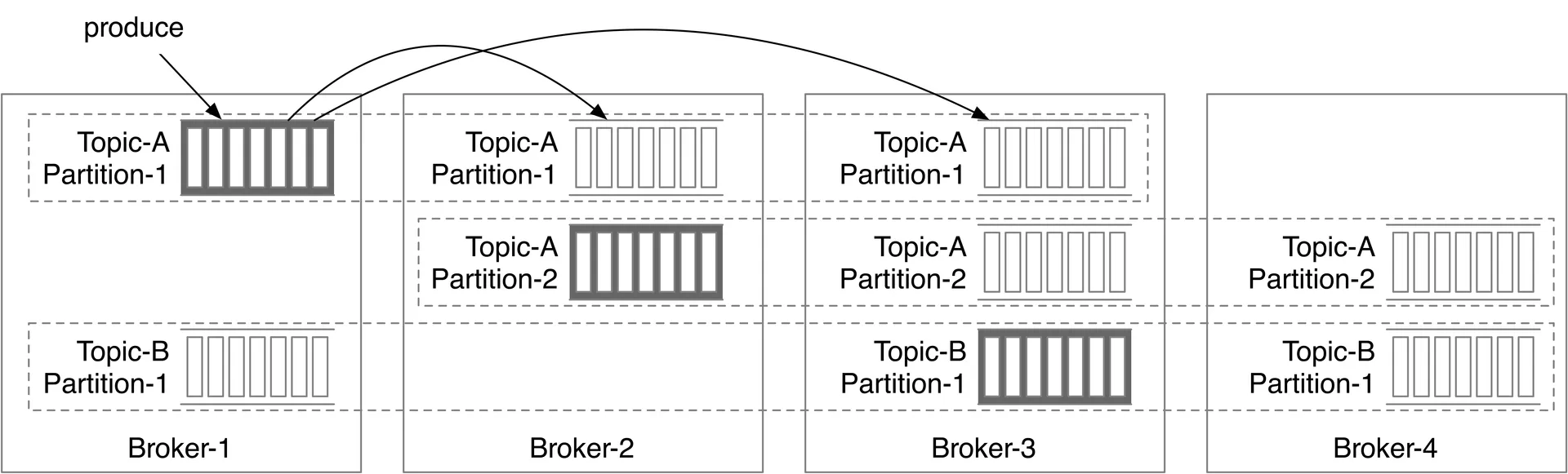
- Replica distribution plan: generated by the active controller (elected broker). Persisted in metadata storage
- In-sync replicas (ISR): replicas caught up with the leader (within configurable lag). Leader always in ISR
Acknowledgment settings:
| ACK | Behavior | Durability | Latency |
|---|---|---|---|
| ACK=all | All ISRs must receive | Strongest | Highest |
| ACK=1 | Leader persists only | Medium (lost if leader fails before replication) | Medium |
| ACK=0 | No ack, no retry | Lowest | Lowest |
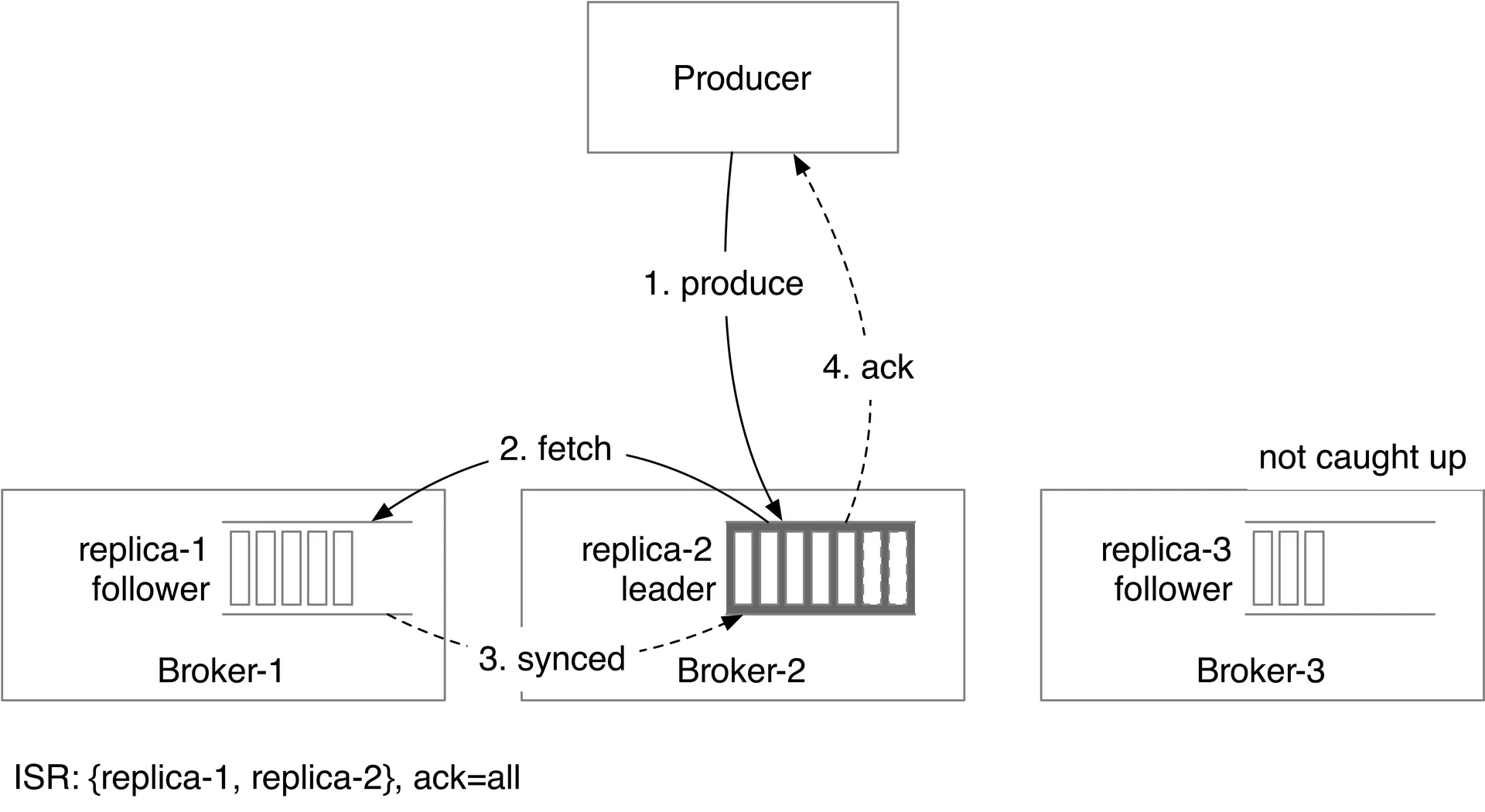
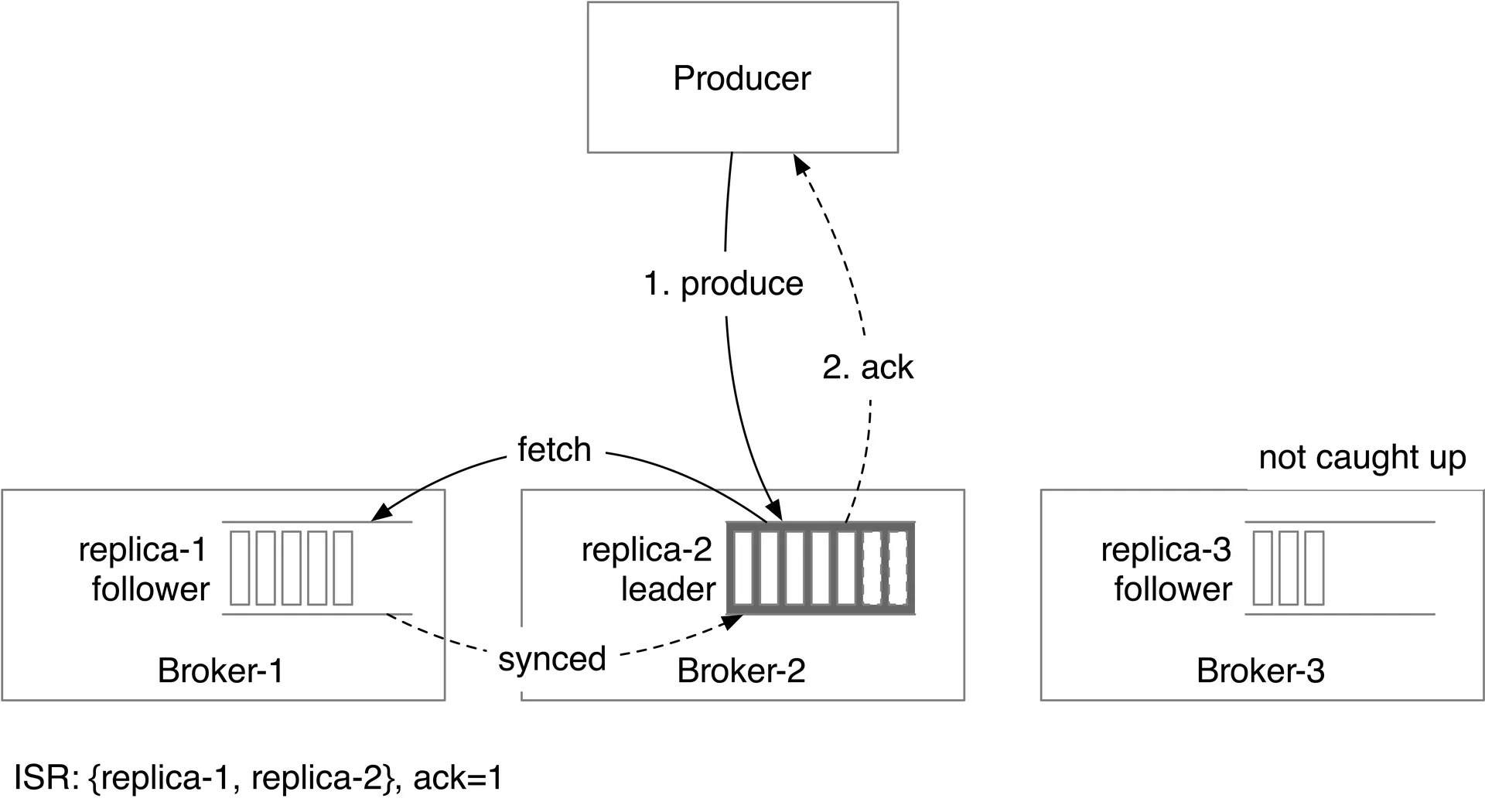
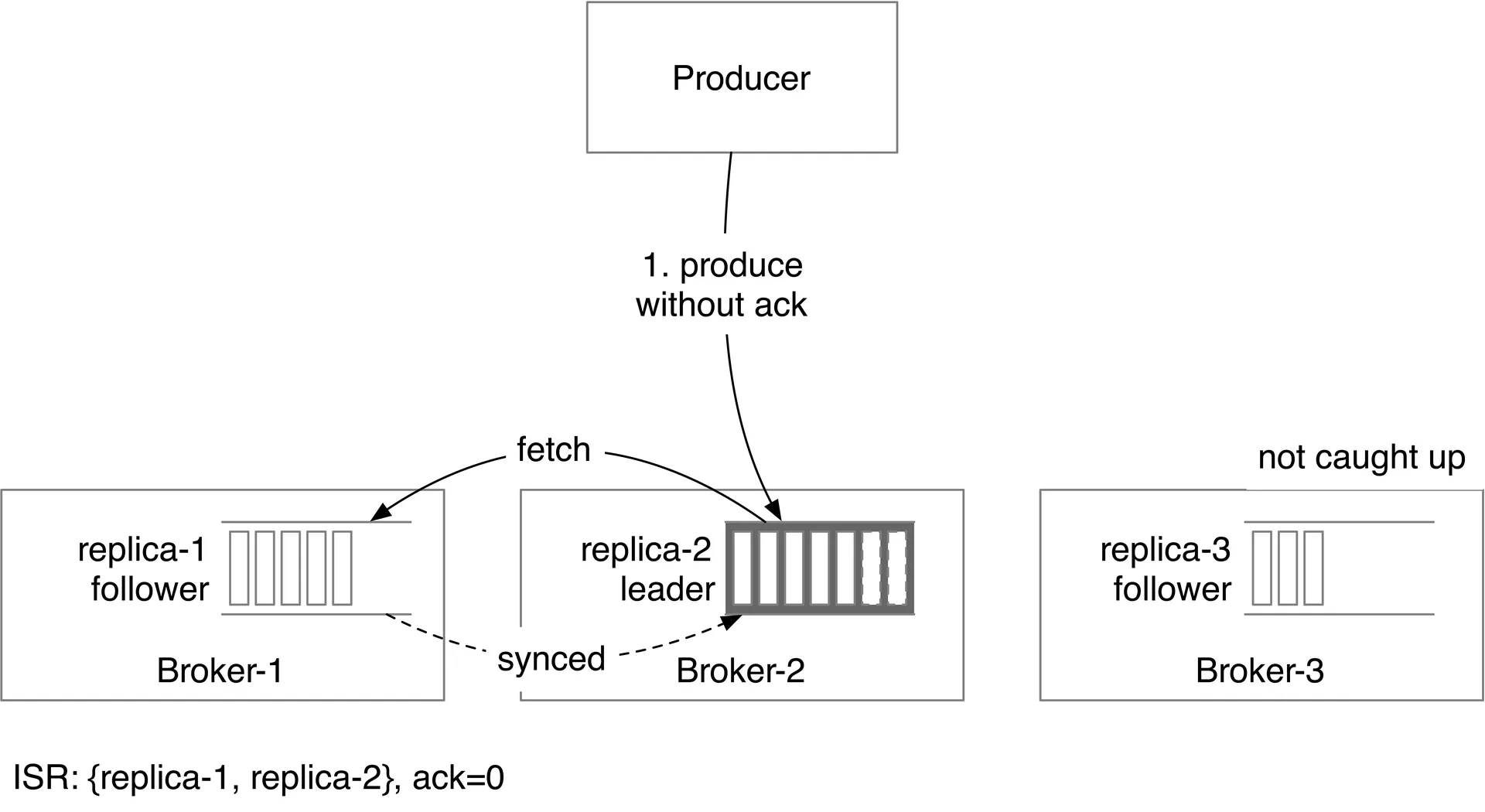
Consumers read from leader replicas (simplicity, limited connections per partition). If a topic is hot → scale partitions + consumers. Alternative: read from the closest ISR for cross-DC scenarios.
Scalability
Producers: easy: add/remove instances.
Consumers: consumer groups are isolated → easy to add/remove groups. Rebalancing handles group-internal changes.
Brokers (failure recovery):
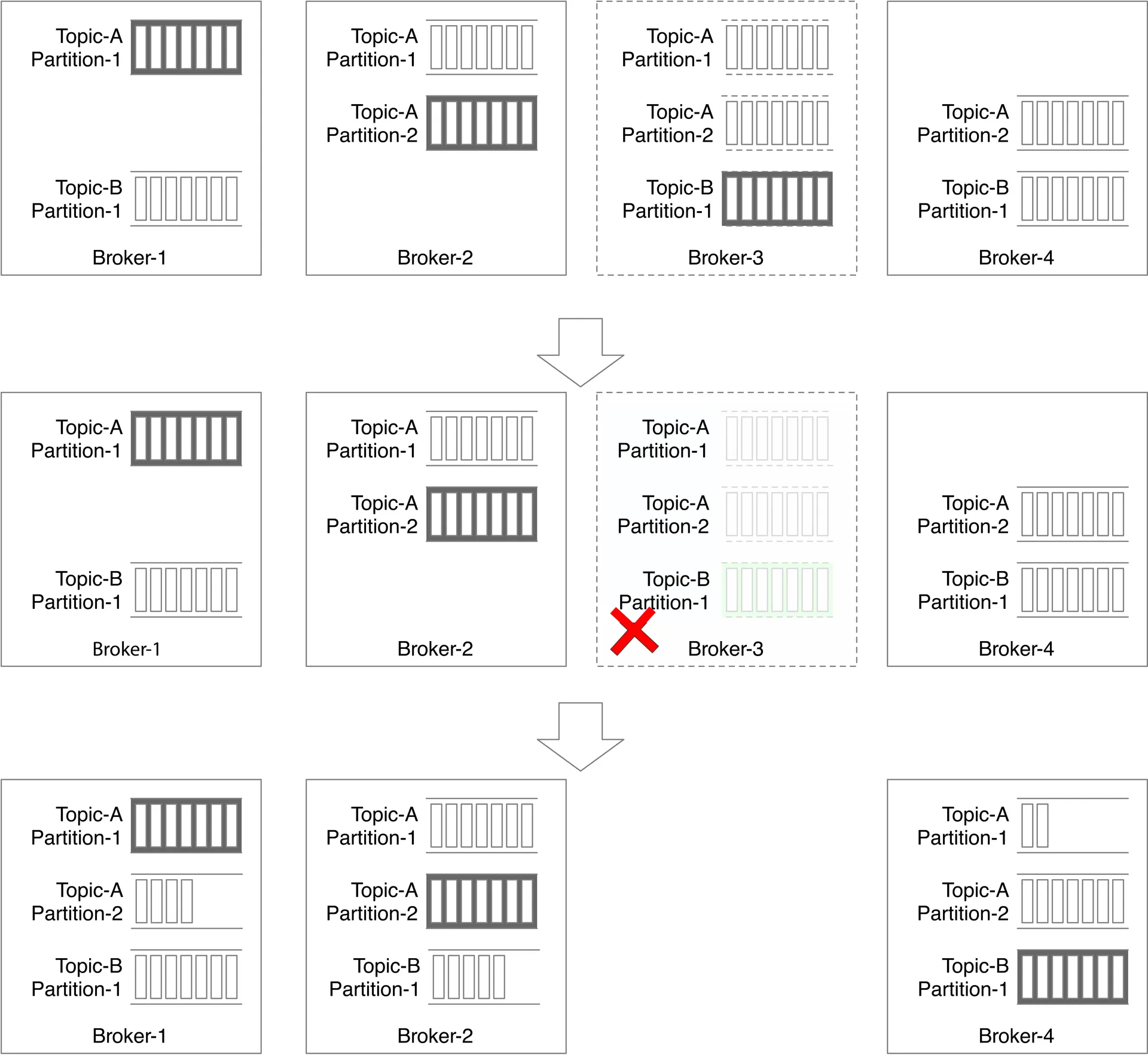
When a broker crashes → the controller detects it and generates a new replica distribution plan. New replicas catch up as followers.
Fault-tolerance considerations:
- Min ISR count: balances latency vs safety
- Replicas on different nodes (never the same broker)
- Cross-DC replicas → safer but higher latency/cost. Data mirroring as a workaround
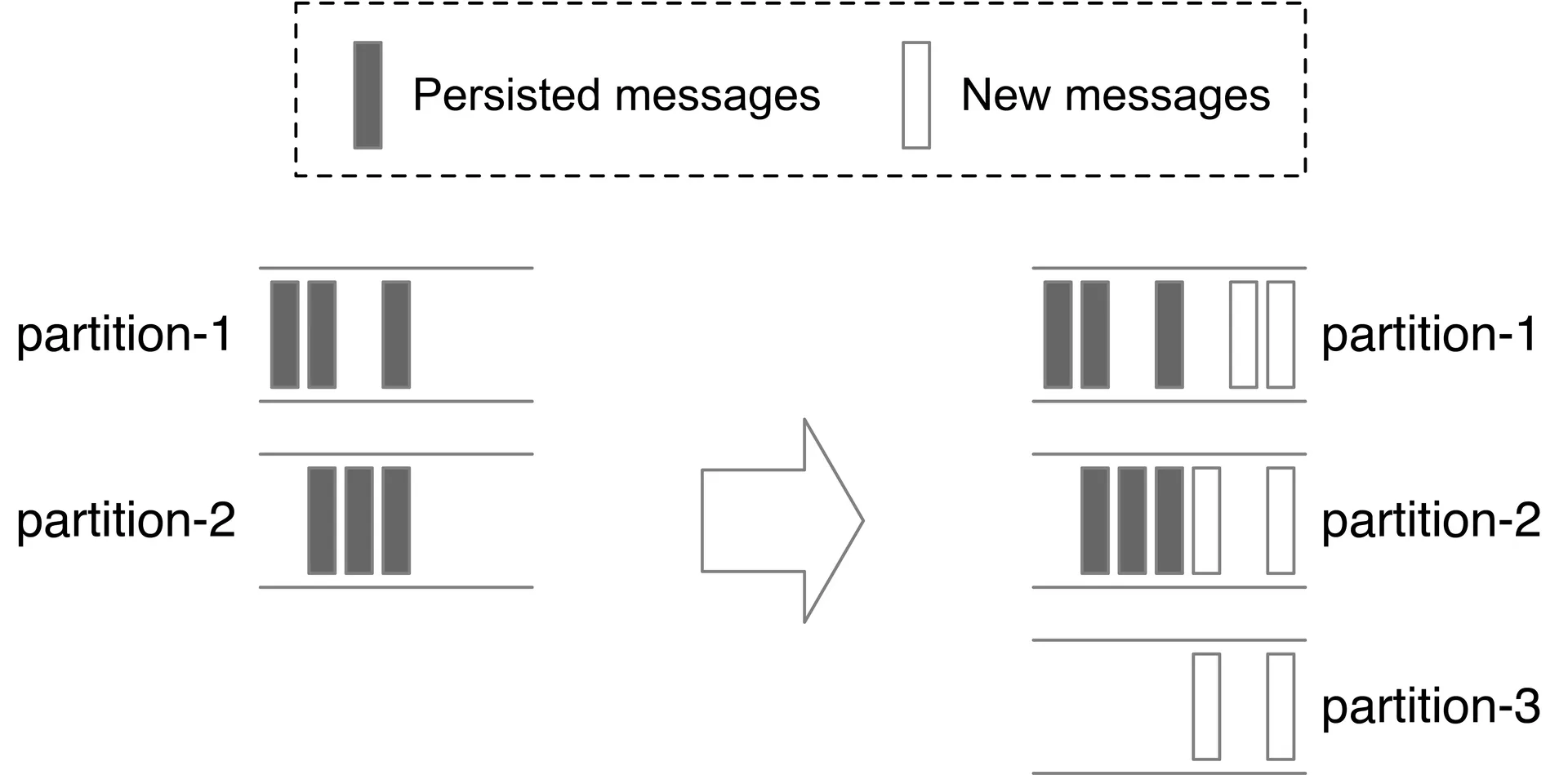
Adding brokers: the controller temporarily allows extra replicas → new broker catches up → remove redundant replicas. No data loss.
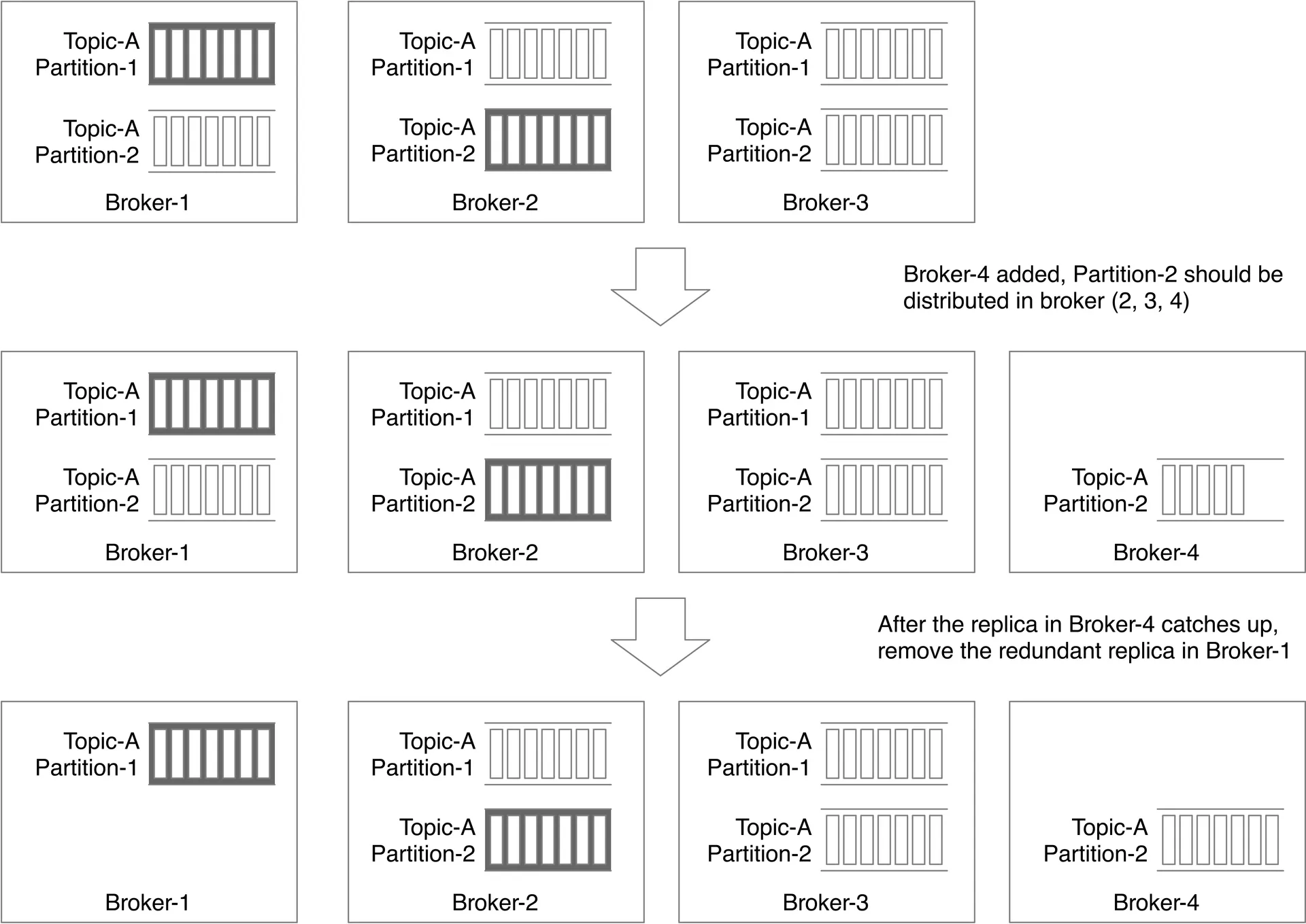
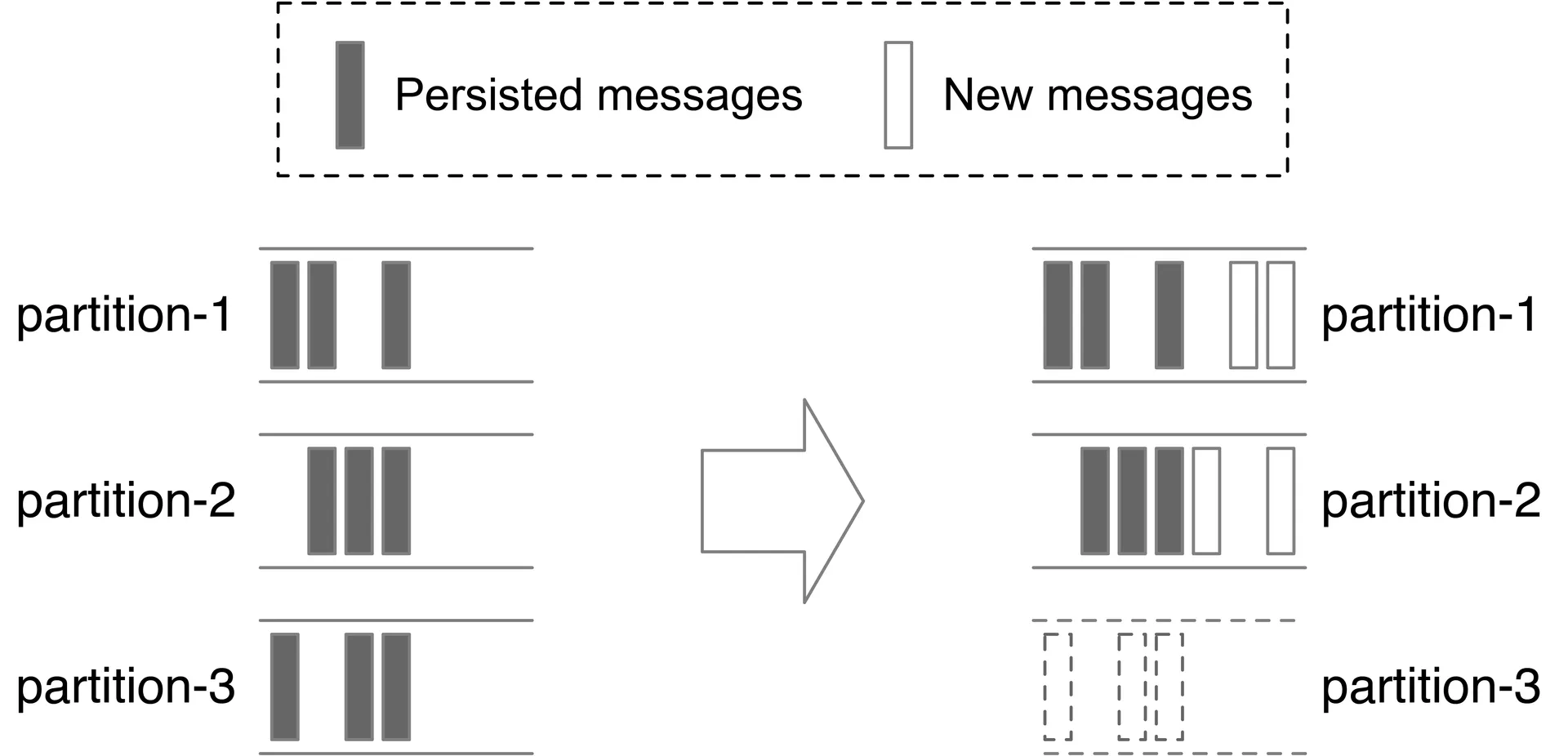
Partitions:
- Increasing: new messages go to all partitions; old messages stay
- Decreasing: the decommissioned partition stops receiving new messages but remains readable until retention expires. No immediate data migration
Data delivery semantics
At-most-once:
- Producer: async, ack=0, no retry
- Consumer: commit offset BEFORE processing. Crash after commit → message lost
- Use: metrics/logging (small data loss acceptable)

At-least-once:
- Producer: ack=1 or ack=all, retry on failure/timeout
- Consumer: commit offset AFTER processing. Crash after processing but before commit → re-consume (duplicate)
- Use: most cases; deduplication handled by a unique key on the consumer side

Exactly-once:
- Most difficult. High performance/complexity cost
- Use: financial (payment, trading, accounting) where duplication is unacceptable

Step 4 of 4: Wrap up
Advanced features:
Message filtering
Problem: the consumer needs only a subset of a topic's messages. Naive: consumer fetches all, filters client-side (wasteful). Better: broker-side filtering via message tags (metadata, not payload: avoids decryption/deserialization overhead). Tags support multi-dimensional filtering. Complex logic (formulae) → too heavyweight for a message queue.

Delayed & scheduled messages
Delayed: message held in temporary storage, delivered to the topic after a specified delay. Example: order payment check after 30 min.
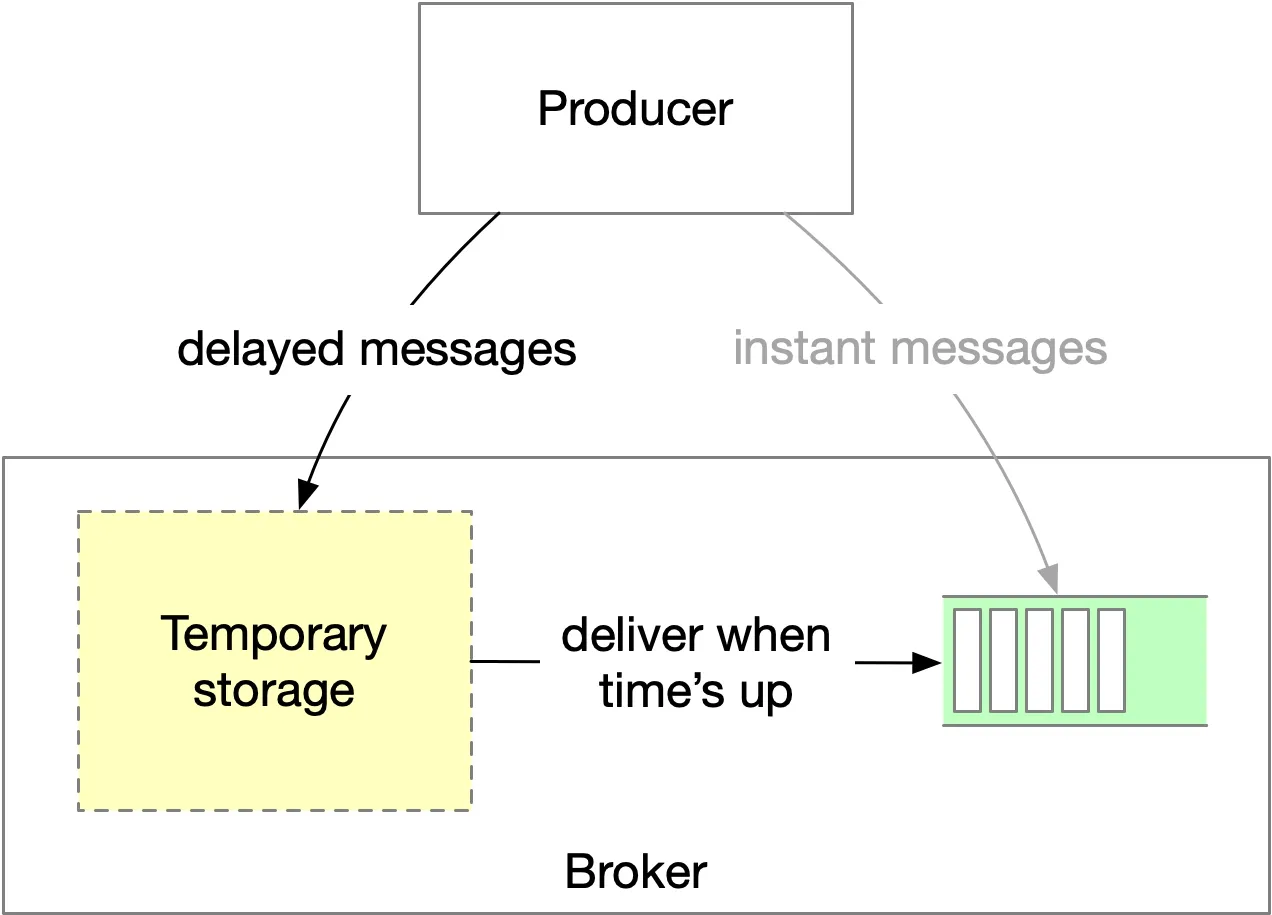
Timing implementations:
- Dedicated delay queues with predefined levels (RocketMQ: 1s, 5s, 10s, 30s, 1m, 2m, 3m, 4m, 6m, 8m, 9m, 10m, 20m, 30m, 1h, 2h)
- Hierarchical time wheel
Scheduled: similar design; message delivered at a specific scheduled time.
Additional talking points:
- Protocol: AMQP, Kafka protocol: cover all activities (produce, consume, heartbeat), transport large data, data integrity
- Retry consumption: failed messages → dedicated retry topic for later consumption
- Historical data archive: truncated messages archived to HDFS or object storage for replay