Payment System
8 min read- What it is: payment backend for e-commerce (e.g. Amazon): handles all money movement
- Scale: ~10 TPS: correctness matters more than throughput
- Core choices: 3rd-party PSP + hosted page (no card storage, no PCI DSS), relational DB with ACID, async communication
- Golden rules: exactly-once = retry + idempotency; never fully trust external systems (idempotency + reconciliation)
Design a payment backend for an e-commerce application (e.g. Amazon.com). Handles all money movement.
Step 1 of 4: Understand the problem and establish design scope
Goal: lock in requirements, constraints, and scale before designing.
Requirements
Must have:
- Payment backend for e-commerce (Amazon-like)
- Credit cards, PayPal, bank cards: focus on credit cards for the interview
- Third-party payment processors (Stripe, Braintree, Square): NOT direct processing
- No internal credit-card storage (security/compliance)
- Pay-in flow (buyers → platform) and pay-out flow (platform → sellers)
Nice to have / assumptions:
- Global, but single currency assumed
- 1 million transactions/day
- Non-functional: reliability, fault tolerance
- Reconciliation: async verification across internal + external services
Back-of-the-envelope: 1M transactions / 86,400 sec ≈ 10 TPS: low throughput → focus is on correctness, not raw scale.
Step 2 of 4: Propose high-level design and get buy-in
Goal: agree on the flows and components before diving deep.
Pay-in flow
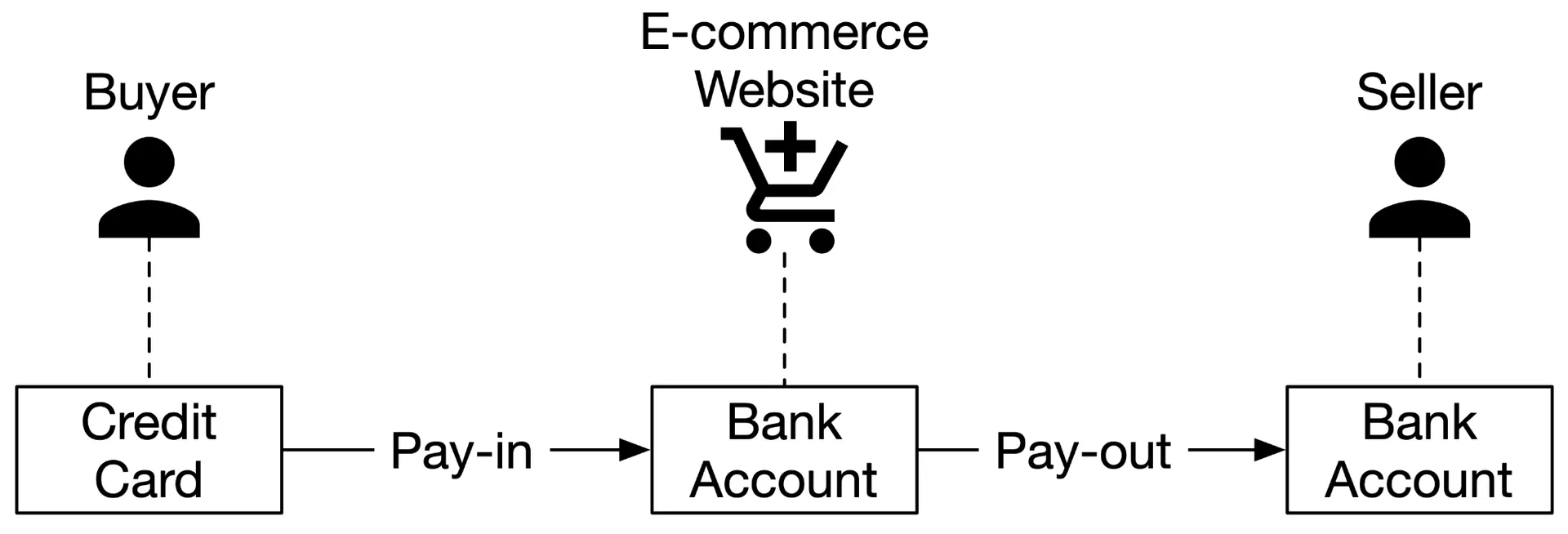
Figure 1: Simplified pay-in and pay-out flow
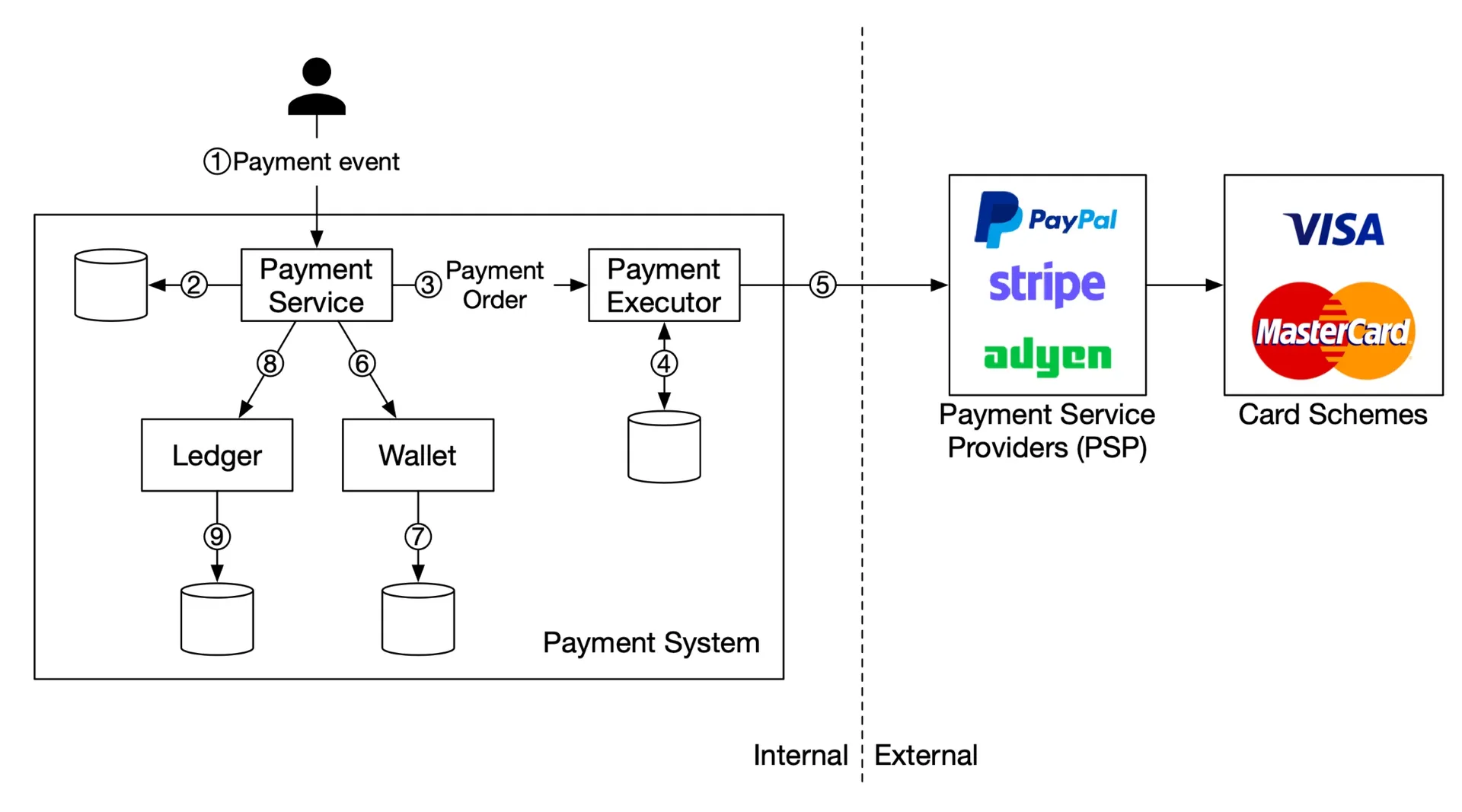
Figure 2: Pay-in flow
Components:
| Component | Job |
|---|---|
| Payment service | Accepts payment events, coordinates the process. First runs risk check (AML/CFT compliance, fraud detection: typically third-party). |
| Payment executor | Executes a single payment order via PSP. One payment event may contain multiple payment orders. |
| PSP (Payment Service Provider) | Moves money from buyer's credit card to platform's bank account. |
| Card schemes | Visa, MasterCard, Discover: process credit card operations. |
| Ledger | Financial record (debit buyer 1,creditseller1, credit seller 1). Used for post-payment analysis (revenue, forecasting). |
| Wallet | Merchant account balance. Records total amount paid per user. |
Pay-in flow steps:
- User clicks "place order" → payment event → payment service
- Payment service stores event in DB
- Single checkout may split into multiple payment orders (products from multiple sellers) → payment service calls payment executor for each
- Payment executor stores payment order in DB
- Payment executor calls external PSP to process credit card
- On success: payment service updates wallet (seller balance)
- Wallet server stores updated balance
- Payment service calls ledger
- Ledger appends new entry
Payment service APIs
POST /v1/payments: execute a payment event. Params:
buyer_infocheckout_id(globally unique)credit_card_info(encrypted or token)payment_orderslist: each:seller_account,amount(string, not double),currency(ISO 4217),payment_order_id(globally unique, used as PSP dedup/idempotency key)
amount is a string, not a double: different protocols/hardware have different numeric precision → rounding errors. Numbers can be extremely large (Japan GDP ~5×10¹⁴ yen) or small (satoshi = 10⁻⁸ BTC). Parse to a number only for display/calculation.GET /v1/payments/{:id}: get payment order execution status by payment_order_id.
Data model
Storage choice factors: proven stability (5+ years in big financial firms), monitoring/investigation tools, DBA job market maturity → traditional relational DB with ACID over NoSQL/NewSQL.
Payment event table:
| Name | Type |
|---|---|
| checkout_id | string PK |
| buyer_info | string |
| seller_info | string |
| credit_card_info | depends on provider |
| is_payment_done | boolean |
Payment order table:
| Name | Type |
|---|---|
| payment_order_id | String PK |
| buyer_account | string |
| amount | string |
| currency | string |
| checkout_id | string FK |
| payment_order_status | string (enum) |
| ledger_updated | boolean |
| wallet_updated | boolean |
Status flow: NOT_STARTED → EXECUTING → SUCCESS / FAILED. On SUCCESS: update wallet (wallet_updated = TRUE) → update ledger (ledger_updated = TRUE). All orders under the same checkout_id succeed → is_payment_done = TRUE. Scheduled job monitors in-flight orders, alerts when threshold exceeded.
Double-entry ledger
Every transaction is recorded in two ledger accounts with the same amount → sum of all entries = 0. One cent lost = someone gains a cent. End-to-end traceability (see Square's immutable double-entry accounting DB).
| Account | Debit | Credit |
|---|---|---|
| buyer | $1 | |
| seller | $1 |
Hosted payment page
Companies avoid storing credit cards (PCI DSS compliance burden). The PSP provides a hosted page (widget/iframe for web, SDK for mobile) and collects sensitive data directly: it never reaches our payment system.
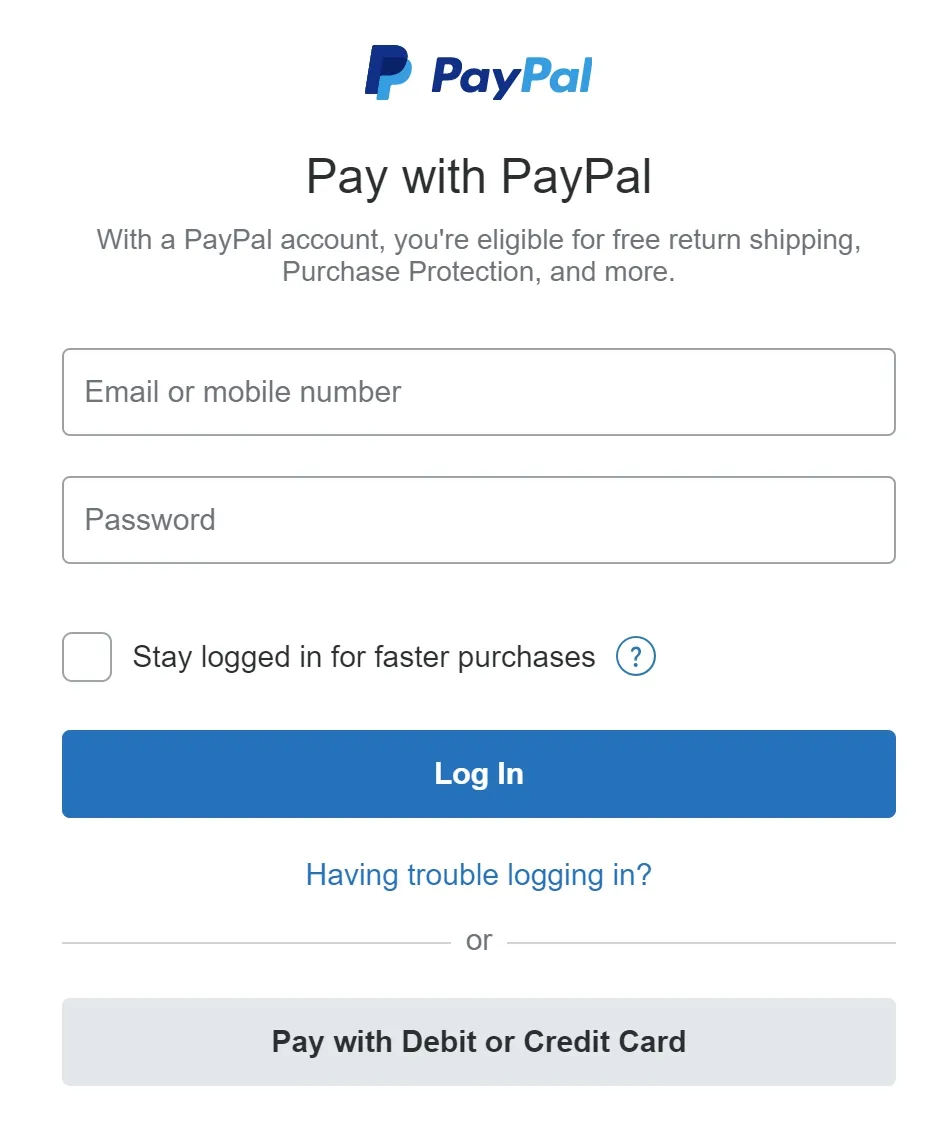
Figure 3: Hosted pay with PayPal page
Pay-out flow
Similar to pay-in, but uses a third-party pay-out provider (e.g. Tipalti) to move money from platform bank account → seller bank account. Additional bookkeeping/regulatory requirements.
Step 3 of 4: Design deep dive
Goal: harden the design: PSP integration, failure handling, consistency, security.
PSP integration: two approaches
- Direct API: company stores payment info, develops payment pages; PSP connects to banks/card schemes
- Hosted payment page (common): PSP provides the page, collects/stores card data → company avoids PCI DSS
Hosted payment flow:
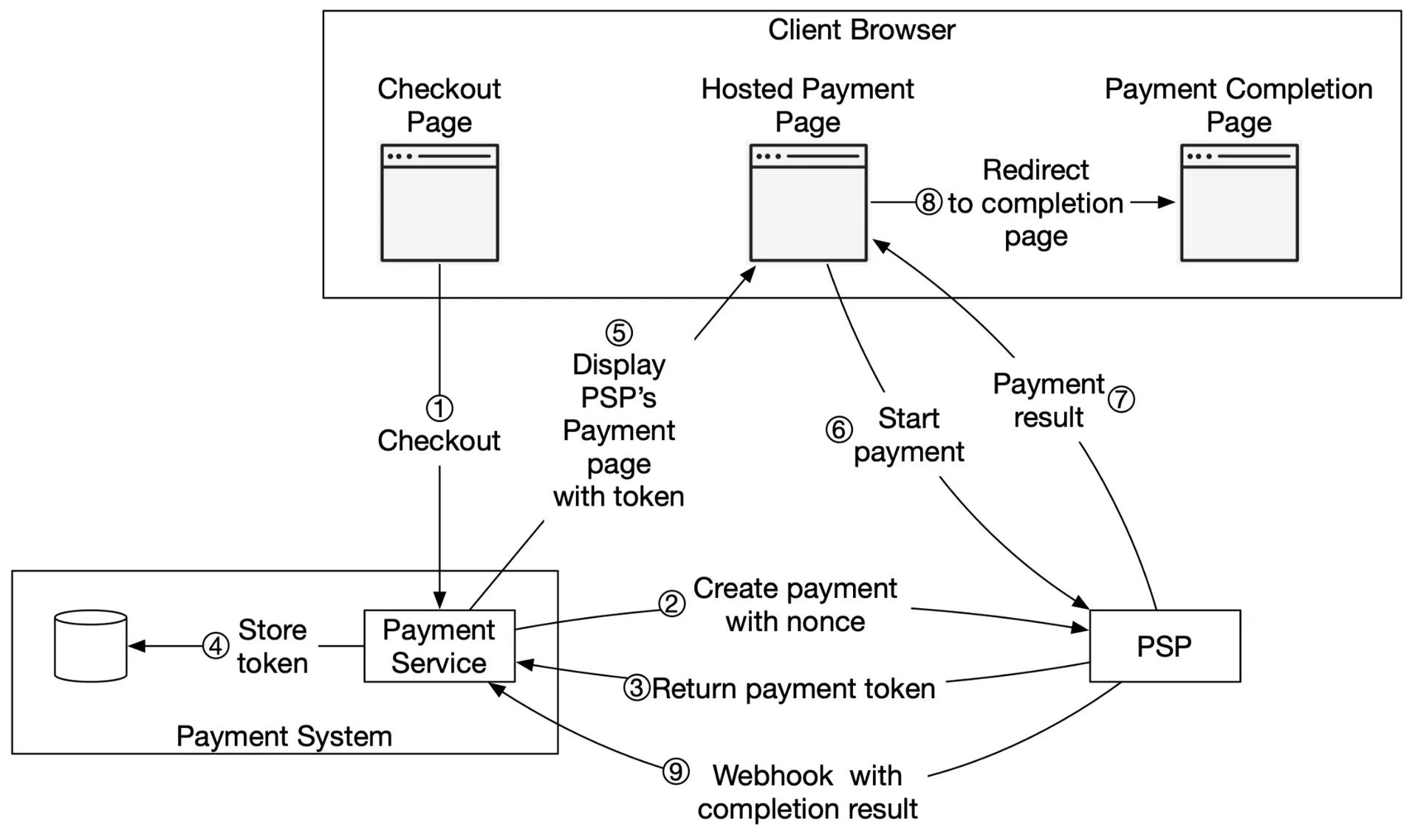
Figure 4: Hosted payment flow
- Client clicks "checkout" → payment service with payment order info
- Payment service → PSP: payment registration request (amount, currency, expiration, redirect URL, nonce =
payment_order_idfor exactly-once registration) - PSP returns token (UUID, uniquely identifies registration)
- Payment service stores token in DB
- Client displays PSP-hosted payment page (Stripe JS library): needs token + redirect URL
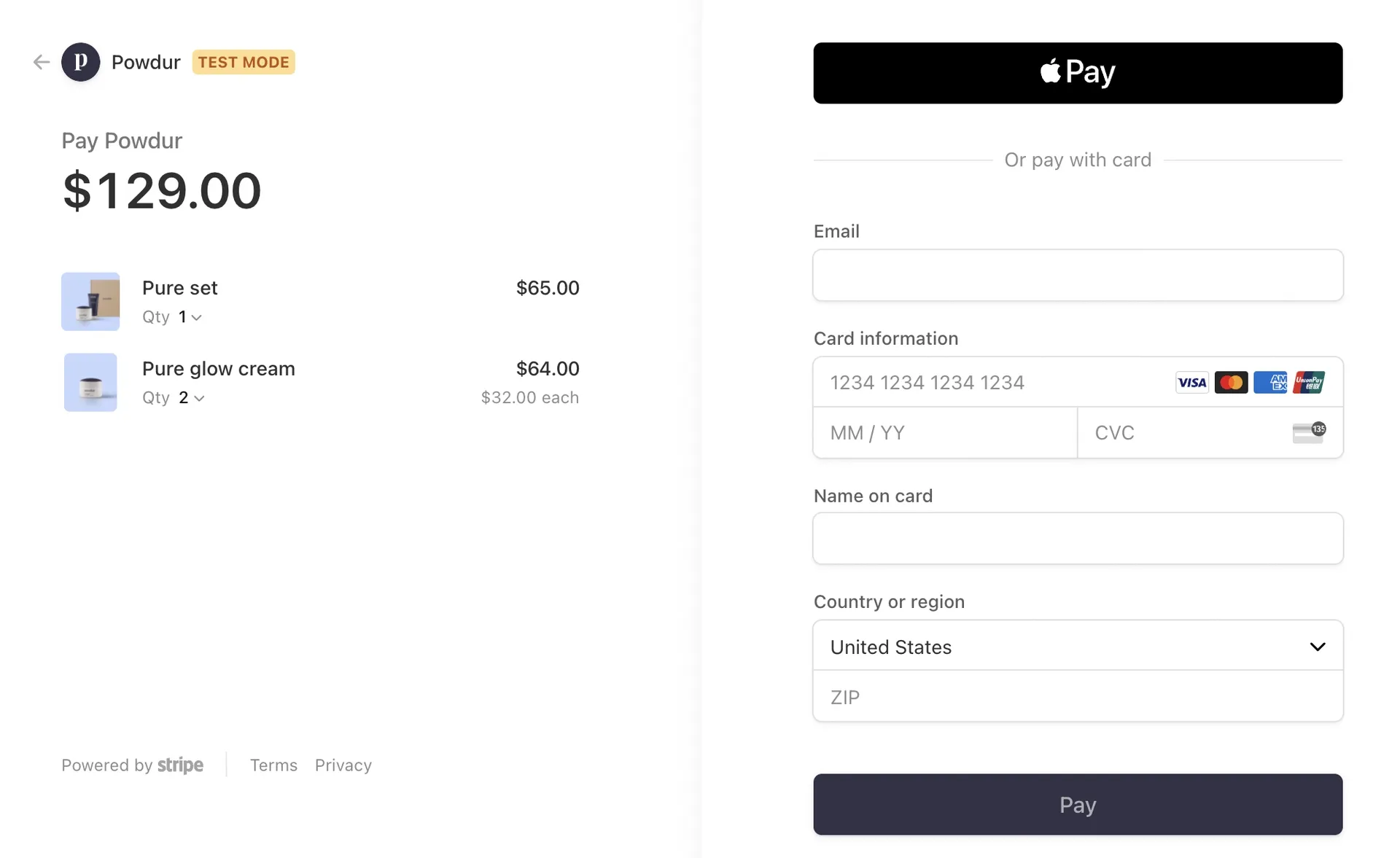
Figure 5: Hosted payment page by Stripe
- User fills card details on PSP page → clicks pay → PSP processes
- PSP returns payment status
- Browser redirected to redirect URL (status appended as query param)
- Async: PSP calls payment service via webhook with payment status → payment service updates
payment_order_status
Reconciliation: the last line of defense
Async communication → no guaranteed delivery. Reconciliation periodically compares states across related services.
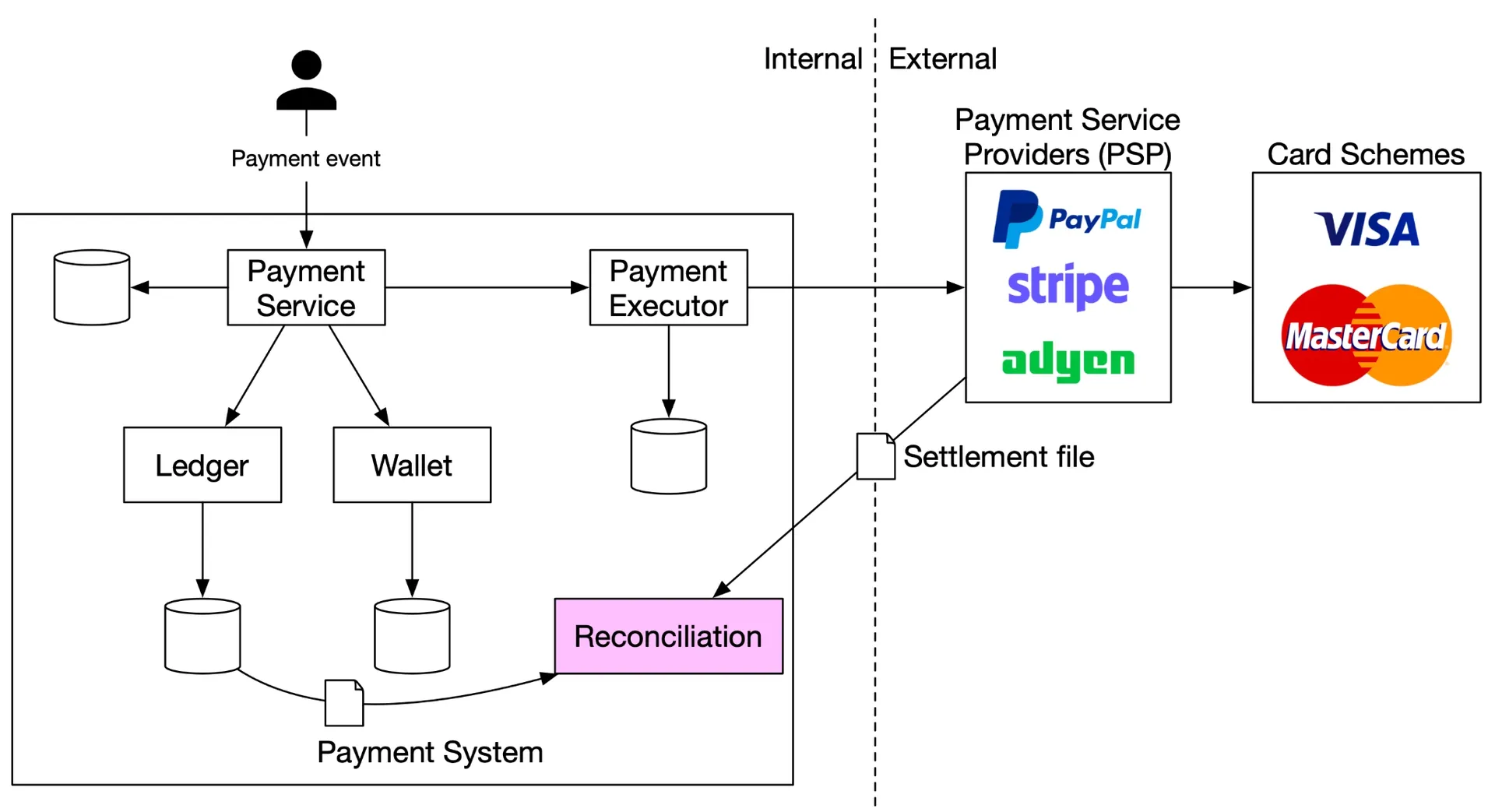
Figure 6: Reconciliation
Nightly: PSP/banks send a settlement file (bank balance + daily transactions). Reconciliation system parses it and compares with the ledger. Also used internally (ledger vs. wallet divergence detection).
Mismatch handling:
- Classifiable + automatable → auto-fix via code
- Classifiable, not automatable → manual fix by finance team (job queue)
- Unclassifiable → special queue, finance team investigates
Handling payment processing delays
Some payments take hours/days (PSP risk review, 3D Secure Authentication). The PSP handles long-running requests:
- Returns pending status to client → client shows pending + check-status page
- Notifies via webhook on status change (or payment service polls PSP)
Three-party consistency (client, payment service, PSP) requires idempotency + reconciliation.
Communication among internal services
| Approach | Pros | Cons |
|---|---|---|
| Synchronous (HTTP) | Simple | Low performance (one slow service impacts all), poor failure isolation, tight coupling, hard to scale |
| Asynchronous (message queue / Kafka) | Scalable, failure-resilient | Trades simplicity for complexity |
- Single receiver: shared message queue: once processed, message removed
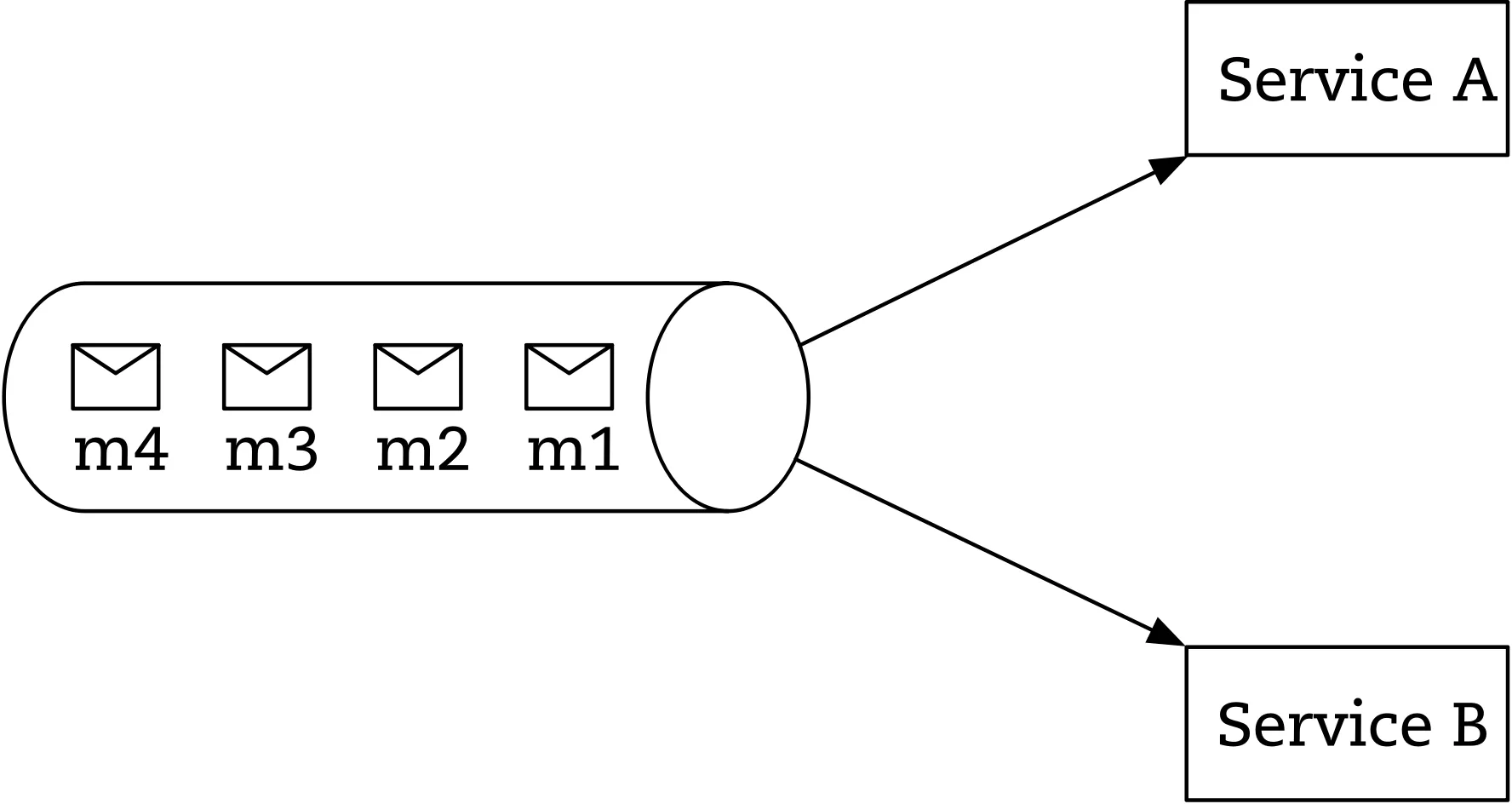
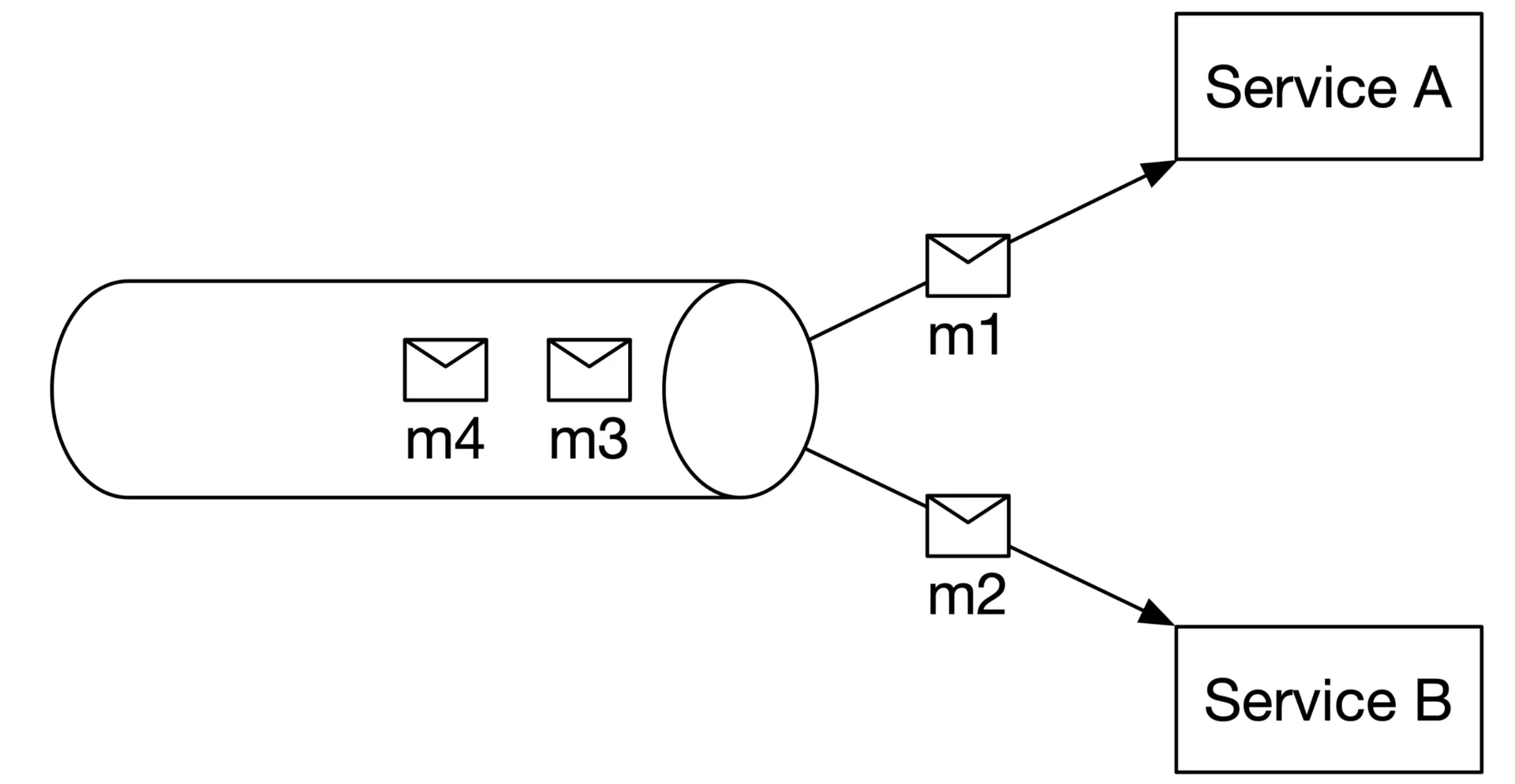 Figures 7-8: Message queue, single receiver
 - Multiple receivers: Kafka: same message consumed by multiple services (payment, analytics, billing)
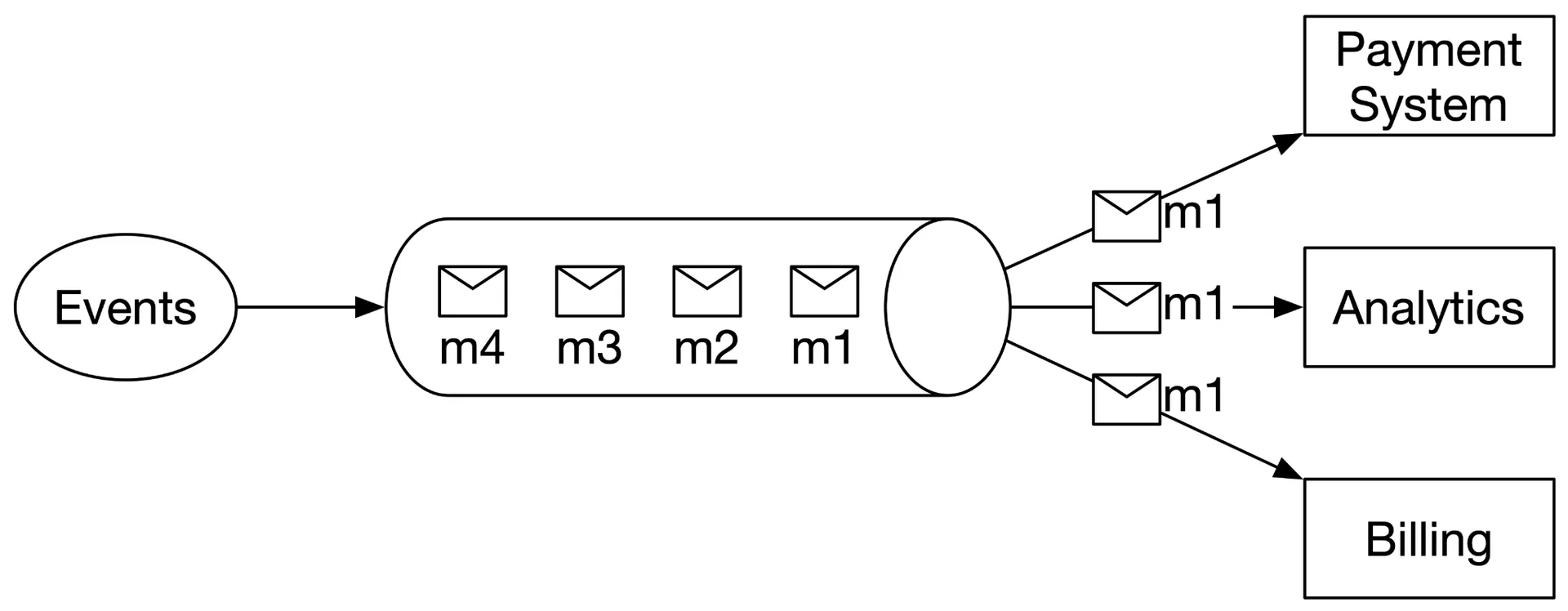 Figure 9: Multiple receivers
For large-scale payment systems with many dependencies → async preferred.
Handling failed payments
Track payment state: definitive state at any stage, persisted in append-only table.
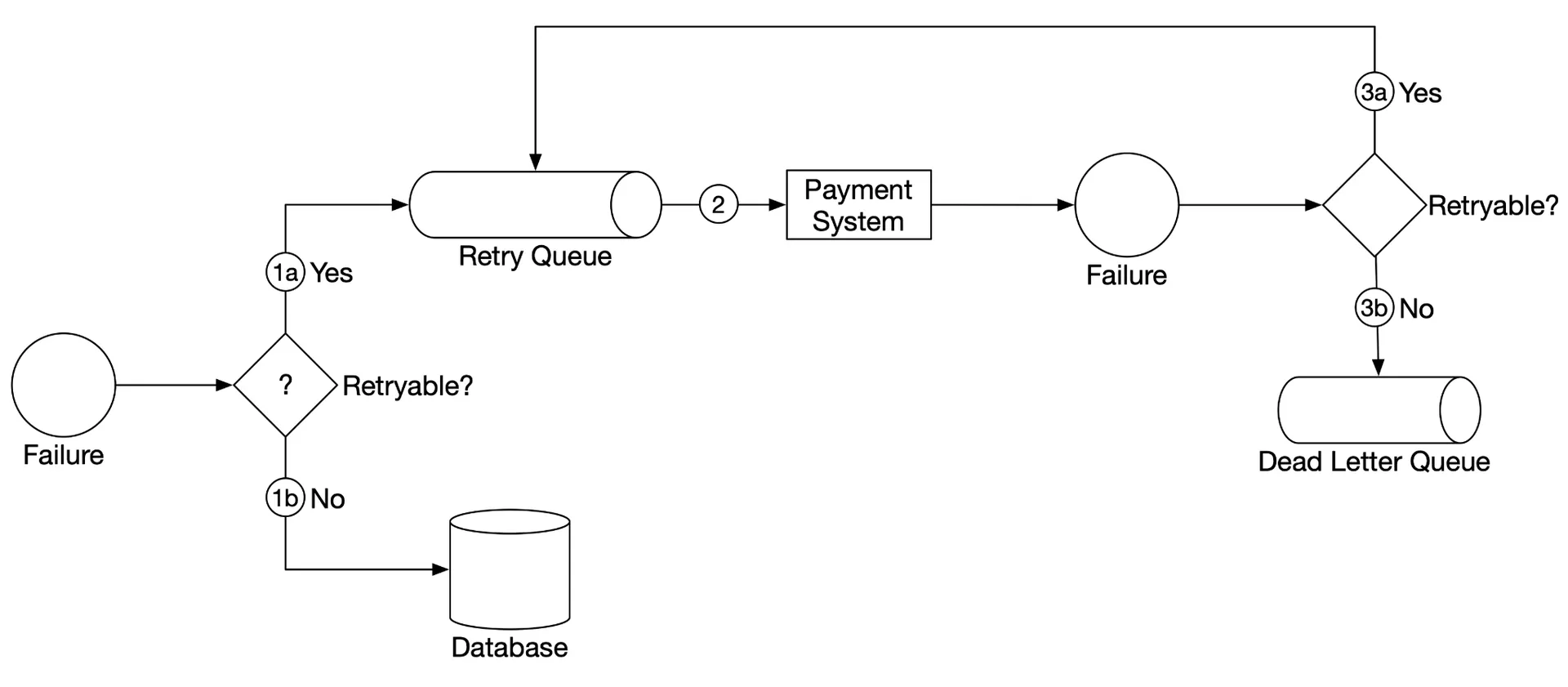
Figure 10: Handle failed payments
- Check if failure is retryable → retry queue; non-retryable (invalid input) → error DB
- Consume retry queue, retry transactions
- If fails again: retry count < threshold → back to retry queue; ≥ threshold → dead letter queue (debug/inspect)
Exactly-once delivery
Exactly-once = at-least-once (retry) + at-most-once (idempotency).
Retry (at-least-once)
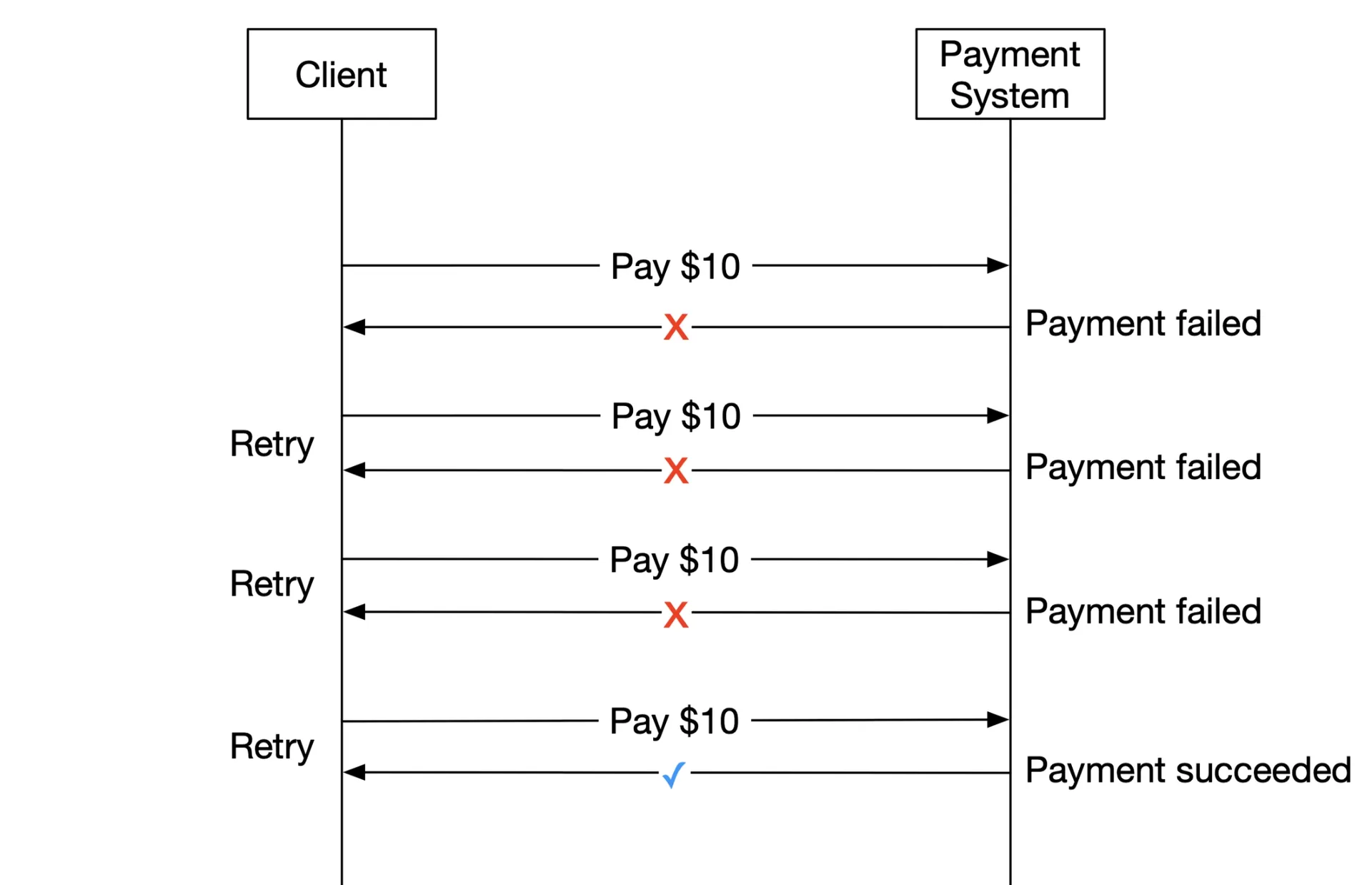
Figure 11: Retry
Retry strategies: immediate, fixed intervals, incremental intervals, exponential backoff (1s → 2s → 4s → ...), cancel. Use exponential backoff for persistent network issues. Provide Retry-After header with error codes.
Idempotency (at-most-once)
Client generates a UUID as idempotency key → HTTP header <idempotency-key: key_value> (Stripe/PayPal recommended).
Scenario 1 (double click): idempotency key = shopping cart ID pre-checkout. Second request seen before → return previous request's status. Concurrent duplicates → 429 Too Many Requests.
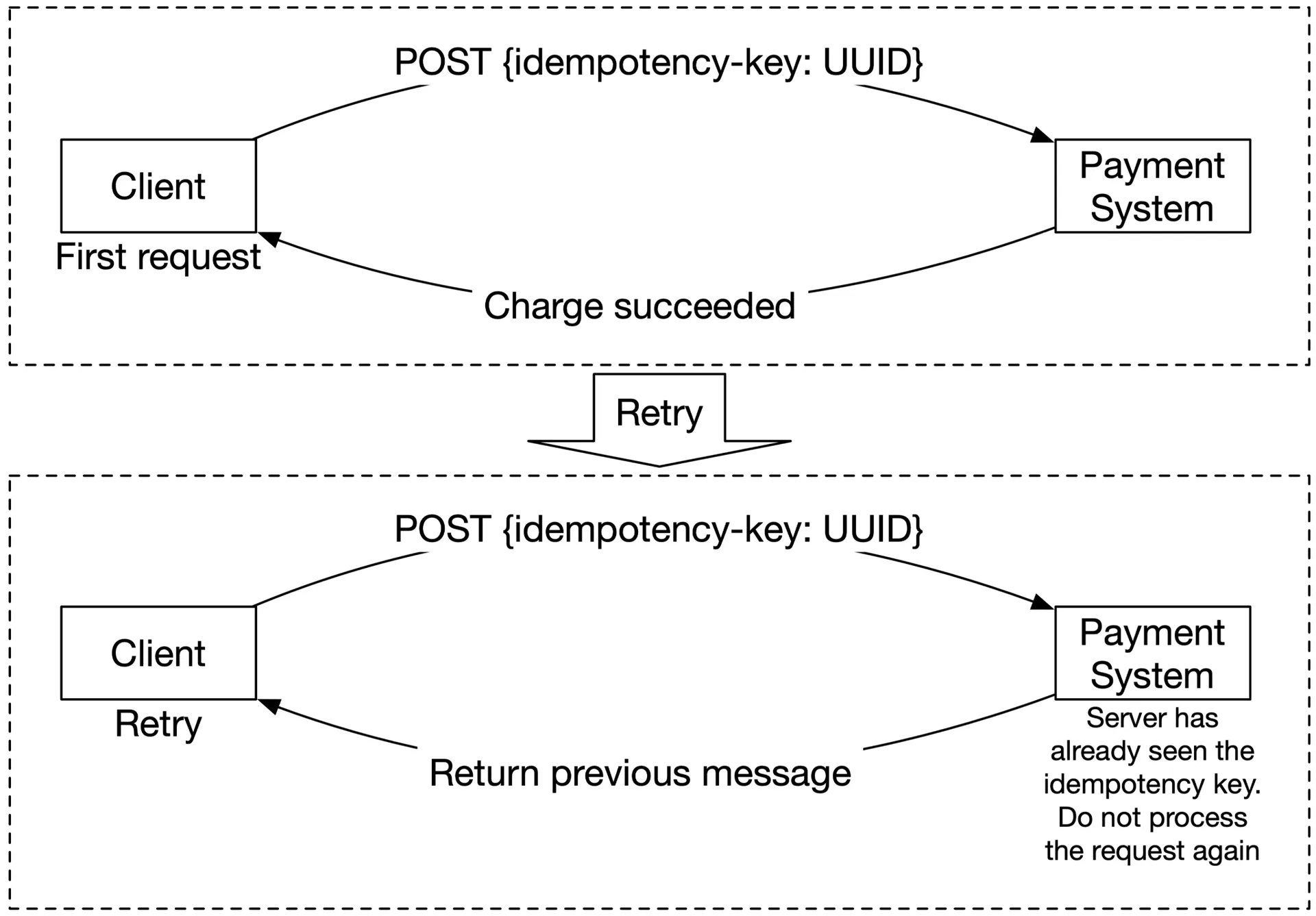
Figure 12: Idempotency
Implementation: DB unique key constraint. Insert succeeds → new request. Insert fails (PK exists) → duplicate, reject.
Scenario 2 (PSP processed but response lost): nonce (payment_order_id) → PSP → token. Token uniquely maps to the payment order. Re-send the same token → PSP recognizes the duplicate, returns previous execution status.
Consistency
Stateful services involved: payment service, ledger, wallet, PSP, DB replicas.
- Internal services: exactly-once processing
- Internal ↔ external (PSP): idempotency + reconciliation: never trust an external system fully
- Replica lag: Option 1: read+write from primary only (wastes replicas). Option 2: consensus algorithms (Paxos, Raft) or consensus-based DBs (YugabyteDB, CockroachDB)
Payment security
| Problem | Solution |
|---|---|
| Eavesdropping | HTTPS |
| Data tampering | Encryption + integrity monitoring |
| MITM attack | SSL + certificate pinning |
| Password storage | Salted hashing |
| Data loss | Multi-region DB replication + snapshots |
| DDoS | Rate limiting + firewall |
| Card theft | Tokenization (store tokens, not real numbers) |
| PCI compliance | PCI DSS standard |
| Fraud | Address verification, CVV, user behavior analysis |
Step 4 of 4: Wrap up
What we designed:
- Pay-in / pay-out flows with a 3rd-party PSP (hosted page → no PCI DSS)
- Reconciliation via nightly settlement files
- Async communication patterns
- Failure handling: retry + dead letter queues
- Exactly-once delivery: retry + idempotency
If you have more time, discuss:
- Monitoring, alerting, debugging tools
- Currency exchange, regional payment methods (cash payments in India/Brazil)
- Google/Apple Pay integration